

 May 2017
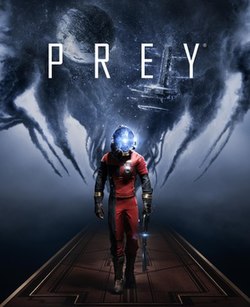

Prey is the kind of sci-fi game that invites you onto a gorgeous orbital stage and then politely asks whether you are human enough to be trusted. On PS4, Arkane Austin's Talos I feels like a luxurious prison with better lighting and worse life choices. The game's mechanics - Neuromods, mimicry, GLOO guns, psychoscopes - are the tools; the real prize is the slow, unsettling unraveling of people, personalities, and moral puzzles. This review zeroes in on the human (and not-quite-human) cast and their story arcs, because if Prey is a haunted house, the hauntings are mostly interpersonal and ethical rather than jump-scare cheapness.
At its heart, Prey gives you agency and then makes you sweat about using it. You play Morgan Yu, whose gender you pick at the start (a choice that tweaks dialogue and how some NPCs respond, but does not reroute the entire plot). Morgan wakes up in a simulated apartment and is then dragged into a three-year timeline of neuromod experiments, memory edits, and corporate hubris. Gameplay supports that thematic messiness: Neuromods function as both mechanics and metaphors. Install them and Morgan learns abilities; remove them and memories vanish. Those mechanics make every player choice feel like rewiring the character in real time. The interplay between human and Typhon skill trees maps neatly onto Morgan's arc. On one hand you can grind Scientist/Engineer/Security skills - classic, human upgrades that reward curiosity, tinkering, and brute force. On the other, the Typhon branches (Energy, Morph, Telepathy) seduce you with alien powers like Kinetic Blast, Mimic Matter, or Mindjack. Each Typhon ability is a narrative pivot: becoming a chair to infiltrate vents is a prank, but it is also a statement about identity. The psychoscope that grants Typhon powers is narratively compact genius - it literally asks you to examine an alien and then internalize it. Combat and stealth in Prey are less about spectacle and more about consequences. A wrench and pistol can clear rooms; the GLOO Cannon can freeze a Mimic mid-shapeshift or create your own improvised scaffolding. The Q-Beam and disruptor are late-game flavor, but the steady pressure of resource scarcity, Recycler Charges, and crafting keeps every bullet and medkit meaningful. That scarcity is narrative: in a station run by TranStar with a conspiracy layered into its walls, the choice to conserve or expend says something about the Morgan you are being shaped into. The game's multiple endings are less a gimmick than the culmination of a character arc. Your decisions about Alex, January, other survivors, and how much Typhon power you accept alter the final judgement. That post-credits twist - the reveal that the Morgan you just controlled might be a Typhon implanted with Morgan's memories - retroactively reframes every action: were you compassionate because you are human, or because you were trained to mimic compassion as part of an experiment? The gameplay loop encourages this ethical bookkeeping: who did you spare, who did you kill, how many neuromods did you install? Those numbers add up to who Morgan 'is' at the end, whether that identity is biological, psychological, or procedural.
Talos I is one of Prey's true characters, a retrofuturistic space station assembled like a lavish museum of future histories. Arkane's art direction stitches together Art Deco executive suites, Soviet brutalist sections, mid-century retrofuturism and garish corporate luxe into a believable social ecosystem. Walking through Talos I on PS4 is a study in environmental storytelling: a child's toy left on a counter tells you more about a death than a hundred expository logs. The station's continuity - designed as a continuous space rather than discrete levels - amplifies the sense that this is a lived-in place where people once argued, loved, and lied. The Mimics and Typhon designs favor unsettling novelty over simple alien cliché. The Mimic's ability to become everyday objects creates a thrilling and slightly absurd dissonance - check the coffee mug twice before sitting down. Lighting, audio cues, and the score by Mick Gordon further sell the world: subtle dissonant notes during a slow corridor walk, bassy tension when neural coral blooms, and the odd moment of sardonic brightness in Talos I's capital-planet kiosk areas. On PS4, the textures and lighting aren't photorealistic miracles, but they are applied with taste; the important thing is the station's identity, which is impeccable.
Prey, as a whole, stages an ethics exam using the language of immersive sims. The characters are less about tidy three-act arcs and more about how choices refract personhood. Morgan Yu is the core experiment - malleable, repeatedly edited, and judged - and the game's structure forces you to build an interpretation of Morgan via gameplay. Alex Yu (voiced by Benedict Wong) plays the role of charismatic, morally ambiguous sibling-scientist whose ambitions crystallize into a knife-edge argument: save science or save people? January, the Operator AI whom Morgan supposedly built, is the ghost in the machine that keeps asking the game's real question: what exactly makes someone 'human'? NPCs scattered through Talos I act as little moral accelerants. Helping survivors tends to humanize Morgan; abandoning them leans into a colder, utilitarian end. The TranStar board and cleanup teams exist mostly to personify corporate indifference, but the neat trick is how personal stories - a lover's note, a terminal confession, an abandoned nursery - turn abstract blame into small, specific tragedies. By the time the game asks you to flip the self-destruct or construct the Nullwave, this has stopped being a logistics problem and has become a moral signature. Arkane's decision to let players pick gender and then largely avoid cartoony branching is smart: Morgan's core arc remains intact while the game still allows players to see themselves reflected. The post-credits twist is where Prey claws your assumptions: if an alien can be taught empathy and pass as human, what did you actually teach? The game doesn't hand you that answer; it turns your own save file into an echo chamber where your playstyle becomes the verdict. Prey is at its best when it trusts the player to reckon with their actions. The gameplay systems - neuromods, Typhon powers, crafting, and resource management - are not window dressing but narrative currency. Talos I is gorgeous and detailed, but it's the ensemble of voices (Tim Kang or Sumalee Montano as Morgan depending on your pick, Benedict Wong as Alex, the uncanny calm of January) and the moral screws Arkane tightens that make this an unforgettable ride. If you want a shooter that leaves you thinking about identity and empathy while you patch your suit and staple together another medkit, Prey on PS4 is a high-class way to get that existential hangover. It isn't flawless - combat can feel uneven and some plot strands could be deeper - but it succeeds where studios often fail: it makes mechanical choices meaningful to character. You will leave Talos I with a bunch of crafted junk, a handful of Neuromods, and a genuine curiosity about what the person you became up there actually felt. That's rare, and beautifully eerie.
 IL-2 Sturmovik: Birds of Prey on PS3
 Century: Age of Ashes on PS5
 PixelJunk Shooter 2 on PS3
 Primal Carnage: Extinction on PS4
 Tower of Guns on PS3
 Commandos: Strike Force on PS2










 Another SquareThought Site