

 Jun 2016
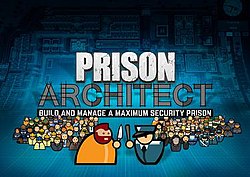

Prison Architect is the kind of game whose premise sounds like a heated parliamentary debate if you explain it to your mum. It hands you the keys to a private prison company - which, in the space of a few hours, becomes a puzzle about doors, budgets, and the human tendency to start fires when slightly hungry. The PlayStation 4 edition is a port of a long-lived PC project: an alpha launched in 2012, a full PC release in October 2015, and the console versions arriving in mid-2016 after a stint in early access and a business model that began with pre-orders and crowdfunding. By the time Prison Architect reached PS4 it had already established a reputation for deep, occasionally bleak systems and a charmingly spare visual style. On PlayStation, the experience is largely the same: you're still the architect, the warden, and the slightly uncomfortable economist of a building whose residents are not optional extras. This review assesses how well that idea survives the migration from mouse to pad, whether the game's calmly bureaucratic humour translates to the sofa, and if the console edition retains the meat of what made the PC game a BAFTA-winning persistent simulation.
Core loop: build, staff, schedule, troubleshoot. The player is hired by a fictional CEO of a for-profit prison company and asked to design and run prisons with the dual roles of architect and governor. You lay down walls, toilets, canteens and workshops, connect utilities, hire staff (guards, cooks, janitors, accountants), and try not to have a riot on a Tuesday because you forgot to schedule a shower break. Prison Architect rewards patience more than reflexes. The top-down 2D presentation hides a deep micromanagement engine. Finance matters: you earn money by housing prisoners and depending on security levels, sentences and optional programs. Recruit an accountant if you want your finances explained; the game helpfully hides certain information until you do so. Schedules are the invisible puppeteer - you don't tell prisoners to pick locks, you set 'Work' and 'Yard' and watch them interpret it creatively. Security levels are more than window dressing. Inmates arrive labelled from minimum-security citizens with bad luck to higher security offenders who bring reputations and a fatter daily income. There's a Death Row mechanic with a "clemency" percentage that can sink or save a convict depending on how well their appeals go, and you can assign protective custody or segregate troublemakers. If you're the kind of person who names rooms after famous philosophers then also rigs contraband runs, Prison Architect will reward that personality with drama. The game includes options to add simulated temperature, gang activities, extreme weather, and other toggles to increase realism and difficulty. You can decide to create a female prison, which requires nursing and childcare facilities for inmates with infants, or toggle creative mode where every problem is politely ignored and building is instant. For most players the challenge is balancing prisoner needs - food, sanitation, exercise, safety - with limited funds and an impatient CEO who will fire you for spectacular failure conditions. Progression is pleasantly flexible. Research unlocks facilities, staff and programs; DLCs add layers (a Psych Ward for criminally insane inmates, Going Green, Gangs, Island Bound and more). The Psych Ward expansion lets you handle criminally insane prisoners and introduces padded cells, psychiatrists and orderlies; regular prisoners can even become criminally insane if neglected. Rehabilitation programs, prison labour, and recidivism metrics add a moral layer: run everything like a sweatshop and you'll make money, but your prison's grade and recidivism will suffer. The systems nudge you toward thinking about outcomes rather than just income statements - which is mildly surprising, given the game originally made millions in pre-orders. Console-specific notes: Double Eleven adapted controls for the PS4 controller. The UI remains dense and information-heavy; the developers have done a solid job of mapping complex menus to sticks and buttons, but the experience is still more 'strategic paperwork' than 'pick-up-and-play.' Navigating overlays and toggling room types with a pad lacks the speed of a mouse, and there are moments where you will miss clicking the right tool and blame ergonomics rather than the 42nd policy of your prison handbook. Multiplayer was added later to the PC version, allowing cooperative prison building. On console, the single-player experience is the focus, and it's the one you'll spend the most time with. The built-in story mode acts like an extended tutorial, and there's an escape mode that flips the script, letting you attempt prison breaks if you prefer plotting over plotting out canteens. If you like emergent stories - a riot caused by a blocked shower schedule, a smuggled shank turned into an impromptu chapel, an accountant quietly balancing the books while a riot happens in sector D - then Prison Architect delivers. If you want instant cinematic drama, it will still appear, but it is more likely to arise slowly and with the bureaucratic inevitability of a poorly scheduled meal.
Prison Architect's visual approach is unfussy and efficient. The top-down 2D art is functional: icons, rooms and people are readable at a glance and the palette is muted in a way that suits the subject matter. There's an optional partially 3D mode that adds depth and perspective for those who yearn for slightly more dimensionality, but it's decorative rather than necessary. On PS4 the game runs smoothly and the art translates well to a TV. The console port includes modified controls and a UI adapted for a controller, and most of the time the transition works. Large prisons with lots of active staff and prisoners can feel cluttered, but this is a problem of complexity, not of visuals. There are moments when the UI feels like it's trying to squeeze a spreadsheet into a living-room-friendly controller layout: informative but slightly awkward. Expect to spend a little time learning where everything lives on the pad. Graphical polish is not the selling point here; the game's icons, animations and cutaway views are intentionally simple. That economy of design is part of the charm. It reads more like an efficient municipal report than a glossy simulator, which suits the deadpan humour of the experience. The art direction keeps the focus on systems and emergent storytelling rather than rendering convincing light shafts or photorealistic canteens.
Prison Architect on PS4 manages a neat trick: it keeps the rewarding complexity of the original while making the interface tolerable with a controller. The translation to consoles is not flawless - a mouse would still be my first pick for speed and precision - but the essential game is intact. This is a builder/sim that wants your patience. It wants your time to learn what a canteen schedule does to morale and what a missing toilet does to a riot probability chart. In return it gives you a steady stream of blackly comic incidents and managerial dilemmas. The game's long life on PC, its BAFTA for Persistent Game, and the dozens of DLCs released over the years are evidence that Introversion (and later Paradox/Double Eleven) created something with slow-burning appeal. On PS4, you can expect the same slow burn: thoughtful design, emergent chaos and a dry sense of humour about the absurd job you've chosen to do. If your idea of fun is designing efficient systems and then watching them unravel in amusingly bureaucratic ways, this edition is worth the price of admission. It loses a little precision without a mouse and sometimes expects you to be quietly thrilled by spreadsheets in a living room, but those are minor complaints in a game that otherwise handles its complex subject matter with intelligence. Score: 8/10 - mostly because the game does what it sets out to do very well: let you build institutions and then watch the paperwork become drama, with a stoic face and a wry little shrug.
 The Escapists on PS4
 The Escapists on Switch
 PlayStation Home on PS3
 Crash Bandicoot: The Wrath of Cortex on PS2
 Theme Park World on PlayStation
 MLB The Show 22 on Switch










 Another SquareThought Site