

 Mar 2017


If you like emotional whiplash, branching narratives and the comforting knowledge that one bad choice will probably lead to twenty pages of dialogue and a CG you didn't expect, Death or Kiss is tailored for you. 5pb.'s Re:Zero visual novel is an original-route companion to the light novels and anime: it doesn't retread the show so much as remix it. On PS4 the package ships with a promise of multiple heroine routes (Emilia, Rem, Ram, Felt, Beatrice, Crusch, Priscilla and Anastasia) and a design philosophy that leans heavily on the audiovisual strengths of the franchise. Famitsu's 30/40 suggests a solid if not revolutionary execution - and from a technical point of view that's about right: the game is competent, conservative and efficient in how it delivers narrative-driven content, with a couple of awkward design choices that will annoy the more demanding visual-novel power user.
Death or Kiss is, at its core, a branching-route visual novel. That means the obvious: most of the interaction happens through choices that unlock character-specific routes and lead to different sequences of CGs, voiced scenes and music tracks. The menu architecture centres on route selection rather than an open-world flow; you pick a heroine route and the scenario engine pulls the relevant script blocks. For players who track choice trees, the implementation is predictable and serviceable: choices are explicit, consequences are usually immediate, and there's a conventional flow from decision point to route flag to endpoint. Where the technical design merits attention is in content density and audio integration. 5pb., a studio with a VN pedigree, leans into fully voiced scenes and licensed theme music. The opening theme for the game is performed by Konomi Suzuki (who also sings Re:Zero's anime OP) and the ending is handled by Inori Minase and Rie Murakawa - this is not background elevator music; these tracks are used as presentation anchors. On PS4 the mix keeps voice and music levels distinct, and the songs are threaded into route transitions and the title screens, which helps the experience feel more cinematic than many VN releases that rely exclusively on short motifs and stings. Script-wise the game is theatrical in scope. It's an original storyline rather than an adaptation, which gives it freedom to recompose character beats. That design choice increases branching complexity because the writers must produce full arcs for multiple protagonists. From a systems engineering standpoint, that translates to a large script database, repeated assets for alternate scenes, and the need for a robust save/restore stack. 5pb. handles this in a minimal and expected way: the autosave and manual save slots behave as you'd expect (quick save, multiple slot support), and the title includes the standard VN conveniences - skip unread text, auto-play and a backlog/history so you can re-trace the lines that pushed you into despair. If you are the kind of player who likes to replay routes to map a choice tree, the interface is adequate though not especially fast for mass replays. On the subject of choices, the game doesn't attempt to hide anything behind opaque RNG or hidden stats. Routes are gated by explicit choices, and the game offers a fairly linear tree per heroine rather than a complex mesh of interdependent flags. That design skews the experience toward being narrative-focused rather than mechanic-focused - if you want finely tuned branching with emergent outcomes, you're out of luck; if you want polished, voice-acted arcs with solid production values, you're in the right place. DLC and monetization are handled in a straightforward manner: there was a pre-order bonus DLC that allowed swimsuit costume swaps, and the limited edition shipped with physical extras (soundtrack CD and an SD figure). From a technical standpoint this means the game supports runtime costume swaps (simple asset replacement) and the PS4 build is modular enough to accept extra packages without re-flashing core scripts. It's small-scale DLC, not a live-service trickle, which fits the product's design. The game's release was delayed by a week (from March 23 to March 30, 2017), an entirely expected shove for polishing assets and QA in story-heavy releases. Performance and stability: the visual-novel engine 5pb. uses is not GPU-taxing, and the PS4's hardware overhead means frame rates are irrelevant here - the important metrics are load times, audio desync and save reliability. There were no widespread reports of crashes in the game's initial cycle and Famitsu's coverage of a 30/40 suggests no catastrophic technical problems. That said, visual-novel releases often have room to improve: tighter skip/read acceleration, faster skip-to-next-choice, and more aggressive preloading of voice assets would have made the experience feel snappier during repeated replays. Accessibility and QA: voice toggles, text speed, and font scaling are present in most 5pb. visual novels, and Death or Kiss exposes reasonable options for these. There's no mention of a comprehensive localization package in the source material (this was a Japan-focused release), so non-Japanese players relying on fan patches or later localisations will need to factor in translation latency. Famitsu's 30/40 suggests the writing, audio and presentation passed a Japanese media sanity check, which is useful if you consider the game's target audience first and foremost domestic fans.
Graphically the game does what a Re:Zero title should: high-quality character portraits, event CGs and slick interface dressing that echo the anime's art direction. Shin'ichirō Ōtsuka's designs inform the assets - the character art and event illustrations are the headline visuals, and the UI is designed to frame those CGs rather than compete with them. Expect plenty of close-ups, layered sprites and occasional full-screen art when the script calls for it. From a technical presentation standpoint, the PS4 build uses static and pre-rendered art rather than real-time 3D; that keeps file sizes predictable and avoids runtime rendering variability. The trade-off is obvious: you get beautifully composed frames but no dynamic camera work or real-time lighting effects. That's a deliberate choice, and for a VN that prioritises illustration and voice, it's the right one. If you come to the game expecting console-level animation depth, you'll be disappointed; if you want high-resolution character art, crisp typography and clean menu transitions, the package is tidy and competent. Another subtle technical area is the handling of music and voice overlap. The sound designer balances long-form opening songs and route-specific stings with dialogue playback. On PS4 this was executed without the jarring ducking or clipping that plagues lower-budget releases. The included soundtrack on the limited edition underscores the production's focus on audio assets as first-class citizens.
Death or Kiss is a textbook, well-produced visual novel for fans who want more Re:Zero content and who value voiced routes and polished presentation over experimental mechanics. From a technical perspective it's a conservative but competent build: clear branching architecture, solid asset management for costumes and DLC, proper audio integration and a stable PS4 deployment. The game's limitations are also technical design decisions - route linearity, lack of emergent state systems, and a presentation model that relies on high-quality static art rather than dynamic rendering. If you're a Re:Zero fan the game is comfortably worth a look: it gives you new interactions with familiar characters, high production audio, and the collector's trinkets that make limited editions fun. If you're a VN purist seeking cutting-edge branching complexity or engine-level innovations (real-time effects, procedural outcomes, or a dense, interlinked flag system), Death or Kiss plays it safe. Famitsu's 30/40 feels appropriate: competent, polished in places, and conservative in ambition. On PS4 it's a solid narrative delivery engine - like a dependable but slightly predictable butler who will faithfully serve your emotional roller-coaster, then politely hand you a soundtrack CD and a figurine afterwards.
 Fantasy Life i: The Girl Who Steals Time – Nintendo Switch 2 Edition on Switch 2
 Project Awakening on PS4
 Nobody Saves the World on Xbox Series X/S
 Tintin: Destination Adventure on PlayStation
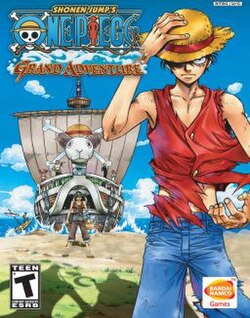
 One Piece Grand Adventure on PS2
 Taiko no Tatsujin: Don to Katsu no Jikū Daibōken on Switch
 Taiko no Tatsujin: Dokodon! Mystery Adventure on Switch
 Robotics;Notes on PS3
 Memories Off Historia Vol. 1 on PS4
 Chaos;Head Noah / Chaos;Child Double Pack on Switch
 Robotics;Notes Elite on Switch
 Dunamis 15 on PS3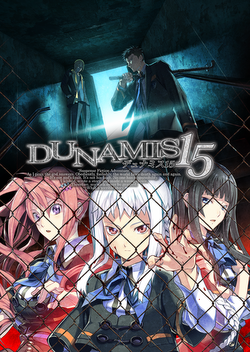










 Another SquareThought Site