

 Aug 2019
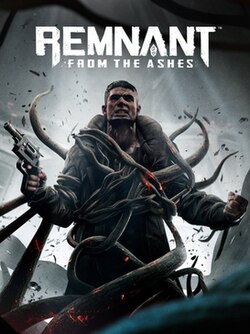

In the halcyon days of glossy paper and painfully earnest editorial columns, a game that could make you swear at a TV in three distinct languages was considered a badge of honour. Remnant: From the Ashes arrives on PS4 with precisely that ambition: to be frustrating, rewarding and occasionally bewildering, much like the gaming scene of the 1990s - but with better shaders. Developed by Gunfire Games and running on Unreal Engine 4, Remnant braids third-person shooting with action-RPG systems and a stiff nod to the 'soulslike' school of hard-won progress. If you come looking for simple comfort, you'll likely leave with an ugly trophy case of grievances and triumphs in equal measure. If you come wanting to be tested, you'll find a world that will insist you earn every breath.
Remnant is a curious hybrid. The combat borrows the measured brutality of the Dark Souls lineage - careful movement, punishing bosses, the joy of turning the tide through pattern recognition - then straps two firearms and a melee weapon on that back and tells it to stop being melodramatic. You may carry a main weapon and a sidearm, plus melee; guns range from shotguns and hunting rifles to machine pistols and sniper-class rifles. Weapons accept 'mods' that grant special abilities (teleportation among them), allowing players to tinker with loadouts in ways that frequently change the feel of an encounter. The structure is deliberately slippery. The game sends you to several distinct worlds through interdimensional rifts: Earth, the ruined Rhom, the swampy Corsus and the forested Yaesha. The map layouts, events and enemy distributions are partially randomized, which means no two runs play out exactly the same. There remains a set story thread - you are a survivor intent on ending the Root at its source, tracking down Ward 13 founder Ford, and ultimately confronting the Dreamer - but the path to that conclusion is variegated. Progression is rooted in scavenging materials to upgrade weapons and armour, unlocking trait points to nudge your character's stats, and discovering new gear by besting monstrous guardians and beasts. Co-op is central to Remnant's DNA. Up to three players can team up, and the difficulty scales accordingly. This is not a simple damage-number increase: the game rearranges encounters and even changes which bosses you meet, an oddity that makes co-op feel like a complementary campaign rather than an easy carry. Loot sharing is handled with a peculiar courtesy: joining players get the same loot as the host, but when they return to their own world they may find their personal world differs in enemies and events and must chase story beats anew. Death in Remnant is forgiving in the sense that you do not lose items or skill points - you return to the last checkpoint - yet each respawn can rewire the challenge by altering enemy counts and types. This maintains tension without the soul-crushing penalties many 'soulslike' titles favour. Where the game stumbles is in its loot and gear loop. The gunplay is satisfying when the encounter design is firing on all cylinders: clever boss telegraphs, environmental cover that matters, and weapon mods that enable spectacular saves. But the broader equipment system sometimes feels undercooked. Gear variety can be thin and upgrades, while mechanically meaningful, do not always carry the dramatic payoff of a truly great loot title. Critics noted this imbalance: the combat often soars while the loot meta can feel like an afterthought. The addition of DLC - notably Swamps of Corsus and the Subject 2923 expansion - patched in new systems, a roguelike-style survival mode and more gear to chase, which helped shore up the late-game appetite for variety.
Visually Remnant presents a grim, baroque apocalypse where each world has its own flavour. Rhom feels like an empty monument to hubris, Corsus is sodden and nauseous in the best way, and Yaesha offers a leafy, sometimes eerie contrast. Running on Unreal Engine 4, the game manages atmospheric set pieces and intimidating boss designs that often read like living nightmares. On PS4 the textures and particle effects are competent rather than jaw-dropping; the lighting and creature designs do the heavy lifting more than raw fidelity. At times the character models and armor pieces lack the polish of AAA blockbusters, but Remnant leans on mood and composition - fog-choked swamps, towering root-beasts, and the odd grotesque silhouette bounding out of the dark - to keep the screen interesting. Performance on console is generally stable, but the game's ambition for dense, multi-enemy encounters can introduce hitching or frame drops on older hardware. The score and audio design, composed by Rob Westwood, complement the visuals with tense rhythms and sparse melodies that underline the sense of isolation. In short, Remnant's graphics are most impressive in how they construct atmosphere rather than in technical showboating; the game looks like a world that has been carefully, grotesquely curated rather than cosmetically perfected.
Remnant: From the Ashes is not the straightforward heir to any single series. Gunfire Games mixed the austere discipline of 'soulslike' design with third-person shooting and a randomized-world conceit, and the result is an experiment that works more often than it doesn't. Boss fights and core combat feel excellent, the co-op architecture encourages shared misfortune and victory, and the randomized elements give the game replayability that many linear action-RPGs lack. Shortcomings remain: the loot loop can feel thin, the presentation is moodier than glossy, and some systems cry out for more depth. When the game is on, it produces moments of real elation - the sort you used to write about in longform between adverts for memory cards and page three letters. For a 1990s-minded evaluator - one who respected difficulty, design intent and the occasional rough edge - Remnant earns respect. It's a title that demands patience and rewards learning; if you're fond of tough bosses, cooperative mayhem and atmospheric worlds that slowly reveal their logic, you should find it a worthy challenge. For those who require a polished loot treadmill or cinematic polish above all, it may chafe. Sales and critical response suggest many players found its rough-hewn charms irresistible: by late 2021 the game had sold over three million copies, and reviewers generally responded favourably. On PS4, Remnant stands as a confident, occasionally maddening reminder that games can still make you work for the applause - and, for my money, that's worth an 8 out of 10.
 Remnant: From the Ashes on Switch
 Monster Boy and the Cursed Kingdom on PS5
 Combat Elite: WWII Paratroopers on PS2
 Onimusha: Dawn of Dreams on PS2
 Crimson Sea 2 on PS2
 Tom Clancy's Rainbow Six: Vegas on PS3
 Darksiders II: Deathinitive Edition on PS4
 Chronos: Before the Ashes on Switch
 Darksiders: Warmastered Edition on Switch
 Chronos: Before the Ashes on PS4










 Another SquareThought Site