

 Aug 2025


If you grew up thinking neon windbreakers and shoulder pads were a reasonable life choice, Retro City Rampage is the game equivalent of that mixtape your dad made-equal parts nostalgic earworm and slightly suspicious taste. Vblank Entertainment's love letter to 1980s and 1990s pop culture smashes Grand Theft Auto-style open-world mischief into a gloriously lo-fi 8- and 16-bit aesthetic. On PS4 the game rocks the DX updates, which polish the edges but stubbornly keep the sprite-y charm and ridiculous one-liners intact. You play The Player, a hired thug whose life of crime is interrupted by a time-traveling phone booth, Doc Brown parodying scientists and a plot that hops through decades and video game genres like it's speed-running nostalgia. If you like your chaos served with chiptune backing tracks (Jake Kaufman, Leonard J. Paul and Matthew Creamer contributed-yes, the soundtrack is that good) and your pop-culture references dense enough to be breathable, this is for you.
Retro City Rampage borrows the sandbox shorthand of GTA-missions, vehicle hijacking, police chases-but dresses it in an outfit that looks suspiciously like it raided every toy box from 1985. The game is primarily top-down, so imagine GTA's early days if they were filtered through an NES cartridge that took a crash course in satire. Story missions send you scuttling through Theftropolis while challenge levels and mini-games suddenly swap the perspective to platformer, shooter or other retro forms, usually with pleasingly absurd rules. Vblank reportedly planned roughly 50 story missions and about 30 challenge levels during development, which gives a decent chunk of content. The pacing can feel patchy-some missions are a sprint of ingenuity and nostalgia, others are filler that overstays its welcome-but overall there's variety. The weaponry is gleefully excessive: basic melee and firearms escalate quickly into cartoonish mayhem, and the police response system is satisfyingly punitive in a way that encourages you to experiment with getaway routes, or simply run over everything in sight and call it modern art. Free Roaming Mode is where Rampage shines for people who like to cause trouble with a strict set of aesthetic rules. You can unlock playable cameos-Super Meat Boy, Commander Video, even Minecraft's Steve-so the sandbox occasionally feels like a crossover episode with every indie game you secretly respect. There's a prototype ROM mode, ROM City Rampage, which is an actual NES-styled port emulated within the game. If you like the idea of inception but with pixels and fewer therapy sessions, this feature is delightful. Controls are serviceable on PS4. They never quite match the fluidity of modern 3D open worlds-this is deliberate-and occasionally the top-down camera and tight corridors lead to collisions that feel like bad parking in video game form. Some reviewers found moments of frustration in mission design and collision detection, and they weren't wrong. But most of the time Rampage's gameplay loop-complete mission, unlock toy, blow up signage-delivers honest fun. It's the kind of game where failing spectacularly is often its own reward because the spectacle is half the joke. Underneath the jokes is a project that began as a homebrew obsession by Brian Provinciano. The developer built NES tools, toyed with Grand Theftendo (his Grand Theft Auto tribute), and over years expanded the idea into a full project. That single-developer, sweat-and-pixel-backstory is baked into the game; you can sense the long tail of love and obsession in the small touches, the obscure references, and the lovingly assembled chiptune soundtrack. If you're the kind of player who picks apart where an Easter egg came from, Rampage is that museum with a crazy curator who also occasionally robs the gift shop.
Visually, Retro City Rampage is an unapologetic pastiche. The PS4 version benefits from the DX polish: smoother animations, cleaner transitions and some visual niceties that make the 8-bit aesthetic feel less like a constraint and more like a stylistic decision. The game offers 16 graphical filters that simulate everything from old CRTs to crunchy monochrome systems, which is a nerdy playground for anyone who likes to pretend their modern console is actually an antique television. The sprites and tiles are lovingly detailed; characters express themselves in the terse language of limited pixels, and that economy of expression becomes part of the humor. On PS4 the frame rate is stable and the screen looks pleasantly crisp while still preserving the chiptune-era ambience. If you want modern fidelity, you're in the wrong decade; if you want modern polish on retro designs, DX squeezes out the best of both worlds. One quibble: sometimes the top-down perspective and small sprite sizes can make important objects blend into the background during hectic sequences. That's not usually a technical failure so much as a design quirk carried over from the retro homage, but it can make a clutch moment feel like searching for a pixelated needle in a haystack. Still, the visual charm far outstrips the occasional readability hiccup.
Retro City Rampage on PS4 is a cheeky, energetic romp for anyone who still gets flustered remembering the good old days of cartridges and dial-up. It's not perfect-pacing, occasional control quirks and mission bumps are real-but its strengths are wholehearted: a brilliant chiptune soundtrack, a gaudy museum of pop culture jokes, and a sandbox that rewards mischief. Vblank's one-developer origin story and the sheer number of lovingly placed references make it feel like a crafted mixtape of video game nostalgia. If you're looking for a documentarian-quality tribute to retro gaming that also lets you drive a van through a parade of neon-clad nonsense, Retro City Rampage is a charming guilty pleasure. Score-wise it sits comfortably in the 'pretty good' zone: not revolutionary, but consistently fun. Consider it a must-play for retro heads and anyone who enjoys open-world shenanigans with a healthy side of pixelated irony. Also, play the soundtrack. You'll be humming it for hours, which is both a compliment to the composers and a minor warning that you may develop an addiction to bleeps and boops.
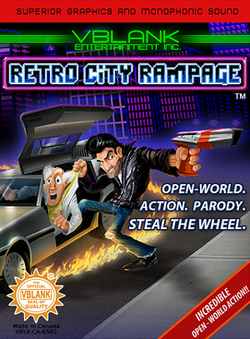
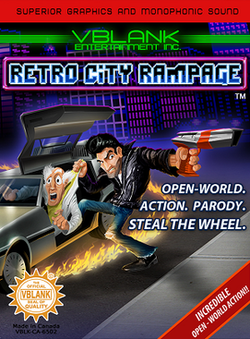 Retro City Rampage DX on Switch
 Retro Game Challenge on DS
 Tintin: Destination Adventure on PlayStation
 One Piece Grand Adventure on PS2
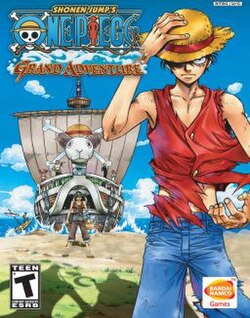 Taiko no Tatsujin: Dokodon! Mystery Adventure on Switch
 Onimusha: Dawn of Dreams on PS2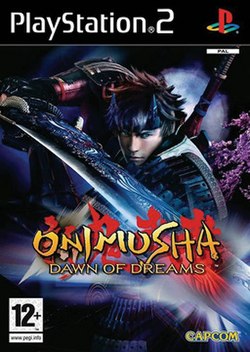
 Shakedown: Hawaii on PS3










 Another SquareThought Site