

 Sep 2023


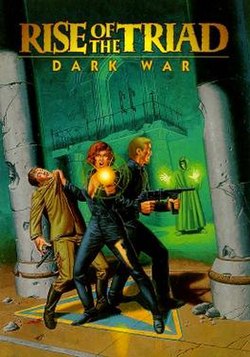
Rise of the Triad's Ludicrous Edition drops onto PS4 like a boomerang of retro violence: old-school level geometry, digitized goons, and more giblets than common sense allows. This remaster wears its 1995 DNA proudly - it's a Wolfenstein-era engine given a modern polish by Nightdive Studios, with toggles to flip between the original soundtrack options and Andrew Hulshult's newer remixes. If you expect a hand-holding blockbuster, you'll be sad; if you expect a blast-from-the-past FPS that asks you to actually learn the map and earn your survival, you'll likely grin, grit your teeth, and then complain that the enemy just stole your gun. This review digs into the part of RotT that matters most if you play to get better: the challenge, the precise skills it demands, and the merciless little traps the level designers put in just to hear you swear.
At its core, Rise of the Triad is still a key-hunting, corridor-slashing first-person shooter, but don't let that make you think it's shallow. The game expects players to trust their eyes, memory, and finger dexterity. Early on you pick from five characters - each with distinct hit points, speed, and accuracy - which already forces a decision that matters. You can be the speedy glass cannon or the durable slowpoke; your choice changes how you approach encounters. That isn't window dressing: speed affects how you time jumps on launch pads, accuracy affects how forgiving the game is when you try to land headshots on dodging enemies, and hit points determine whether you play aggressively or methodical. Map literacy is the first skill RotT punishes you for lacking. Levels are mostly linear, but the engine supports elevation, level-over-level moments, and secret passages. Keys and multi-exit maps hide behind destructible ornaments, shattered glass, and dimmable lighting. If you sprint around like a headless robo-brawler, you will miss jump-pad arcs that are required to reach ledges and power-ups. The jump pads themselves are tiny tests of movement skill: stand on one and you hop vertically; run at one and you make a long, physics-lite leap. Learning those angles - and remembering where the power-ups and missile caches live - turns a frustrating death loop into a satisfying 'aha' run. Combat requires more than trigger worship. Weapons are split into infinite-ammo bullet guns, limited missile projectiles, and limited magic weapons. You can carry only four weapons at once (all three bullet guns plus either a missile or a magic weapon), which forces smart loadout management. That scarcity means resource management is a genuine survival skill: knowing when to conserve missiles, when to swap to dual pistols, and when to go all-in with a magic blast against clustered foes can be the difference between a tidy completion and an embarrassing replay. The enemy behaviors add spice and chaos: some baddies will beg for mercy, fake death, dodge shots, set ambushes while lying on the floor, throw nets to trap you, and even pilfer your weapons. You'll need situational awareness, pattern recognition, and the reflexes to punish a dodger with a quick alternate attack. Secrets and bonuses reward thorough play. Collecting all missile weapons in a level, consuming the healing items, or finishing with low hit points unlocks bonuses at stage end - basically the game's way of scoring how cleverly (or masochistically) you played. The level designers were not shy about tucking secrets behind breakable objects and lighting puzzles; shooting a couple of firepots dims an area and often reveals new paths. That sends a clear message: look, prod, and think like a hunter, not a tourist. The multiplayer suite - COMM-BAT - is a relic in the best way: up to eleven players, nine modes (including deathmatch, capture-the-flag, and several inventive tag-like modes), and tweakable options like whether health refills or missile weapons spawn. Playing on PS4 you'll still need to bring teamwork, map knowledge, and the chaos control skills that make old-school multiplayer so lethal. If you like your multiplayer merciless and unpredictable, you'll find company here. If you get the Extreme Rise of the Triad levels (or DLC mind-benders in the Ludicrous Edition), expect a steeper spike in difficulty. These maps were historically noted as noticeably harder due to clever editor tricks - which means platforming precision, trap prediction, and puzzle patience are tested at higher levels. In short, RotT remastered is a challenge loop that rewards learning: map memory, controlled aggression, weapon/equipment economy, jump-pad mastery, and reading enemy quirks.
Graphically, Ludicrous Edition doesn't try to pretend it's a modern photorealistic shooter - it's a respectful restoration of a 90s aesthetic with modern flourishes. The original Wolfenstein-era engine constraints (90-degree walls, uniform floor and ceiling heights per map) are still visible in level geometry, but Nightdive's enhancements add elevation, panoramic skies, dynamic lighting, fog, and breakable glass to give the world depth without betraying its retro look. Digitized enemy actors retain that wonderfully awkward '90s vibe - you can tell they were friends and employees in costumes - which is part of the charm. There's a toggle to swap between the original OPL/MIDI soundtrack and Andrew Hulshult's remix from the 2013 remake, and that small audio option dramatically changes the mood. On PS4 the Ludicrous Edition runs crisply and keeps the old-school visuals readable: enemies pop out, gibs (including the gloriously labeled "Ludicrous Gibs!") remain extra dramatic, and destructible set-pieces still reward curiosity. If you want glossy modern shaders, this isn't it; if you want polished retro, it looks great.
If you're approaching Rise of the Triad Ludicrous Edition on PS4 expecting modern conveniences and a forgiving learning curve, you'll be mildly annoyed. If you approach it as a retro challenge that rewards skill, memory, and creative problem solving, it's a joyful masochist's playground. The remaster keeps the original's core design - key hunts, jump-pad platforming, weapon triage, and unpredictable enemies - while adding enough modern polish to make it comfortably playable on a console. Skills you'll sharpen: map memorization, movement precision, resource management, adaptive tactics, and multiplayer chaos control. It isn't for everyone, but it does exactly what it promises: bring a brutal, clever classic to a modern system without softening its teeth. Recommended for players who like their shooters with a side of stubborn learning curve and an appetite for "Ludicrous Gibs!"
 Monster Hunter Stories 2: Wings of Ruin on Switch
 Monster Hunter Rise on Switch
 Warhammer 40,000: Boltgun 2 on Xbox Series X/S
 PixelJunk Shooter 2 on PS3
 Turok: Dinosaur Hunter on Switch
 Primal Carnage: Extinction on PS4










 Another SquareThought Site