

 Aug 2015


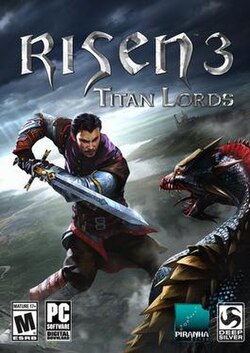
Risen 3: Titan Lords Enhanced Edition arrives on PS4 wearing the slightly scuffed hat of a classic European RPG and the slightly stained coat of a game that never really learned to iron. You play a Nameless Hero whose soul has been stolen by shadowy forces - which is convenient, because it gives the game an excuse to make you fight with one hand tied behind your back, metaphorically speaking. The Enhanced Edition waved at console players from the PlayStation Network on 21 August 2015, promising a Piranha Bytes slice of open-world, choice-heavy role-play. Critics were mixed (the PS4 edition averages around a 51/100 on Metacritic), but if you enjoy a world that rewards patience, experimentation and the occasional stubborn save-scumming, this one still has teeth. This review zeroes in on the parts of Risen 3 that matter most if what you want is a challenge: combat, resource and party management, quest choices that change difficulty more than morality, and boss fights that feel like small exams in adaptation. If you're the sort of player who treats every enemy as a puzzle and every companion as a fragile social experiment, read on. If you demand hand-holding and tutorial ribbons, Risen 3 will make you mutter naughty things at your TV.
Risen 3 does not apologize for making you work for things. The first, most obvious layer of challenge is combat. Piranha Bytes' action-RPG combat sits somewhere between the clunkier Souls-likes and the cinematic button-smashers: it rewards timing and positioning more than flashy combos. Enemies telegraph attacks with a rhythm you must learn, and many encounters are distinctly "learn the pattern, then punish the pattern" affairs. Expect to feint, block and dodge rather than stand in place slashing like a deranged lawnmower. What makes fights meaningful is variety. The Shadow invasion spawns a menagerie: shadow minions, demonically-possessed sea creatures, undead captains with ghostly parries and the occasional crystal Titan that shifts the rules entirely. Each enemy type nudges you to use a different toolset-melee, ranged, or sorcery-and the Enhanced Edition's roster includes bosses that force you to swap tactics mid-battle. The Nekroloth fight is a particular highlight of mechanical creativity: you spend chunks of the battle outside your own body, trying to disable a Titan while your corpse is vulnerable. That back-and-forth demands situational awareness and a willingness to manage two combat states at once. Beyond the knuckles-and-spells stuff there's a second tier of challenge in RPG systems. The soul mechanic isn't just window dressing. Your soul value (pure vs. demonic) isn't a cosmetic meter - it's a gameplay lever. NPC loyalty, certain dialogue options and even which companions tag along happily are all influenced by where your soul sits on the moral thermostat. That means choices have teeth. If you want a crew that stays loyal and helpful, you need to think not only about what loot to grab but how the world sees you after each ruthless murder or saintly save. Balancing short-term power grabs with long-term loyalty becomes a continuous, low-key strategic problem. Inventory and resource management are also part of the gauntlet. Risen 3's world is generous but not indulgent. Ammunition and consumables are finite enough that you can't spam your way out of tough spots forever. Crafting and equipment upgrades exist, but the real skill is in scouting-knowing which fights to pick, when to retreat and how to use terrain to turn numbers into advantage. On higher difficulty levels (or just in badly anticipated thunderstorm ambushes), the game will chew through your potions faster than you think, and that'll force a cold-blooded reassessment of risk. Quests are rarely linear tutorials; they are branching little ecosystems. You will be asked to recruit sorcerers, assault fortresses, and decide whether to ally with pirates or inquisitors. Those decisions affect who helps you later and thus how difficult the late-game siege on Skull Island feels. If you burn bridges early, you might face the final act with fewer hands on deck-easier to role-play as a tragic anti-hero, harder to clear the battlefield. Skill requirements for success are mercifully straightforward to list: patience to learn enemy cues, situational awareness to manage spirit/body phases, resource discipline to avoid being caught underprepared, and an ability to read social consequences so your party composition doesn't implode. Add a dash of adaptability-switching from sword to spell to stealth when the fight demands it-and you have the Risen 3 playstyle. If you favor twitch-reflex arcade combat above learning and planning, Risen 3 will feel like homework. If you enjoy building character arcs and seeing consequences unfold, it's more like a challenging, sometimes flaky, but ultimately rewarding class.
Graphically, Risen 3 is functional with personality, not a show-off. Reviews called out 'muddy' visuals on the original release and the Enhanced Edition on PS4 cleans up some edges but doesn't turn the art direction into photorealism. Textures and draw distance still betray the game's mid‑generation DNA; fog and murk are often used where sharper detail would have been nicer. That said, the environments-pirate coves, crystal-rifted ruins and the brooding Skull Island-have a consistent tone. The shadow creatures look suitably nasty, and some boss designs, particularly the spectral and Titan forms, are memorable despite the technical roughness. In practice this means you shouldn't pick Risen 3 for a graphics flex on social media. The payoff is in atmosphere and variety: the game does a good job of making places feel distinct and dangerous even when the lighting and texture fidelity aren't on par with late-gen releases. If you can forgive a slightly grainy coat of paint, the Enhanced Edition delivers an agreeable visual stage for its mechanical challenges.
Risen 3: Titan Lords Enhanced Edition is a grab-bag of stubborn charms and rough edges, an RPG that asks you to earn your victories and live with the consequences. Its combat isn't flashy, but it matters: timing, pattern-reading and tactical swaps are rewarded. The soul/loyalty system layers choice over consequence in a way that actually changes how hard your life gets, which is the kind of design I respect. The PS4 port cleans up a little but won't win any beauty contests-this is a game for players who want systems and stakes more than polish. If you're into methodical, consequence-heavy RPGs that test your planning and adaptability, Risen 3 will scratch that itch. If you want tutorialized, streamlined action with a cinematic sheen, look elsewhere. My score lands at a 6 out of 10: not pristine, not for everyone, but worth a try if you enjoy a stubborn RPG that will make you learn - and sometimes laugh - as you keep coming back to beat it at its own game.
 PS5 Disc Console vs. PS5 Digital Edition: Which One Should You Get?
 Tomoyo After: It's a Wonderful Life on PS3
 Combat Elite: WWII Paratroopers on PS2
 Onimusha: Dawn of Dreams on PS2
 Disney's Chicken Little: Ace in Action on PS2
 Action Man: Operation Extreme on PlayStation
 Risen 2: Dark Waters on PS3
 ELEX II on PS5
 ELEX on PS4
 Risen 3: Titan Lords on PS3
 ELEX II on Xbox Series X/S










 Another SquareThought Site