

 Jan 2015


ROCKETSROCKETSROCKETS is a compact, unapologetically twitchy 2D arena combat game from Radial Games that arrived in 2015 and places you in control of a single rocket in a small, geometry-driven battlefield. The stated objective is simple: score a three-point lead over your opponent. From a technical perspective the game is a study in minimalism applied to competitive systems design - sparse visual fidelity and pared-down rules combine to prioritize responsiveness, readability, and emergent aerial choreography. It's not trying to be a sprawling simulator; it's trying to be a tight little mid-air ballet where latency, hit detection, and consistent physics matter far more than texture detail.
At its core ROCKETSROCKETSROCKETS is about control systems and moment-to-moment decision-making. Each player pilots a rocket in a 2D plane, maneuvering with thrust and brief bursts to create arcs, dodges, and lead shots. The studio's design choice to keep the action in two dimensions is a technical one as much as an aesthetic one: it constrains the state-space, which simplifies both player intent recognition and deterministic physics behavior. For players who care about the mechanical underpinnings, that means the inputs map predictably to motion - you're not wrestling with hidden third-axis corrections or ambiguous depth cues, which pays dividends in skill expression. The scoring rule - first to build a three point lead - is a clever systems-level decision. It forces dynamic risk/reward assessments: do you press to extend a lead and expose yourself, or play conservatively to retain a margin? Because the arena matches are short and spikes in momentum can be immediate, that scoring mechanic amplifies comeback potential without padding match length. Power-ups and environmental variety are the two main modifiers to the base movement-and-fire loop. Power-ups act as transient state changes that can swing skirmishes, and different arena layouts emphasize either maneuvering or line-of-fire control. From a balancing perspective these elements are well-implemented: they're binary enough to be readable in high-intensity moments, but impactful enough that their placement and timing change tactical choices. AI opponents and human players populate the same rule set, which invites a technical comparison between scripted behavior and human unpredictability. The AI is serviceable for learning rocket kinematics and practicing positional play, but the emergent skill ceiling is realized against humans, where micro-feints and frame-level dodges matter. Given the game's emphasis on precision, collision and hit detection are crucial. The developers' approach appears to favor tight hitboxes and low ambiguity; projectiles and contact interactions resolve cleanly, which avoids the frustration of 'did-I-hit-that-or-not' that plagues many action games. Control fidelity is where this title shines. Because the visual design strips away gratuitous effects, input feedback and positional clarity are emphasized: you can see threats and your escape arcs in real time. That feels like a deliberate engineering choice to keep network and local play equitable. The game supports both single-player and multiplayer modes; while the documentation here doesn't exhaustively describe online architecture, the underlying rule set and low-resource 2D representation naturally reduce bandwidth requirements and make frame-synchronous states easier to reconcile. Whether you're playing locally on a single console or across the internet, the design leans toward predictable, deterministic interactions rather than physics chaos. One trade-off of the game's minimalism is content depth. Matches are intense and mechanically rich, but the variety comes mostly from player skill differences and ephemeral arena effects rather than a deep progression system. For players who enjoy optimizing inputs and learning match-ups, that's a feature. For players expecting a long solo campaign or a constantly-updating meta, it can feel light. Technically-minded players will appreciate the clarity of systems: movement is the primary resource, environment and power-ups are modifiers, and scoring is a finite-state victory condition that keeps sessions tight.
Graphically ROCKETSROCKETSROCKETS leans into a functional, almost diagrammatic style. The 2D assets are deliberately spare - think clean shapes, high-contrast palettes, and minimal particle clutter. That's not an indictment; it's a performance and clarity choice. By avoiding heavy texture work and complex lighting, the game reduces GPU load and frame variance, which benefits input-to-display latency and visual consistency. Small arenas with bold color-coding aid quick visual parsing: allies, enemies, power-ups, and hazards are easy to distinguish at a glance, even when chaos erupts. From a technical artistry standpoint, this approach is elegant. UI elements are unobtrusive, and the HUD focuses on essential information - score, power-up status, and basic timers - leaving the playfield visually accessible. Effects are used sparingly but effectively; smoke trails, small explosions, and velocity streaks convey motion without masking hitboxes or obscuring targets. Because the game is 2D, anti-aliasing and resolution scaling are less of a concern than in 3D titles, and the net effect is a consistent, readable image that supports precise play. On PS4 specifically, the minimal rendering demands of the title are an advantage. The platform's hardware headroom means the game can prioritize a stable frame-rate and smooth input handling over high-fidelity textures. That results in gameplay that 'feels' fast: rockets respond crisply, animations don't stutter, and collision responses resolve without visible frame hitching. If you're the sort of player who internalizes mechanical timings to the frame, this clarity matters more than pretty pixels. There are, however, limits to the presentation. The art direction is intentionally minimalist, and some players may find the visual palette too austere after long sessions. Also, because much of the game's identity resides in its systems rather than cinematic spectacle, the graphics do not provide a long-term hook by themselves. They are tools that serve competitive readability - nothing more, nothing less.
ROCKETSROCKETSROCKETS is a tightly-designed, technically coherent arcade arena where mechanical precision and predictable systems are the reward. The technical decisions - 2D constraint, simple but unambiguous hit logic, and minimal graphics - are all in service of a single goal: a responsive, high-skill multiplayer experience with short, explosive matches. That makes it excellent for local competitive sessions or short online bouts where player ability, not spectacle, determines the outcome. The weak points are by-products of those same choices: limited solo content, a sparse aesthetic that won't impress fans of visually ostentatious titles, and relatively shallow meta progression beyond pure player skill. If you are the kind of person who enjoys dissecting control loops, optimizing input-response, and savoring the nuance of a well-tuned physics toy, ROCKETSROCKETSROCKETS is an efficient delight. If you want narrative campaign breadth or high production visuals, it won't scratch that itch. On technical merit alone - control fidelity, clarity of systems, and consistent performance on platforms like the PS4 - it's a solid package. For those reasons it earns a 7.5 out of 10: an accomplished, focused design that knows exactly what it wants to be and executes that vision with pleasing mechanical precision.
 Rocket Arena on PS4
 Kerbal Space Program: Enhanced Edition on PS5
 Disney's Chicken Little: Ace in Action on PS2
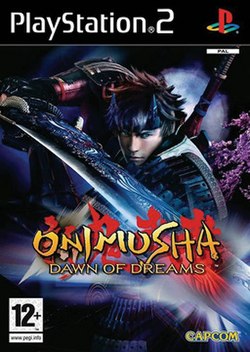
 Onimusha: Dawn of Dreams on PS2
 Action Man: Operation Extreme on PlayStation
 Nobunaga no Yabou Online: Haten no Shou on PS2










 Another SquareThought Site