

 Jun 2021
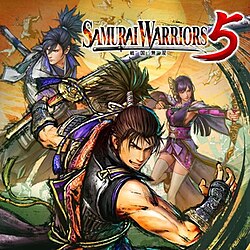

Samurai Warriors 5 is a reboot that decided to stop trying to be every samurai story at once and instead zero in on the dramatic magnet that is the Honnō-ji Incident. The result is a leaner Warriors game with a clean art direction that channels traditional Japanese painting, a trimmed roster (37 playable characters instead of the bloated 55), and a sharper narrative focus on Nobunaga Oda and Mitsuhide Akechi. If you came here expecting a sprawling encyclopedia of Sengoku carnage, you'll still get hundreds of faceless soldiers smashed beneath your blade-Omega Force didn't change the button-mashing party-but if you care about character beats, this entry actually asks you to pay attention to who these historical (and fictionalized) figures are and how their arcs lead to one of the most infamous betrayals in Japanese history.
On the surface Samurai Warriors 5 plays like a comfortable pair of old sandals: familiar, reliable, a little dusty. The usual mission structure-clear the stage objectives, slice a mountain of mooks, kill the commander-remains intact. What freshens the familiar is a trio of mechanical flourishes that shape how characters feel in combat. Hyper Attack lets you vault long distances while attacking, which turns the battlefield into an arena for dramatic entrances and escape-of-the-century plays. The Ultimate Skill system adds personality: different augments let characters extend combos, stun opponents, regenerate the Musou gauge, or unleash concentrated barrages. These are small but meaningful changes that let each character play distinct without inventing an entirely new genre. Where the game really tries to be interesting is the way gameplay ties into character design and storytelling. Nobunaga and Mitsuhide-both presented with youth and mature versions-aren't just palette swaps. Their move sets and Ultimate Skills feel like narrative shorthand: Nobunaga's fluid, commanding combos evoke an imposing unifier who bulldozes opposition, while Mitsuhide's kit often emphasizes precision and control, hinting at the strategist simmering under a calm exterior. The trimmed roster works in service of these arcs: shaving numbers down to 37 (21 returning faces, 16 newcomers, and roughly 10 supporting characters who aren't playable in Story Mode) allows more screen time for the main players. Supporting characters exist, but many are reduced to vignettes-cameos with a pose and a single scene-so your emotional attachment has to be built on fewer, stronger relationships instead of dozens of half-baked subplots. Story Mode is saved from being a glorified museum tour by the chosen scope. Restricting the timeline to events leading up to the Honnō-ji Incident concentrates dramatic energy. Noble ambitions, shifting loyalties, and small interpersonal slights are given room to breathe. This isn't a documentary; Omega Force leans into melodrama and character beats, and that's fine-some arcs land with satisfying payoff while others are deliberately ambiguous, which suits the history's messiness. The supporting cast often feels like the scaffolding for Nobunaga and Mitsuhide's arcs rather than the main attraction. That's a design choice: you get depth over breadth. Multiplayer and classic Warriors mechanics remain, so there's a satisfying loop for completionists: level up characters, unlock new weapons and skills, and replay stages to see different perspectives. The cost of that replay value is a few characters' shoehorned presences and the occasional thin dialogue scene, but when the central friendship-turned-betrayal is handled well, you'll forgive a lot of padding.
Samurai Warriors 5's visual identity is the game's confidence trick: it makes button-masher chaos look formal and composed. The developers leaned into an art style that resembles traditional Japanese painting, and it's a surprisingly effective coat of lacquer. Characters are redesigned across the board-most of the cast received brand-new looks, with only a few holdovers like Katsuyori Takeda keeping their older uniforms-so the game feels fresh without pretending to be historically documentary accurate. Nobunaga's presence is framed pictorially, often resembling a figure from an ukiyo-e print stomping through a modern action scene, and that visual juxtaposition helps frame his arc as something operatic rather than purely historical. Technical execution on the PS4 is competent: character models are expressive during cutscenes and punchy in combat, though you'll still see the odd texture pop or framerate wobble when the screen fills with enemies. The Katana Engine handles sprawling battles well, and the decision to go for stylistic fidelity over photorealism keeps performance stable while also giving cutscenes a painterly sheen. The soundtrack mirrors this aesthetic shift by leaning more on rock and orchestral tracks while keeping traditional Japanese instruments intact; it underscores emotional highs and lows without becoming obnoxious background adrenaline.
Samurai Warriors 5 is not a reinvention of the Warriors formula, nor does it try to be. It's a focused reboot that trades roster bloat for greater character clarity and takes pains to let Nobunaga and Mitsuhide's story actually mean something on the battlefield. If you value character-driven beats, the condensed timeline up to the Honnō-ji Incident makes for a satisfying arc: Nobunaga's towering ambition, Mitsuhide's simmering doubts, and the small human relationships (siblings, retainers, followers) that get chewed up by politics are given room to grow. The redesigns and painterly visuals give the game personality, and the tweaks to combat-Hyper Attack and Ultimate Skills-make playing different characters feel distinct without overwhelming the classic loop. There are trade-offs. Cutting the roster and relegating about ten characters to supporting, non-Story Mode roles will disappoint fans who loved the series' encyclopedic approach. Some characters end up as intriguing sketches rather than full portraits. Technical quirks appear during the most chaotic moments, and if you want a game that narrates the entire Sengoku period like a binge-watchable Netflix epic, this isn't it. What Samurai Warriors 5 does well is give the core drama room to breathe and make the politics of betrayal feel personal. It's the best-reviewed entry in the series for a reason: it pares down, focuses up, and still lets you mow down hundreds of troops with theatrical flair. For a PS4 owner who wants action with a side of storytelling, this is a cut above the usual Warriors fare. Score: 7.5/10.
 Touken Ranbu Warriors on Switch
 Onimusha Blade Warriors on PS2
 PlayStation Home on PS3
 Gaelic Football '25 on Xbox Series X/S
 Together! The Battle Cats on Switch
 Crash Bandicoot: The Wrath of Cortex on PS2










 Another SquareThought Site