

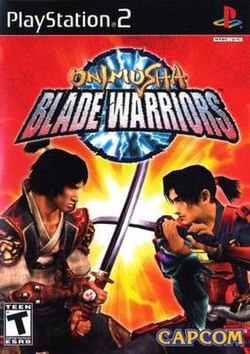

Onimusha Blade Warriors is Capcom's 2003 experiment that dresses the Onimusha universe in a 2D fighting suit and sends it into the ring. Built for the PlayStation 2 and essentially a sprite-based spinoff of the action-RPG series, it takes the series' samurai melodrama and translates it into button-bashing duels. Where the mainline Onimusha games were about careful exploration, resource management and cinematic setpieces, Blade Warriors is two-button-ish chaos wrapped in sprite animation, plane switching and a roster that reads like a samurai-themed guest list: staple protagonists, demo bosses and a few impossible cameos (MegaMan.EXE and Zero show up like they missed the memo about the era). This review looks at the game through a technical lens - input, animation, systems interactions and how well a PS2-era 2D fighter can simulate the feel of carrying an Oni Gauntlet.
At the mechanical core, Blade Warriors is refreshingly literal: swords hit, blocks happen, combos connect, and souls are absorbed. From a systems-design perspective the game mixes conventional 2D fighter inputs (light/heavy attack, jump, block) with several meta mechanics that are direct lifts from the Onimusha lineage. Soul absorption functions as an on-hit pickup/resource: it feeds special elemental attacks (lightning, fire, wind) and acts as an impetus for aggressive play. This creates a small resource-economy loop where landing hits increases your options for using higher-impact moves, which in turn require positional commitment to land. Control latency and input handling are central to the experience. Onimusha Blade Warriors does not pretend to be a precision, tournament-ready fighter; it's closer to a polished versus-party engine where the action feels responsive but generous. Input buffering exists in a rudimentary form: you can queue a light attack into a heavier follow-up more forgivingly than in tighter, frame-counted fighters. That design choice lowers the skill floor and increases the feeling of kinetic satisfaction when juggling combos. From a technical standpoint, Capcom trades strict frame windows for accessibility by widening cancel windows and allowing easier chain transitions. The result is a combo economy that favors spectacle over micro-optimization. Hit detection and collision geometry are implemented with the era's typical sprite-on-sprite approach, augmented by plane switching. The game supports switching between planes - essentially foreground/background layers within a stage - which is implemented as discrete z-axis toggles instead of continuous 3D movement. This mechanic complicates collision logic: the engine must track separate collision boxes for each plane and handle cross-plane interactions (disarm attempts, thrown items). The plane switch is handled smoothly in animation terms, but it occasionally exposes awkward edge-cases where a successful attack animation occurs while the opponent's z position is in transit, producing momentary visual discrepancies between hit sparks and damage numbers. Blocking, block-break moves and the option to disarm opponents introduce interesting decision points. Block-breaks act as a pseudo-rock-paper-scissors: heavy investment to punish passive defenders. From a frame-data perspective (Capcom never hands you a frame chart here), block-breaks function like armored moves - they negate block advantage and force a state change that is punishable if read correctly. Disarm mechanics are a particular technical flourish: they alter a player's move set by temporarily removing weapon-based attacks and forcing the opponent to rely on weaker strikes or pickups. Implementation-wise, the disarm system requires the character animation tree to support alternate movesets and hitboxes when unarmed; Capcom handled this with a finite set of state-dependent animation swaps rather than on-the-fly bone retargeting, which saves CPU cycles on PS2 hardware but can make the transition feel abrupt. Elemental attacks (fire, lightning, wind) are another layer. They aren't just visual; they typically modify hitstun, damage over time or hit reactions, and occasionally impart stage-specific interactions (e.g., wind pushes back). From a design perspective these act as modifiers that stack on top of the basic move set, creating temporary variable meta - a small branching tree of interactions that increase the game's depth without needing to expand the button layout. Because these moves are gated by the soul mechanic, the game avoids allowing infinite spam and preserves the feel of a decisive, high-commitment special. Character design here is both a tech and balance challenge. Blade Warriors pulls from multiple Onimusha entries and folds in extra fighters like Zero and MegaMan.EXE as unlockables. Each character comes with unique reach, frame profiles and special move sets. The roster diversity is handled by tweaking a few crucial parameters - recovery frames, active frames, hurtbox sizes and damage multipliers - rather than rewriting core systems. It's efficient for development, and it mostly works: longer weapons like Keijiro Maeda have extended hurtboxes and reward spacing play, while nimble ninja characters trade that reach for quicker frame advantages. However, balance is not laser-focused; some characters feel markedly stronger in casual play due to their moves having oversized hitboxes or forgiving recovery windows. Modes and progression are implemented in a way that mixes classic unlock loops with skill gating. The story spans a narrow narrative slot in the Onimusha timeline but functions mainly to justify an arcade-like sequence of fights. Beating story mode opens hidden fighters; this unlock path supports longevity and gives casual players goals beyond perfecting frame data. Multiplayer is local only, which is sensible given the era, and the engine holds up well to 2P clashes - no notable slowdown on split-screen bouts, because the devs wisely stuck to sprites and pre-baked backgrounds rather than full 3D rendering. From a technical performance standpoint the PS2 handles Blade Warriors with competent optimization. Memory footprints are modest, as sprite sheets and tiled backgrounds are less demanding than polygonal cinematics. Animations are relatively heavy on frames for a 2D game of the time, which helps the visual fidelity but requires careful streaming of assets to avoid hitches. Capcom's experience shows: load times are acceptable and frame pacing during fights is stable. The title isn't pushing the console's hardware envelope, but it uses the PS2's strengths - texture memory for high-resolution sprites and a low-latency controller path - to deliver a crisp experience that rarely feels technically compromised.
Artistically, Blade Warriors doubles down on the Onimusha aesthetic: grim samurai fantasy drenched in chromatic elemental effects. Technically it's a 2D fighter running on 3D-capable hardware, so Capcom takes the approach of high-detail sprite work layered over pre-rendered or low-poly backgrounds. Sprites are fairly dense in pixel information for a 2003 release; facial expressions and weapon arcs animate with more keyframes than a lot of contemporaneous beat-'em-ups, and the extra frames do a lot of the heavy lifting in selling combo continuity. The plane-switching mechanic involves parallax and depth-sorting tricks. When a character moves between planes the renderer swaps sprite layers and toggles occlusion masks instead of morphing models. That keeps the GPU load down and avoids alpha-sorting chaos, but it means the game sometimes cheats camera perspective: you may see a character 'pop' forward or backwards rather than glide through space. It's a trade-off that preserves framerate and graphical clarity at the cost of cinematic realism. Special effects are where the engine goes showy. Elemental attacks trigger particle overlays, additive blending and screen-shake cues. On PS2 this is achieved with sprite-based particles and palette modulation rather than modern shader-based systems. The result is bright, readable effects that perform consistently across stages. The UI and hit sparks are optimized for clarity: damage numbers, soul pickups and guard indicators are color-coded and scale with impact to avoid visual clutter during hectic multi-hit exchanges. There are a few aesthetic compromises. Because the game uses sprite sheets, zooming and camera pan are limited; extreme close-ups can expose pixelation and artifacting. Also, because the engine defines separate collision boxes for planes, occasionally the visual 'who-hit-who' moment is slightly out of phase with damage registration. These are small technical grievances in the context of the game's era and platform, but they're noticeable to a reviewer who is asking the code for its homework.
Onimusha Blade Warriors is an intriguing technical footnote: a Capcom-made 2D fighter that borrows narrative and systems from an action-RPG and converts them into a party-friendly brawler. Its strengths are in accessible input handling, a smartly implemented resource loop (soul absorption enabling elemental specials), and sprite work that gives the fights character. From a systems design perspective Capcom prioritized fun and visual clarity over strict frame-level precision, which enlarges the fun factor for casual matches but will frustrate players looking for tight tournament balance. If you're evaluating it for historical interest or local multiplayer sessions, Blade Warriors is worth the time: it runs smoothly on PS2, the plane mechanics and disarm system add tactical variety, and the unlockable roster provides extended goals. If you're a competitive fighter purist chasing flawless frame data and pixel-perfect hitboxes, you'll find the game's generous cancel windows and occasional hitbox oddities grating. On a 0-10 scale rooted in technical execution and design coherence, the title lands around a 6.5: competent, occasionally clever, sometimes messy, but undeniably entertaining when you want samurai spectacle without having to memorize ten thousand frame charts.
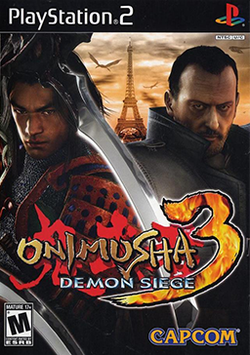 Onimusha 2: Samurai's Destiny on PS2
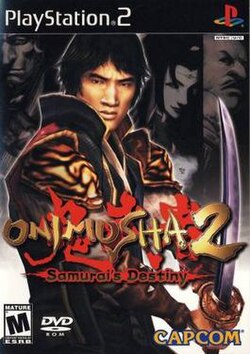 Onimusha: Warlords on PS2
 ACA Neo Geo: Art of Fighting 2 on Xbox One
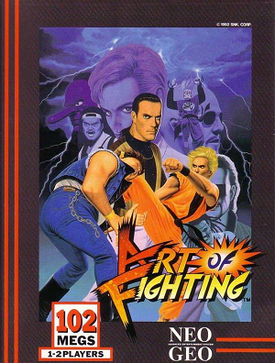 ACA Neo Geo: The King of Fighters '98 on Xbox One
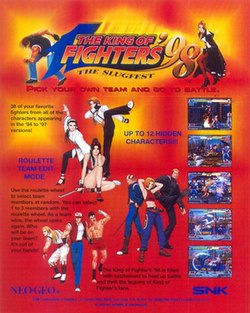 Art of Fighting Anthology on PS2
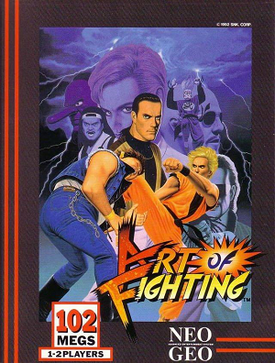 ACA Neo Geo: Art of Fighting on Xbox One
 Devil May Cry 5: Special Edition on Xbox Series X/S
 Resident Evil 2 on Xbox Series X/S
 Resident Evil 2 on PS5
 Resident Evil 4 on PS5
 Street Fighter 6 on Xbox Series X/S












 Another SquareThought Site