

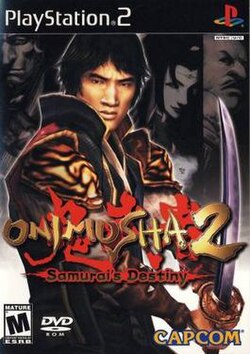

There are sequels that announce themselves with fireworks and shiny new logos, and then there are sequels that quietly sharpen the sword that the first game left lying around. Onimusha 2: Samurai's Destiny is firmly in the latter camp - a game that refuses to be merely bigger for the sake of it and instead tightens the screws on a formula Capcom established with Onimusha: Warlords. Released for the PlayStation 2 in 2002, this follow-up swaps Samanosuke for Jubei Yagyu, moves the action deeper into the mythic shadows of feudal Japan, and dresses its demons up in one of the gloomiest, most atmospheric wardrobes the PS2 has to offer. If you remember the era of tank controls and pre-rendered backgrounds as the height of digital cinema, Onimusha 2 will feel like a comfortable, if occasionally stubborn, old friend. The title keeps the series' sword-and-sorcery DNA intact - timed counters, weapon upgrades with collected souls, and a steady stream of Genma grunts to be cut, shot, and pulverized - while grafting on a branching narrative and an expanded cast meant to give the adventure some lateral space. This is not a revolution; it is a careful, confident reworking of the parts that worked the first time around, with a few new quirks that will charm and frustrate in roughly equal measure.
Onimusha 2 borrows the familiar Capcom survival-horror control scheme - a direct descendant of Resident Evil's rigid, stage-managed movement - and then layers it with a fighting system that rewards patience as much as aggression. Combat is not about flurries of reckless button-mashing: it is timing, counters, and that delicious little trick the manual won't yell about until you discover it yourself, the Issen hit. Land an Issen - the precisely timed strike as an enemy lunges - and the screen lights with a flash as a foe keels over. Chain several together in a crowd and the Genma fall like bad props in a kabuki production. Jubei is a weaponsmith's dream. He encounters short and long-range implements - everything from razor swords to matchlock rifles and bows - and each carries elemental properties that can be used to devastating effect. Elemental weapons allow for a charged attack that, when used wisely, opens up certain enemy types and boss patterns. Souls, represented by colored orbs, provide the rhythm to progression: red orbs for experience and upgrades, yellow for health, blue for magic, and the purple orbs that turn Jubei into a temporary Onimusha - a berserk, invincible state that will swing even the tide of a tough boss fight. The soul system is oddly satisfying because it forces a small economy of risk and reward. Do you step forward to gather the orbs and risk being cornered, or kite the enemy and pick them up more cautiously? The purple Onimusha state in the original PS2 release is automatic once five orbs are collected, which can be maddening at times because the transformation happens when the game decides, not when the player does. It is a quirk that the remaster later adjusted, but in this PS2 incarnation it can lead to both triumphant annihilation and inconvenient interruptions. Beyond the core of swordplay, Onimusha 2 introduces a gift-giving and relationship system centered on the gold-mining town of Imasho. Rewards and alliances hinge on which gifts you buy for characters such as Ekei, Magoichi, Kotaro, and Oyu; the player's success in courting their aid affects which sub-characters appear during the campaign and even alters some cutscenes. This branching system adds replayability that the original lacked: multiple playthroughs reveal different allies, different side-quests, and occasionally, divergent fates. It is a primitive attempt at meaningful choice, executed through inventory rather than dialogue trees, but it works well enough to keep completionists digging through the mines for loose change. Interludes hand Jubei off to allies for short side-quests where they equip the same soul-absorbing bracelet, allowing you to taste different combat flavors. These moments are small but smart: they prevent the game from becoming a single-hero monotony and give the narrative the sense of being a true group effort. The downside of the gameplay package is not the mechanics so much as some archaic design choices. The camera, at times, will make you fight invisible geometry rather than demons; locked angles and awkward repositioning can turn a tense duel into a test of patience. Also, directional control keyed to the D-pad rather than the left analog can feel clumsy to players steeped in dual-analog movement, although fans of the era's control sensibilities will likely accept it as part of the charm. Boss encounters are the game's dramatic peaks. The fights against Ginghamphatts and the theatrical Gogadantess (who is annoyingly immune to normal attacks until you discover the game's little narrative/weapon synergy) are examples of how the game blends story and mechanics. The narrative itself - revenge, oni heritage, and the looming presence of Nobunaga Oda - supplies a solid dramatic spine. Where the game stumbles narratively is in its ending, which reviewers at the time complained was abrupt and unsatisfying. Still, the path there is filled with memorable locales, a handful of satisfying puzzles, and a combat loop that stays enjoyable through to the credits.
Graphically, Onimusha 2 sits in that sweet spot of early PS2 ambition where pre-rendered backgrounds are gorgeously detailed and character models are pushed toward the limits of the hardware. Capcom's decision to use more animated backgrounds - water rendered from footage, rain sequences that are a respectful nod to Seven Samurai - gives many scenes a cinematic sheen. Jubei himself was modelled with the likeness of actor Yūsaku Matsuda, and the character models feel more realistic than those in the first game. The CGI cutscenes remain the production's crown jewel: they are lush, full of mood, and they announce the game's cinematic intent with the sort of swagger you associate with early 2000s Capcom. There is a pleasing contrast between the detailed, static backgrounds and the more limited polygonal models; it is the era's visual dialect: lush paintings for the world and blockier figures moving across them. This makes the environments feel like painted stages - sometimes leading to awkward camera collisions, but more often creating postcard moments that stick in the memory. The game's sound design and soundtrack also deserve mention. The music, bolstered by contributors like Tomoyasu Hotei on the alternate intro theme, is orchestral and dramatic where it needs to be, with battle cues that lock nicely to encounters and quieter themes that underscore the lonely stretches between fights. The North American release's omission of the Japanese audio track and the presence of a middling English dub was a disappointment; the remaster later fixed this grievance, but original PS2 players had to settle for a dub that never quite matched the gravitas of the Japanese performances. Technical glitches are rare but present: camera angles that clip into walls, occasional frame hiccups during dense action, and the aforementioned automatic Onimusha transformation that can feel at cross-purposes with the player's intent. Still, when the game hits its visual notes - the zeppelin crash into Gifu Castle, the Oni Sacred Island, the rain-slick town of Imasho - it does so with the confidence of a production that understands how to stage spectacle on constrained hardware.
Onimusha 2: Samurai's Destiny is not the sort of sequel that shouts from the rooftops with flashy reinvention. It is a sequel that goes into the forge, sharpens the blade, and returns with a weapon that feels truer for the work. Capcom built a game that keeps the satisfying timing- and counter-based combat of the first title, adds a respectable range of weapons and elemental nuance, and sprinkles in branching loyalty paths that make replaying the campaign a genuine temptation. Its flaws are the flaws of the era: tanky controls for players who want analog freedom, camera angles that sometimes feel like adversaries in their own right, and a localization that robbed some players of the richer emotional notes found in the Japanese track. Yet those caveats hardly sink the experience. The presentation - especially the CGI and the music - is top-tier for its day, and the combat loop is honest and rewarding. If you approach Onimusha 2 as a modern player used to fluid free-roam combat, you will find things to grumble about. If you approach it as someone who remembers when games were happy to be films you could play, you'll find a polished, often beautiful action-adventure with enough depth to justify multiple visits. For a PlayStation 2 classic that understood how to be cinematic without losing sight of gameplay, Onimusha 2 earns a respectable place on any shelf. It is a samurai's game: disciplined, occasionally inscrutable, and ultimately satisfying when you learn its rhythm.
 Onimusha Blade Warriors on PS2
 Onimusha: Warlords on PS2
 PlayStation Home on PS3
 Ōkami on PS2
 Crash Bandicoot: The Wrath of Cortex on PS2
 Persona 5 on PS3
 Onimusha: Dawn of Dreams on PS2
 The Misadventures of Tron Bonne on PlayStation












 Another SquareThought Site