

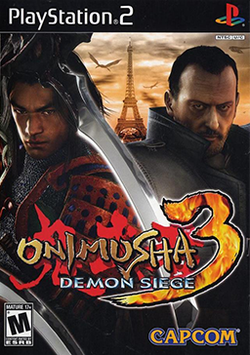

When a samurai and a French cop swap centuries like two men swapping trench coats at a costume party, you have the basic pitch for Onimusha 3: Demon Siege. Capcom's third numbered entry in the Onimusha series arrived on the PlayStation 2 in 2004 with all the theatrical flair the company could muster: celebrity talent in the form of Jean Reno, motion capture and voice work from familiar franchise faces, and an opening cinematic whose choreography reads like a punch-card RSVP to a kung-fu banquet. The team wanted to appeal more strongly to western audiences after Onimusha 2 underperformed there, so they plunked half the game down in modern Paris and sprinkled enough time-travel mechanics on top to keep both eras busy. The result is a confident, well-polished action-adventure that keeps the franchise's hack-and-slash heart beating while modernizing the package for the PS2 era. Players who remember the first two games will find familiar systems here - elemental weapons, soul-gathering, and Oni power-ups - but presented in a cleaner, more immediate format that benefits greatly from analog control and a genuinely improved 3D engine. Onimusha 3 is not a revolution, but it is an exemplar of careful iteration: the kind of sequel that tightens screws, polishes edges, and, in doing so, produces a very satisfying if somewhat compact experience.
Onimusha 3 trades the prerendered, static backdrops of its forebears for a real-time 3D environment, though it retains a fixed, developer-placed camera that follows the action rather than your thumb. Gameplay alternates between two playable leads: Samanosuke Akechi, the show's returning samurai, and Jacques Blanc, a French officer plucked into feudal Japan by a time warp. Capcom's designers split duties between the characters in a way that affects not only the story but the way you play. Samanosuke is the close-quarters specialist: tachi in hand, he is a bruising, methodical presence on the battlefield and can use a bow for rare long-range opportunities. Jacques brings a more acrobatic flavor with his energy whip, which doubles as a traversal tool to swing across gaps and reach otherwise awkward ledges. Combat benefits from an analog stick that finally allows Onimusha to shake off the old D-pad limitations. Attacks feel weighty and precise; the game introduces the Issen system, a high-skill defensive mechanic that rewards perfectly timed strikes to instantly dispatch enemies. Elemental weapons return and alter fighting styles and magic abilities; the loop of slaying Genma, collecting souls, and feeding them back into health, magic, and upgrades gives the combat an addictive rhythm. Souls function as both resource and currency, so the act of killing feeds forward into the player's capacity to sustain future encounters. Puzzles profitably exploit the game's time-travel conceit. Many obstacles require cooperation across eras: a door too withered to open in the present must be pried open by a past incarnation, and certain items can be traded between Samanosuke and Jacques to progress. The interplay feels like a well-constructed mechanical dialectic; what one character cannot do in his epoch, the other can undo. This cross-temporal problem solving is a highlight and gives the narrative switch more than mere flavor. Occasional forays hand the player control of side characters. Michelle, Jacques' girlfriend, offers gunplay sections, and Heihachiro appears in a lance-based minigame. These detours break the main flow but intentionally do so to provide contrast. They are not, however, the meat of the experience: unlike the leads, they lack upgradeable weapons and cannot enter Oni mode, so their segments feel more like interstitial experiments than fully realized alternatives. Progression is straightforward. Weapons are upgradeable through absorbed souls and special items, armor sets grant differing properties, and collecting certain artifacts unlocks bonuses like carrying over weapons into a subsequent playthrough. The designers padded longevity with extras and additional content, but critics and players alike flagged the game's relatively short runtime. It is compact by design: dense with well-crafted fights and set pieces, but finite. Replay value hinges on chasing alternate equipment, pursuing completionist items, and attempting to perfect the combat flow, particularly the Issen parries. If the gameplay occasionally betrays its lineage-fixed camera angles can mean unseen threats appear offscreen-the lock-on mechanics and camera placements do much to compensate. At its best, Onimusha 3 marries tight, tactile combat to thought-provoking puzzle design and a satisfying sense of progression. At its least, it feels slightly conservative: the franchise's formula is not upended here, merely refined.
Capcom went to some lengths to make Onimusha 3 a looker on the PS2, and the payoff is plain to see. The franchise's transition to a 3D-engine approach freed the development team from prerendered backgrounds and produced environments that feel both more immediate and more interactive. Parisian rooftops, shadow-strewn temples, and the Genma's grotesque designs are rendered with a care that pushes the PS2 hardware further than the series had ever demanded. Critics at the time lauded the visuals, and it remains one of the PlayStation 2's more impressive spectacles when you line it up against contemporaries. The game's opening cinematic is an event piece: Donnie Yen supervised the fight choreography, and the result reads like a miniature action film. The cinematic direction gives the game an almost movie-budget polish-Jean Reno's likeness and motion capture help, whether you love or mock the celebrity cameo. Reno's presence was a deliberate bid to court Western sensibilities, and while a few reviewers later found the voice work uneven or even occasionally jarring, the visual fidelity and motion capture data underpinning his character never look out of place. Capcom plainly invested time and manpower; over a hundred staff worked on the opening alone, and two years of work on that sequence shows. The 3D engine also boosted combat clarity: the player can now see more of the arena, spot incoming threats earlier, and appreciate animation transitions that read cleanly in real time. That said, the fixed camera philosophy sometimes rears its head as a nuisance. There are moments when an enemy is offscreen or the angle chooses an ungenerous viewpoint. Lock-on functionality mitigates most of these problems, but the occasional tussle wherein the camera refuses to be helpful can feel like a last-generation hangover. Those who later played the PC port noticed a dip in visual or technical presentation; the PC conversion was judged inferior by many reviewers, suffering framerate and audio issues that made it feel like a hurried port rather than a faithful upgrade. Sound design and score are competent and often stirring. The English voice cast gives the game an accessible tone, though purists miss the Japanese audio track. Overall, the production values-animation, cinematics, engine polish-put Onimusha 3 among the most visually assured PS2 releases of its year.
Onimusha 3: Demon Siege is the sort of sequel a conservative franchise occasionally needs: not a revolution, but a careful and confident refinement. The game modernizes the Onimusha formula with analog movement, a 3D engine that opens up level design and combat, and a time-travel twist that actually impacts puzzles and progression rather than serving as window dressing. It packs a cinematic punch-its opening sequence alone justifies the development fanfare-and it balances spectacle with satisfying, weighty melee and tactical defensive systems like Issen. There are caveats. The game's relatively short length was a common complaint on release. Voice acting and some subplots (Jacques' familial threads, Ako's ambiguous role) feel inconsistent, and the fixed camera occasionally reminds you this series grew up with a headset and map tucked in its sash. The PC port is best avoided unless you're prepared for rough edges. Commercially the title performed well-about 1.5 million copies sold by 2008-but Capcom felt the results did not fully match expectations in the West despite the studio's deliberate outreach. For a modern twenty-something who cut their teeth on archaic control schemes, the PS2-era Onimusha 3 still reads as a mature action game: cinematic without being hollow, challenging without being cruel, and stylish without being indulgent. The game's legacy extends beyond its own sales, too; designers such as Shinji Mikami took note of its camera and presentation, and elements of Demon Siege's engine and staging influenced future action titles. If you enjoy samurai honor clashing with Parisian grit, if you tolerate the occasional fixed-camera quirk, and you appreciate well-executed melee that rewards timing and strategy, Onimusha 3 is a must-play on the PlayStation 2. It is not the sprawling epiphany some sequels try to be, but neither is it a misstep. It is a competent, occasionally brilliant action-adventure that carries the Onimusha banner with dignity-and does so while delivering one of the most memorable opening fight sequences the PS2 ever saw. That, in the lexicon of late twentieth-century game criticism, earns it a hearty recommendation and a respectable score: 8.5 out of 10.
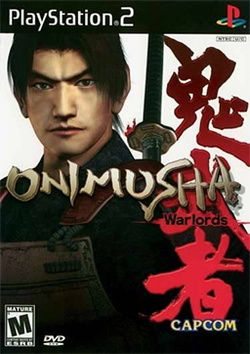
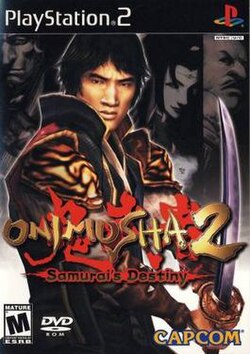 Onimusha: Warlords on PS2
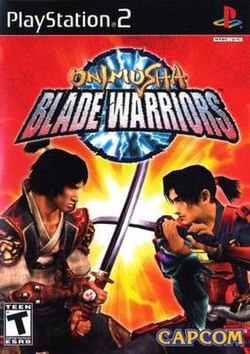
 Onimusha Blade Warriors on PS2
 PlayStation Home on PS3
 Ōkami on PS2
 Crash Bandicoot: The Wrath of Cortex on PS2
 Persona 5 on PS3
 Devil May Cry 5: Special Edition on Xbox Series X/S
 Resident Evil 2 on Xbox Series X/S
 Resident Evil 2 on PS5
 Resident Evil 4 on PS5
 Street Fighter 6 on Xbox Series X/S












 Another SquareThought Site