

 Jun 2021
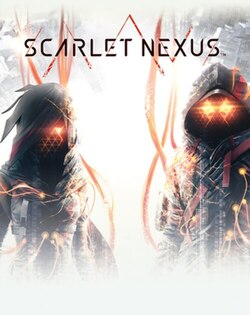

Scarlet Nexus arrives wearing its neon-red skull like a fashion statement: equal parts anime fever dream and brainy sci-fi. On PS4 it delivers the kind of glossy, kinetic combat that reviewers praised at launch, but what really makes it stick in your head are the people - or rather, the emotional scaffolding of their brains. This review digs past the flashy telekinesis and into the connective tissue of the plot, because for a game that calls itself "brain punk," the most interesting circuitry is human. Expect time travel, ethical experiments, sisterly trauma, and a surprisingly melancholy parade of characters who shift from archetypes into actual people. If you like your action RPGs with attitude and with feelings that won't stop nagging you after you put the controller down, this one is worth following down its red string.
Combat is the bait that hooks most players: a fast, fluid third-person system built around two protagonists, Yuito Sumeragi and Kasane Randall, who blend close-up swordplay with psychokinetic object throws. PS4 players will notice how the game makes transitions between melee and telekinesis feel effortless. The brain map - the game's skill tree - functions as both progression and expression: the choices you make there translate into new ways to mash enemies into the scenery, to exploit party members' abilities, and to chain flashy "brain link" combos that pull teammates into your telekinetic ballet. Critics tended to agree this is where Scarlet Nexus shines; the dance between throwing a car and finishing with a slice of blade is genuinely satisfying. But an in-depth look at gameplay can't ignore how the mechanics tie into the story arcs. Yuito and Kasane are not identical playstyles in the narrative sense: their personal stakes inform how their powers are framed. Yuito - the scion of an influential family in New Himuka - starts as a character driven by duty and a desire to be a certain kind of hero. As you push through his route, combat becomes a narrative tool for his growth: learning new brain map nodes echoes him learning to accept the costs of power. Kasane, who suffers the trauma of her sister Naomi's metamorphosis, interprets the same mechanics through a lens of loss and stubborn efficiency. Her telekinesis isn't just a flashy toy; it's the mechanism of a soldier who wants control in a world that stripped it away from her. The game smartly uses party members as both combat partners and narrative mirrors. The brain link system isn't just a means to acquire abilities - it literally ties you into the lives of companions, revealing bits of personality and backstory as you use their powers. This acts as a passive way the gameplay echoes characterization: building a link with someone gradually turns their combat signature into part of your toolkit, which is thematically appropriate for a story obsessed with connections, red threads, and the ethics of borrowing abilities from others. Where the gameplay and character work falter is mainly in the optional content. Those side-quests, which many critics flagged as underwhelming, rarely dig into the political and emotional complexity the main story promises. Instead of using fetch-quest structures to deepen the world or the people in it, these missions often read as padding. That's a shame because the central plot - a crooked New Himuka government experimenting on humans to weaponize "Others," Seiran's morally slippery opposition, and the time-traveling consequences that spiral out of control - has rich veins of drama. When a side quest does connect directly to a character's arc, it can be touching, but the experience is too hit-or-miss. Narratively-driven combat moments are at their best during key set pieces. The Kunad Gate as a looming, metaphysical threat escalates fights into moments of genuine consequence. Yuito's future-self warning about power usage and Karen Travers' time-hopping assassination of New Himuka's founder both recontextualize earlier battles; mid-fight, the stakes feel less like experience farming and more like participating in pivotal timeline events. That interplay between mechanical tension and narrative consequence makes the game's pacing uneven but memorable when it lands. It also leaves an aftertaste: the mechanics invite experimentation, and the story gives reason to care, but the optional systems don't always carry the same narrative weight. For an 18-year-old used to flashy action, Scarlet Nexus rewards both skill and curiosity. Learn the brain map, who to brain-link for each boss, and you'll see how the combat becomes storytelling by proxy. For players who care about how narrative and mechanics should play nice together, this is one of the stronger recent takes - even if the world-building could have used more than just the main plot to bloom.
Visually, the PS4 version leans hard into anime aesthetics while giving the Others a grotesque, biomechanical flair. The game's art director choices, and the work of Masakazu Yamashiro on Other designs, create a satisfying dissonance: humanity looks slick, hair immaculate and uniforms precise, while the Others are squishy, mechanical nightmares meant to feel part-organic, part-industrial. The Red Strings motif - literal red lines linking people and objects - is used consistently across UI, cutscenes, and battle effects, reinforcing the theme. The cinematics, produced by Sunrise, are a level-up in polish and provide the anime-style emotional beats that sell the characters' arcs in a way in-engine cutscenes sometimes struggle to match. On PS4 you won't get the next-gen frame-rate nirvana, but Unreal Engine 4 does a competent job rendering the kinetic chaos of telekinetic battles and the varied locales of New Himuka and Seiran. Environments can be a touch repetitive, which plays into the criticism about side content feeling like fetch quests, but major set pieces look and feel memorable. The overall package is intentionally stylized rather than photorealistic, and that choice helps the game stick to its "brain punk" identity: visually striking, a little weird, and consistently directed toward the spectacle of connection and consequence.
Scarlet Nexus is the kind of game that looks like it's about punching weird monsters with your mind, and it is - but it also wants to make you think about why people make the choices they do when faced with the power to rewrite time, exploit others, or sacrifice everything for a single person. Yuito and Kasane are written as contrasts and complements: where one learns the cost of power through duty and family, the other grieves and becomes relentless in pursuit of agency. Secondary figures like Naomi, Wakana, and Karen aren't mere plot notes; their fates twist the main characters and force the player to reckon with messy moral questions. The combat is legitimately fun and smartly tied to character progression, but the game's weaker side-quests and occasional world-building shortcuts keep it from achieving masterpiece status. If you're buying Scarlet Nexus for flashy action, you'll get your money's worth. If you're playing for character study, the main story delivers enough emotional payoff and time-twisted tragedy to keep you invested. It was rightly nominated for Best Role Playing Game at The Game Awards 2021, and by selling a million units it proved plenty of players wanted a story that tangled feelings and brain-punk spectacle. This PS4 release balances zippy mechanics with surprisingly earnest character work, which is rare enough to be appreciated: consider this a strong eight out of ten - a game that both smashes things with style and asks you to care about the people who do the smashing.
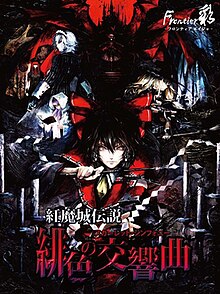
 Koumajou Densetsu: Scarlet Symphony on PS5
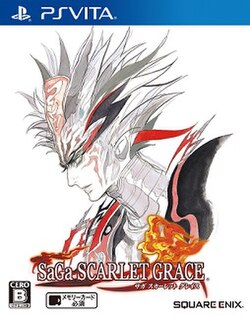
 SaGa: Scarlet Grace - Ambitions on PS4
 Combat Elite: WWII Paratroopers on PS2
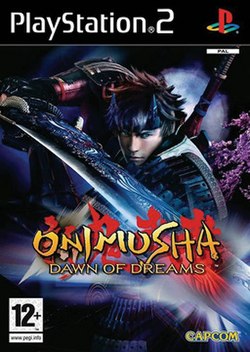
 Onimusha: Dawn of Dreams on PS2
 Disney's Chicken Little: Ace in Action on PS2
 Action Man: Operation Extreme on PlayStation










 Another SquareThought Site