

 Dec 2022
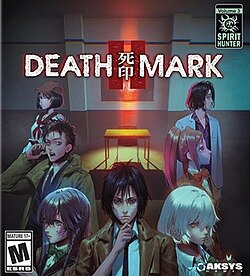

If you have ever been curious what it would be like to take a full-time job as an undercover teacher whose primary duties include solving ghost crimes, Spirit Hunter: Death Mark II is here to validate your life choices. The third entry in Experience's Spirit Hunter series swaps big jump-scare theatrics for a slow-burn, investigative brand of dread described by the developers as a 'gloomy horror with suspense-based mystery'. Released on PlayStation 4 in Japan on December 1, 2022, it leans hard into visual novel storytelling, side-view exploration, and the occasional dice-roll feeling that tabletop fans will nod at approvingly. The game was crowdfunded, carries the creative fingerprints of director Ataka Motoya and producer Hajime Chikami, and dresses its gloom in character designs by Fumiya Sumio and concept art by Kazuhiro Oya. If you like your scares with a side of detective work and a record of failing to pass that one class you never attended, you'll find plenty to chew on here.
You play as Kazuo Yashiki, hired by the principal of Konoehara Academy to infiltrate the school as a teacher and figure out why the place becomes a grisly ghost convention every ten years. That premise is a solid excuse to wander around classrooms and corridors while asking too many questions for a teacher. Gameplay is a hybrid of visual novel and adventure exploration observed from a side-view perspective. Think of it as a haunted high school field trip without the permission slips. Death Mark II borrows flavor from tabletop role-playing games more openly than its predecessors. Each partner character you recruit brings different locations into play and hands you varied items, so your investigative itinerary changes depending on who you buddy up with. Partners also have stats, and your own protagonist can improve statistics that influence outcomes in perilous situations. The Suspensive Act system takes these numbers and turns tense scenes into low-key adrenaline checks: sometimes you will talk or act your way out of trouble, sometimes you'll see a stat screen and realize your charisma roll is terrible, and sometimes the game laughs and hands you a bad ending anyway. Choices matter, but not always in the flashy branching-novel way. They determine which areas you can access, which items you find, and which narrative threads you follow. Some sections play like a detective procedural, where dialogue and item combinations unlock clues; others feel like survival-adjacent encounters where a poor stat allocation or unfortunate choice earns you a nasty spiritual comeuppance. The pacing favors atmosphere and creeping unease over constant shocks, so expect more slow, tense reveals than a nonstop scream parade. The influence of the crowdfunding campaign is visible in the extras and polish: backers unlocked additional art assets, voice-overs, and even a new story expansion. Those production choices boost presentation and room variety, and they make the world feel like a living place haunted by grudges and mediocre cafeteria food. If you are someone who enjoys methodically cataloging evidence, cross-referencing anecdotes from NPCs, and then regretting your life decisions when a timeline inconsistency summons a ghost, Death Mark II gives you plenty of that sweet, spectral paperwork. It is not an action game in any meaningful sense. If you crave fast-paced combat or a complex puzzle system, you will be disappointed. The thrills come from tension, narrative beats, and the mental gymnastics of figuring out which partner unlocks the door you couldn't access earlier. Replaying with different partners changes the experience enough to justify multiple passes for completionists, and the game is deliberately designed to reward curiosity and exploration rather than button-mashing reflexes.
The game wears its art direction like a carefully tailored funeral suit. Character designs by Fumiya Sumio and concept pieces by Kazuhiro Oya give the cast a distinctive look that reads well in static visual novel scenes and side-scrolling investigation segments alike. The environments are moody and effective: dim classrooms, rain-slick courtyards, and weirdly familiar teacher offices all hum with a low-key unease. Because the title leans on atmosphere, the strength of the visuals is less about flashy polygon counts and more about composition, lighting, and clever use of limited animation to sell dread. Thanks to stretch goals in the crowdfunding campaign, Death Mark II benefits from extra art assets and more voicework, which lifts scenes that might otherwise feel too static. On PlayStation 4 the visuals are perfectly serviceable; this isn't a PS5 showcase, but presentation quality fits the game's design goal of unsettling players through mood rather than technical spectacle. The sound design backs this up with well-placed creaks and murmurs, and the soundtrack-later bundled as a CD with some western releases-does a good job of lingering in your head like a bad omen. If you're the kind of player who appreciates atmosphere over realism, the game's visuals will do their job quietly and effectively.
Spirit Hunter: Death Mark II is a respectful evolution of the series: it keeps the journal-scrutinizing, clue-collecting core fans like, and it nudges the formula toward a suspense-driven mystery that rewards thinking over twitch reactions. The side-view exploration and partner-dependent locales add replay value, the tabletop-inspired stats keep some encounters interesting, and the dev team's crowdfunding success translated into tangible extras that improve immersion. The game is at its best when it dials up tension slowly and forces you to make choices that feel consequential without being unfair. There are trade-offs. The pace is deliberate, the mechanical variety limited, and this version's availability is a bit awkward since the western PlayStation 4 release was eventually canceled in favor of a PS5 version. Sales in Japan were modest according to Famitsu figures, so this is more of a niche gem than a mainstream smash. If you like your horror with investigative teeth and can tolerate a visual-novel tempo, this is a satisfying, spooky time. If you were hoping for nonstop action or flashy technical fireworks, you'll be better off elsewhere. For those who enjoy whispered conspiracies in dim hallways and playing teacher without the grading, Death Mark II earns a solid 7.5 out of 10 and a recommendation to play with the lights on - or at least with a slightly comforting nightlight.
 Spirit Hunter: NG on PS4
 The Legend of Zelda: Spirit Tracks on DS
 Tintin: Destination Adventure on PlayStation
 One Piece Grand Adventure on PS2
 Taiko no Tatsujin: Don to Katsu no Jikū Daibōken on Switch
 Taiko no Tatsujin: Dokodon! Mystery Adventure on Switch
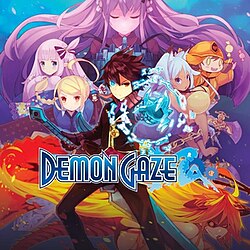 Demon Gaze II on PS4
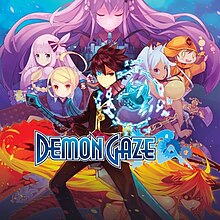 Demon Gaze Extra on PS4
 Mon-Yu on PS5










 Another SquareThought Site