

 Aug 2020
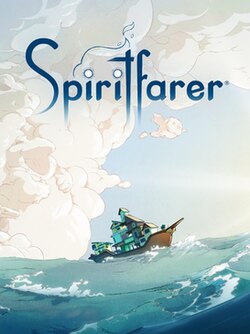

Spiritfarer arrives on PS4 as a soft-spoken little engineering puzzle wrapped in pastel watercolor pajamas. Thunder Lotus built a game where the mechanical scaffolding - resource loops, grid-based construction, upgrade trees and mini-game unlocks - is married to a narrative about death and empathy. On paper it's a management sim and action platformer running in Unity; in practice it's a slow-burn systems game that asks you to optimize the comfort of souls while sailing a modular boat. If you want cold hard facts mixed with a bit of charm (and the occasional existential crisis), this review digs into how Spiritfarer behaves under the hood on PS4 and why those design choices matter.
Core mechanics: At its most mechanical level Spiritfarer is a resource-gathering loop feeding a build-and-upgrade pipeline. You control Stella, gather materials across biomes, and spend those resources to craft ship modules - kitchens, gardens and specialty amenities - placed on a square grid. Modules can be stacked, effectively creating a z-axis on an otherwise 2D plane: this stacking mechanic is simple on the surface but creates interesting layout problems (pathfinding for NPCs, adjacency of service locations, and walkable space planning) that reward spatial thinking rather than twitch reflexes. Ship progression is gated by capacity upgrades that increase grid real estate and unlock new module types. The game leans on deterministic placement rules: a tile is either free or occupied, modules snap to grid cells, and upgrades are explicit rather than probabilistic. That makes failure modes obvious - you didn't leave room for a ladder or you boxed in a crafting station - which aligns with the game's patient pace. It also means planning is a satisfying part of the loop instead of an opaque RNG slog. Resource economy and pacing: Materials are collected via exploration and mini-games tied to each spirit's backstory. These mini-games act as contextualized fetch quests and provide currency and crafting inputs. Vendors offer seeds and ingredients, creating a two-source economy: player-collected resources and marketplace items. Thunder Lotus deliberately downscaled farming compared to early concepts to avoid the trap of repetitive grind seen in full-on sims; the result is a loop that feels intentionally shallow to keep the spotlight on character interaction rather than min-max farming. Narrative mechanics and progression: Spirits have quests that unlock personal stories and gameplay bits - some open new sections of the ship or new mini-games. The Everdoor serves as the hard gate: send a spirit through and they're gone, which is the primary emotional beat and also a mechanical reset of objectives. This commitment to permanent consequence gives the resource loop stakes beyond efficiency: you are managing attachments, not just statistics. Interface and input: On PS4, controls are mapped to a conventional twin-stick platformer/layout with context-sensitive buttons for interaction, crafting and menu navigation. The HUD is deliberately minimal - inventory, crafting tree and quest prompts are accessible but not intrusive - supporting the contemplative tone. The multiplayer mode is listed in the metadata; the game supports a secondary player, but the core design is single-player first, with multiplayer layered on as optional assistance rather than a separate systems branch. Design trade-offs: Thunder Lotus made several scope decisions that shaped the present technical profile. Seasons and an expanded farming subsystem were scrapped to keep scope manageable; that choice preserved performance headroom and reduced animation/state variants. Shrinking farming also avoided a feature-heavy sim that would demand more complex balancing and UI work. The development discipline shows in the consistency of systems: there are fewer interconnected failure states, which results in fewer obscure bugs but also a narrower set of long-term mechanical toys for hardcore simulators. Balance and pacing criticisms: Critical feedback focused on predictable repetition and backtracking. From a systems perspective, that's a pacing issue: resource spawns and vendor availability encourage revisiting the same islands, and the travel cost/benefit curve flattens when you optimize routes. The game's deliberate ambiguity about the metaphysics of its world - mentioned by some reviewers - is a narrative design choice, but it can obscure mechanical intent. If you like clear rule systems, the fuzzy edges of story-driven mechanics may feel like a design decision that sacrifices mechanical transparency for thematic cohesion. Technical underpinnings: The game is built in Unity, which is a logical choice for 2D hand-drawn animation and cross-platform deployment. Unity allowed Thunder Lotus to iterate on rich sprite animations and layered environments while shipping across PC, consoles and later mobile platforms. The engine's flexibility seems to have been used conservatively: complex physics interactions and large dynamic simulations are rare, which helps maintain a consistent performance profile across PS4 hardware while enabling the detailed animations that earned the game animation award nominations.
Art and animation pipeline: Spiritfarer's visuals are its loudest technical success. The team chose a hand-drawn, painterly 2D aesthetic with exceptionally smooth frame-by-frame character animations. From a production pipeline viewpoint, that implies an extensive animation atlas and careful memory budgeting: high-resolution art can be heavy on VRAM, especially on mid-generation consoles like PS4. Thunder Lotus mitigated this by keeping environments relatively simple and reusing modular assets - background plates, parallax layers and tiled textures - while letting character frames carry the visual weight. Rendering strategy: The game relies on layered 2D compositing rather than expensive 3D shaders. Parallax scrolling, depth-sorted sprite batches and baked lighting effects create a sense of depth without requiring deferred rendering or costly post-processes. This approach is engine-friendly on Unity and scales well to PS4's GPU capabilities, allowing the art fidelity to remain high while keeping frame times stable. Any dynamic effects are modest - soft particle usage, simple bloom and vignette - which aligns with the art direction and preserves CPU/GPU headroom. Animation performance and memory: Frame-by-frame character animation nominates trade-offs between animation smoothness and texture memory. The attention to motion (the game earned recognition for animation) suggests an animation-first pipeline where multiple key animations are stored and swapped as needed. On PS4 this is sensible: it keeps the experience visually rich without pushing for expensive real-time skeletal blending or high-poly physics. The result is a fluid aesthetic that feels hand-crafted rather than procedurally animated. Audio and scoring: Technically, the orchestral score complements the visuals without competing for CPU cycles. Audio mixing is clean and spatialization is simple; this is a deliberate choice in a game where atmospheric clarity matters more than 3D audio tricks. Composer Maxime Lacoste-Lebuis's score works as expected in a systems sense: adaptive tracks probably trigger on state transitions (exploration vs. interaction), enhancing immersion without taxing the engine. Platform parity and updates: Post-launch, Thunder Lotus supplied free content updates and the Farewell Edition rebrand. On the technical side, delivering incremental content patches across multiple platforms requires disciplined asset management and backwards compatibility planning. The team's ability to update the game and maintain a stable release across platforms - including later mobile ports via Netflix - indicates a solid build pipeline and cross-platform asset pipeline.
Spiritfarer on PS4 is a technically coherent and deliberate piece of game engineering. The developers prioritized a tight, manageable set of systems - grid-based ship building, resource loops, mini-games tied to character arcs - and paired them with a high-quality, low-overhead visual and audio presentation. Using Unity allowed Thunder Lotus to iterate on a hand-drawn animation pipeline and ship regular content updates without fragmenting the codebase. If you value mechanical clarity and a systems-first look at design, Spiritfarer rewards patience: planning ship layouts, balancing limited resources and making meaningful choices about who to send through the Everdoor are all satisfying problems. If you're after a sandbox with endless mechanical depth or a farming sim with dozens of interlocked subsystems, this isn't built for that groove - and critics' concerns about repetition and backtracking are valid for players who try to optimize every loop. Final takeaway: The result is an emotionally resonant game that's also a tidy piece of technical craft. It's polished, well-balanced for its scope, and a good example of scope discipline - choosing a focused feature set and doing it very well. I give Spiritfarer an 8.3/10 on PS4: it's a lovely, well-made hybrid of narrative and management systems that occasionally wants to be more mechanically ambitious, but prefers to be gentle instead. That gentleness is the point - and technically, it's executed with care.
 Onimusha: Dawn of Dreams on PS2
 Action Man: Operation Extreme on PlayStation
 Samurai Warriors 4: Empires on PS4
 Jotun: Valhalla Edition on Switch










 Another SquareThought Site