

 Sep 2015
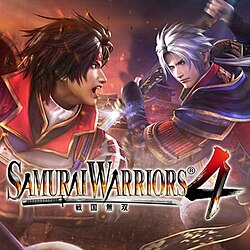

Samurai Warriors 4: Empires is the 'strategy meets mop-up simulator' entry in Omega Force's long-running Sengoku franchise. It takes the core hack-and-slash loop of Samurai Warriors 4-twin-character swapping, sprawling battlefields, Musou special attacks-and straps a strategy layer on top: issuing commands, managing domestic affairs and marriages, and shepherding a clan toward unification. Empires doesn't add a slate of new playable characters, but it rearranges the game architecture so that the player's macro decisions carry weight. For technical-minded players this expansion becomes less about memorizing combo strings and more about how the game's systems talk to each other: AI suggestion routines, officer metadata, event triggers and the UI systems that let you perform dozens of administrative actions without wanting to fling the DualShock across the room.
At its mechanical heart Empires inherits Samurai Warriors 4's polished action skeleton. Players still get two-character swapping in-battle (a feature introduced in the base title and reminiscent of the Chronicles spin-off), Hyper Attacks for sweeping crowd control, and Rage Mode for temporal invulnerability and Musou empowerment. Those combat systems remain the bread-and-butter: Hyper Attacks act as a high-speed area clear with a dash animation, but technically they function as an AOE movement state that is intentionally flagged to ignore officer hitboxes (officers either deflect or are immune). Rage Mode consumes the Spirit Gauge and toggles temporary states: invulnerability, damage scaling, and Musou enhancement. From an engine perspective these are separate state machines layered atop the normal combo system, which explains why transitions sometimes feel weighty-the system is juggling multiple animation rigs, hitbox states and damage multipliers simultaneously. Empires extends the gameplay stack by introducing the 'command/administration' layer: issuing orders, receiving suggestions from subordinate officers, and the Resident Domestic Administration system. Where the base game focuses on per-stage objectives and scripted events, Empires maintains a persistent model of officer relationships, marriage ties, and recruitment metadata. Each generic officer now carries a dossier (implicit through game variables) that the strategy layer queries when generating advice or event triggers. This moves a chunk of the game's logic out of the real-time combat loop and into a turn-like management loop that must be efficiently presented in the UI to avoid overwhelming the player. The Chronicle and create-a-warrior modes are retained and expanded; the custom character benefits from multiple weapon movesets and integration with the Empires suggestion system. The dueling mechanic-where conditions spawn a one-on-one showdown with an enemy officer-remains intact, and Empires preserves the balance design choices from the base game: Musou Attacks now have distinct finishers but don't allow free-action during their duration, and enemy generals are no longer fully invincible during finishes (they are granted Hyper Armor instead). From a technical point of view this is neat: combat resolution relies less on invincibility frames and more on stagger/hyper-armor flags, which improves predictability when multiple systems (player attacks, allied NPC actions, scripted events) converge on a single target. AI behavior deserves explicit mention. The Empires expansion increases the number of generic officers (over 100), many of whom now act as autonomous advisors with suggestions that influence strategic flow. Those suggestions are generated from a rule-based system using officer loyalty, skill metadata and current map state. It's not machine learning-just well-tuned heuristics-but the system scales up the game's perceived depth without overwhelming CPU time on the PS4. The real technical challenge is keeping battlefield density high (to maintain the satisfying 'swipe through hundreds of foes' feel) while also running administrative simulations in the background. Omega Force handles this by isolating the strategy tick to lower-frequency updates and queuing UI events to avoid stutters during peak combat moments. Multiplayer and balance: Empires keeps multiplayer support but the expansion's strategy components are inherently single-player-focused; cooperative play still centers on action stages. Balancing an Empires-equipped army in a co-op match is therefore mostly a matter of shared action prowess rather than shared domestic decisions, which can feel like two different game loops trying to share the same codebase. Controls and responsiveness are crucial for a game that stacks systems. Button mapping for switching partners, triggering Hyper Attacks, Rage Mode and Musou all feel coherent because Omega Force prioritized input predictability over flashy cancel windows. The result is a combat system that is approachable for action veterans and comprehensible for strategy players when they jump back into battle.
Graphically Empires inherits the asset pipeline of Samurai Warriors 4: character models, costume sets and environment tiles are reused extensively, which is expected given Empires' focus on new systems rather than a visual overhaul. The DX release later aggregated 150 DLC items, demonstrating how modular character assets were designed from the outset. On PS4 the engine leans on aggressive instancing and LOD (level-of-detail) transitions to maintain large enemy counts. You can see the trade-offs: up close character faces get a fair amount of detail-normal maps, specular highlights and costume layering-while distant troops fade to lower-res models and simpler animation cycles. That approach minimizes draw calls and keeps GPU-bound frames affordable. Animation blending is another interesting point: the game stitches together base combos, Hyper Attack dash animations and Musou finishers using a layered animation system. Because Musou Attacks have discrete finishers and the team moved away from full free-action during them, you rarely see the kind of animation crossfades that break hit registration. Instead, the engine resolves into clear, deterministic states which helps hitbox consistency-important when dozens of enemies are calculated for collisions every frame. Performance-wise the PS4 port (the platform under review) is competent. The expansion's additional UI layers and background logic for officer management do add memory overhead, but the platform's 8GB unified memory design keeps everything within practical limits. Load times are reasonable if you accept some stage streaming: environment props and large geometry pieces stream in as you approach, which occasionally produces texture pop-in on very dense maps. Draw distance and particle density are tuned to preserve combat clarity-misty battlefield smoke and explosions are restrained so that the player can still read the action. If you're the kind of person who inspects shadow resolution or wonders about mip-map bias, Empires is conservative: it prioritizes stable frame delivery over cinematic fidelity.
Samurai Warriors 4: Empires is an expansion that trades the promise of new playable stars for depth in systems design. Technically it's a solid marriage of Omega Force's action pedigree and a lower-frequency strategy layer: AI suggestion heuristics, officer state metadata, marriage/domestic simulation and a Resident Domestic Administration stack that all sit neatly outside the real-time combat tick. The PS4 handles the load well thanks to instancing, LOD, and careful animation state management, though you will notice the occasional texture stream or pop-in on the busiest maps. If you want a Musou that asks you to think like a daimyo as well as swing a sword, Empires delivers a satisfying systems-heavy experience-just don't expect a visual revolution or a buffet of new characters. It's a smart, technically tidy expansion that will reward players who like their hack-and-slash with a side of spreadsheet-like scheming.
 Touken Ranbu Warriors on Switch
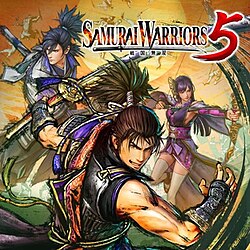
 Samurai Warriors 5 on PS4
 Onimusha Blade Warriors on PS2
 PlayStation Home on PS3
 Gaelic Football '25 on Xbox Series X/S
 Together! The Battle Cats on Switch
 Crash Bandicoot: The Wrath of Cortex on PS2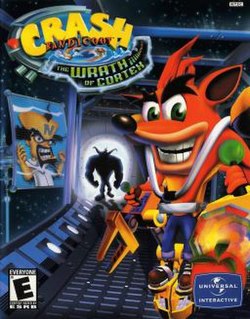
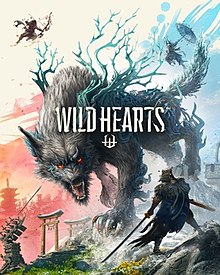 Samurai Warriors 5 on Switch
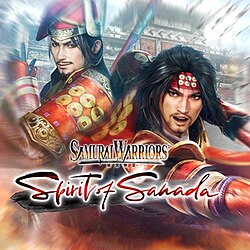
 Samurai Warriors: Spirit of Sanada on Switch
 Hyrule Warriors: Definitive Edition on Switch
 Fire Emblem Warriors: Three Hopes on Switch
 Dragon Quest Builders 2 on Switch










 Another SquareThought Site