

 Jan 2025
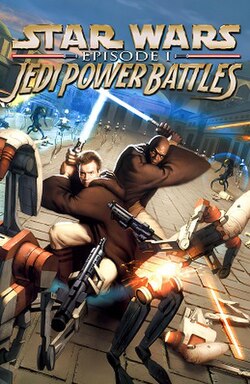

If you remember the early-2000s fondly enough to think clunky camera angles are a charm and not a war crime, Jedi Power Battles' PS4 remaster is a nostalgia-dipped tech museum visit. Originally a 2000 action/beat-'em-up hybrid from LucasArts, the title has been brought back by Aspyr for modern platforms. What arrives is not a full modern reimagination - it's closer to carefully restoring a vintage lightsaber: you keep the old blade, but the polish, balance and wiring get some overdue attention. In practice that means bug fixes, higher resolutions, added characters and optional canonical lightsaber colors. If you care about technical decisions - frame-rate targets, animation tweaks, level design lineage - this version gives you more to chew on than your average cash-grab re-release.
Under the hood, Jedi Power Battles is a technical crossbreed. It combines platforming and beat-'em-up mechanics: the core loop is run, jump, slash, and a smattering of Force-powered abilities. The original design emphasizes spatial navigation as much as combat, which is why many levels read like 3D platforming puzzles with retro beat-downs sprinkled through them. Level design began in the original development with paper cutouts and bubble diagrams to map flow before 3D construction - a telling detail because it explains why the remaster preserves an architecture that rewards level familiarity and route memorization over improvisational combat. Combat is deliberately simplified: lightsaber combos are incremental unlocks, and the lock-on system (mapped to R1 on PlayStation controllers) consistently targets the nearest enemy. The simplicity helps the game run on a console from the previous century, but it also exposes the control model. One of the most discussed technical criticisms over the years has been the control-and-platforming balance. Tight platforming requires precise jumps but the game's input responsiveness and collision windows were never as forgiving as modern players expect. That tension is a design choice from the original, not a remastering oversight - Aspyr fixed some bugs and rebalanced animations, but the core difficulty curve remains intact. Expect repeated deaths from missed jumps rather than from clever enemy AI. The Force and item systems are functionally straightforward: power-ups grant special attacks, and Force abilities unlock as you progress. Character differentiation is meaningful on a mechanical level: each Jedi has a unique lightsaber style, force powers, and a different feel for combos. The game offers five primary playable Jedi (Obi-Wan, Qui-Gon, Mace Windu, Adi Gallia, Plo Koon) and platform-dependent unlockables. Notable technical fixes in the remaster include reuniting Dreamcast-era changes to other versions - for example, Darth Maul using both blades correctly (a bugfix from the Dreamcast port) - and adding 13 story-mode characters as playable, alongside the Dreamcast's bonus modes. Co-op is where the design truly shines from a systems standpoint. The single-player campaign can be played locally in two-player co-op, which changes encounter pacing and increases the need for spatial coordination. The game rewards cooperation in a way many modern online shooters rarely do: you and a buddy literally have to watch each other's platforming and cover angles. This is a local-only feature carried over into the remaster (no online matchmaking), and it's one reason the title still encourages sofa teamwork. If you're the kind of technical player who loves dissecting systems, you'll appreciate the unlock trees and how new combos are gated by level progression. If you prefer modern responsiveness, the game will feel archaic; Aspyr's remaster improves frame pacing and resolves some animation clipping, but it doesn't rebuild the control model from scratch. Difficulty and content depth explain much of the mixed historical reception - the Dreamcast version traded higher frame-rate (60 fps) and visual tweaks for a more polished experience, which the PS4 remaster aims to emulate while keeping the original's structural identity.
Graphically the remaster walks a pragmatic line: instead of full photorealism it offers higher-resolution assets, cleaned-up textures and corrected color profiles (including an option to switch Mace Windu, Plo Koon, and Adi Gallia's lightsaber colors to canon-accurate hues). The Dreamcast originally had the advantage of higher resolution and 60 fps gameplay compared to the PlayStation version; the remaster restores that smoother feel and applies it universally across platforms. Character models retain their original geometry and silhouette - you're still looking at early-3D era meshes - but animation improvements and corrected clipping help lift immersion. Developers also applied fixes to character animation flow, reducing the jarring transitions that used to make combos feel weightless. From a technical polish standpoint, the remaster's biggest wins are frame pacing and presentation consistency. Higher-resolution textures and UI scaling make menus readable on modern displays, and the added resolution helps platforming sightlines (tiny but functionally important). Lighting hasn't been overhauled into modern PBR standards; instead, the studio prioritized fidelity of intent - preserving the look and feel of the movie-era aesthetic while removing some of the jaggedness and aliasing that plagued original console outputs. If you were hoping for a full engine rewrite with advanced particle simulation and dynamic shadows, this isn't it. If you want the original game's visuals made legible and smoother on modern screens, the remaster delivers.
Jedi Power Battles on PS4 is a technically considerate remaster: it doesn't rewrite the game's DNA, but it applies surgical fixes where they matter - frame-rate, animation flow, bug corrections, and additional content from the Dreamcast release. That approach preserves both the game's charms and its flaws. The control model and platforming-heavy level design, which drew criticism in 2000 for high difficulty and punishing jumps, remain central to the experience. Players who go in expecting a modern hack-and-slash will be frustrated; those who want a polished piece of early-2000s Star Wars design with improved framerate and a few modern conveniences will be pleased. Historically the title landed between mixed and favorable review ranges (Dreamcast roughly mid-70s, PS and GBA more divided), and this remaster nudges it upward by addressing technical shortcomings rather than reinventing the wheel. If you're buying it for the nostalgia of cooperative couch play, the remaster is worth a look. If you're demanding modern responsiveness and camera-comfortable platforming, temper expectations and treat it like a vintage arcade cabinet with a fresh coat of paint. Either way, the lightsaber still hums, the Force still pushes, and the game still expects you to master the same sometimes-unforgiving choreography that defined its original charm.
 Power Gig: Rise of the SixString on PS3
 Power Pro Kun Pocket 14 on DS
 Power Pro Kun Pocket 10 on DS
 Disney's Chicken Little: Ace in Action on PS2
 Onimusha: Dawn of Dreams on PS2
 Action Man: Operation Extreme on PlayStation
 Vividred Operation: Hyper Intimate Power on PS3










 Another SquareThought Site