

 Mar 2020
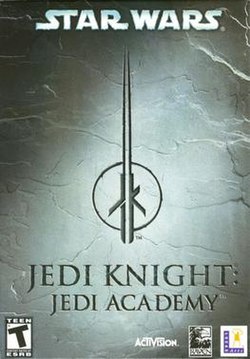

Star Wars Jedi Knight: Jedi Academy arrived on PS4 as a time-machine of neon blades and morally ambiguous teenage energy. Built on the id Tech 3 engine and born in 2003, it was never meant to be subtle, but its core still hums: a player-made Padawan named Jaden Korr learns to be more than a lightsaber-wielding mannequin. This is the rare Star Wars title that asks you to be the protagonist of your own passage to knighthood and then hands you the moral scissors to cut up that passage however you like. If you want an in-depth look at characters rather than just a list of set-pieces, Jedi Academy actually gives you one - clunky AI, occasionally dated visuals and all - because the heart of the game beats in its people and their arcs. Spoiler alert: some of them spiral, some redeem, and some get a very dramatic fall with laser-swording.
Jaden Korr is the narrative fulcrum. You start by designing Jaden - species, gender, wardrobe - which feels cosmetic at first but soon becomes the player's identity stamp. That matters because Jaden is not a pre-scripted legend; they are a student, vulnerable and impressionable, which is the engine that drives the story arcs. Kyle Katarn, the grizzled veteran from earlier games, is the stoic mentor grafted into the plot to provide continuity and a moral mirror. Kyle's presence is smart design: instead of shoehorning a fully formed hero into the player's boots, Raven makes Kyle the example and the test. Players watch and emulate or defy him, and those choices ripple. Rosh Penin is the game's tragic pivot. He starts as a cocky fellow student - competitive, loud, a textbook rival - and his trajectory is the classic academy-to-abyss road trip. Rosh is jealous, insecure, and desperate to be seen; he converts into the Disciples of Ragnos as a way to be significant. The writing does something interesting here: Rosh isn't evil because he likes it, he's someone who felt pushed and chose the quick, intoxicating power of vindication. The missions where you confront him (Byss, Taspir III and V'jun) are not only combat encounters but moral checkpoints. The game forces you to respond: forgive (light side) or slaughter (dark side). Gameplay mechanics - Force upgrades you select, lightsaber forms you adopt - are married to these choices so that mechanical progression is also ethical progression. If you train dark powers and dual-wield sabers, the final scenes are earned and resonant. Tavion Axmis and Alora form the antagonist duo who are both cult leaders and narrative catalysts. Tavion is the charismatic, apocalyptic believer; Alora is the infiltrator who steals Luke's journal and drags the plot forward. Tavion's ritualistic obsession with resurrecting Marka Ragnos is the boiler room for the game's stakes, and she isn't a cardboard villain: the Scepter of Ragnos, which siphons Force energy, is an ingenious plot device because it literalizes temptation. You can feel why a disaffected Padawan like Rosh could be seduced. When the climactic conflict blooms on Korriban, the consequences of your prior choices come fully into focus: consequence-based endings aren't unique, but Jedi Academy scopes them through relationships you invested in, which gives them more weight than just a generic 'light score.' Luke Skywalker is the stabilizing legend who appears as a narrative handhold. He provides exposition and the Jedi institutional perspective, which keeps the story anchored to the franchise's moral grammar. Contrast Luke's calm with Kyle's pragmatic mentorship and Rosh's wounded ambition and you have three different models of heroism presented to the player. The game doesn't lecture you so much as present options and show, repeatedly, what each option costs. That makes replaying tempting: the same maps and lightsaber flicks can feel emotionally different if you decide to redeem Rosh rather than end him. Mechanically, the game backs this character-forward storytelling with swordplay and Force kit choices. Lightsaber customization (hilt, color, single/double/dual sabers and fighting styles) and the ability to upgrade either light or dark Force powers before optional missions means your combat toolkit is also a role-play ledger. The mission structure - grouped acts with optional missions and branching freedom - underlines the academy motif: you pick some lessons, skip others, and graduate with a set of scars and decisions. The multiplayer scene and mod community, while not directly part of the story, extend character fantasies into social theatre; community-made mods like Movie Battles II underscore how strong the game's lightsaber engine is at its core.
The id Tech 3 base is visible: textures and geometry are of their era, and on PS4 the game is essentially a lovingly preserved relic rather than a visual overhaul. That means some set-pieces - Hoth's echo base corridors, V'jun's damp corridors, the funeral grandeur of Korriban - rely on design and atmosphere more than shader wizardry. The lightsaber glow and the way the blade feels when it connects remain delightful; the actual lightsaber engine has been praised by modders and fans for good reason. Voice acting and music are solid: Luke, Kyle, Rosh, Tavion and the supporting cast carry weight in their lines even if the mouth animations are occasionally flustered. Several critics historically praised the audio work and the PS4 port keeps those performances intact. However, limitations matter narratively. The AI's sometimes laughable behaviour - enemies who rush point-blank or ignore cover - can pull you out of tense character moments because it's hard to stay emotionally invested when NPCs behave like NPCs on autopilot. Still, the environments do much of the emotional legwork: V'jun's ruinous feel amplifies desperation, Hoth's emptiness gives weight to isolation, Korriban's tombs exude malice. The visuals are functional storytellers rather than show-off window dressing, and that suits a game whose main spectacle is human (and inhuman) choice rather than purely graphical flash.
Jedi Academy on PS4 is a charmingly imperfect character drama in a lightsaber skin. It asks you to make friends and enemies, to mentor and betray, and then makes you live with the results in the game's closing beats. The arcs of Jaden, Rosh, Kyle, Tavion and Alora are predictable in outline but satisfying in execution because the game operationalizes them: your combat choices, Force upgrades and mission order are the same levers that tilt fate. If you want cutting-edge visuals and cinematic AI, this port won't convert you; if you want agency, moral texture, and a lightsaber system that still hums decades later, Jedi Academy remains one of the more heartfelt Star Wars games. It's a high school drama if the high school were full of Force storms, and that melodrama is the point. For those reasons, it earns an 8.5/10: rough around the edges, but a rewarding narrative playground where character arcs feel earned and your decisions actually matter.
 Lego Star Wars II: The Original Trilogy on PS2
 Angry Birds Star Wars on PS3
 Angry Birds Star Wars on PS4
 PlayStation Home on PS3
 Gaelic Football '25 on Xbox Series X/S
 Together! The Battle Cats on Switch
 Crash Bandicoot: The Wrath of Cortex on PS2
 Call of Duty: Black Ops 7 on PS4
 Star Wars Jedi Knight II: Jedi Outcast on PS4
 Call of Duty: Black Ops 6 on PS5
 Call of Duty: Modern Warfare Remastered on PS4
 Marvel: Ultimate Alliance on PS4










 Another SquareThought Site