

 Oct 2020
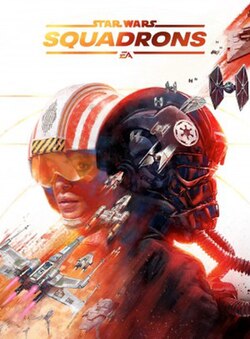

Star Wars: Squadrons is a compact, cockpit‑centric space combat sim that wears its nostalgia for Rogue Squadron on its sleeve but approaches dogfighting with surgical precision. Built in Frostbite 3 by Motive Studio and released by EA on October 2, 2020, the PS4 version doubles down on first‑person immersion: every warning light and HUD blip matters because the game asks you to fly like a pilot, not a joystick wizard who memorized a million macros. The title ships with a single‑player campaign that alternates between New Republic Vanguard Squadron and Imperial Titan Squadron, plus two multiplayer modes (Dogfight and Fleet Battles). It was received warmly by critics for its core mechanics, while attracting predictable grumbles about campaign depth and post‑launch content. If you care about the how more than the who, Squadrons delivers a satisfyingly mechanical, tactile dogfight experience-even on last‑gen hardware.
At its mechanical core, Squadrons is about resource allocation and situational awareness rather than twitchy aim alone. The primary systems you manipulate are weapons, shields and engines, and moving power between those functions is where most interesting decisions live. The cockpit is not window dressing: instrument clusters and visual cues provide the numeric and spatial feedback you need to know when to divert power to engines for a burst of speed or route it to shields to survive a protracted joust. The class structure (Fighter, Interceptor, Bomber, Support, with later additions like the B‑Wing and TIE Defender) keeps roles clear: fighters and interceptors chase and flank, bombers take objective work, and supports handle area denial and repairs. Importantly, imperial ships on paper lack shields, which would be a balance problem if not offset by specific kit changes for Imperial craft-this is a deliberate design choice that enforces asymmetry while preserving parity in multiplayer. Controls and input fidelity vary on PS4, where Squadrons supports DualShock controllers natively, offers HOTAS support via a day‑one patch, and also supports PlayStation VR for an extra layer of presence. HOTAS on consoles is not just a flex; it materially changes how you balance yaw, pitch and throttle inputs and how precisely you manipulate power systems. On a pad, the abstraction is tighter but still serviceable-the game offers sensitivity tuning, aim assist adjustments and control mappings that let you emphasize either a locked‑down arcade feel or a more simulation‑adjacent approach. Flight handling rewards predictive thumbstick work: inertia and momentum matter, so you commit to maneuvers and have to plan your power swaps accordingly. Dogfight mode is pure 5v5 arena chaos with a sharp emphasis on pilot skill and team coordination. Fleet Battles layer a strategic objective (capital ships and turrets) over the core combat loop; it's where bombers and supports earn their salt, and where the power management mechanics feel most consequential. The single‑player campaign is structured to alternate perspectives between New Republic and Imperial pilots, which is narratively smart because it forces you to learn both sides' kit. Mechanics are taught organically through mission variety-intercepts, escort runs, capital ship assaults-rather than through oversized HUD tutorials. However, the campaign's usual criticism applies here: it's concise and mechanically tight but light on narrative branching or character development. The game's progression systems are straightforward: experience unlocks weapons, modules and cosmetics; Glory currency unlocks vanity items through challenges. Competitive and casual players can both see progression, but the overall amount of endgame content and live service-style features is modest compared to larger multiplayer shooters. Still, for players who want a disciplined, technical combat simulator rather than an endlessly expanded MMO, the loop is addictive.
Frostbite 3 underpins Squadrons and, while not a graphics flex piece on PS4, it uses the engine's strengths where it counts: cockpit geometry is detailed and readable, particle effects for lasers and explosions are crisp, and the lighting inside cockpits is functional-important for interpreting your instruments during tight engagements. The external visuals of capital ships and battlefield debris read well at the intended scale, and the particle-heavy scenes during Fleet Battles convey the chaos without turning into visual noise. On PS4 specifically, the tradeoffs are sensible: the game keeps frame pacing stable enough to preserve the feel of inertial flight and precise control. Performance on last‑gen hardware isn't perfect if you're counting microstutters, but it's consistent enough that they rarely undermine a dogfight. PlayStation VR support deserves a separate nod because it materially changes the technical profile: in VR the cockpit feels like a physical space where HUD elements sit at believable distances and instrument fidelity is the difference between a comfortable experience and motion sickness. Audio design-headed by composer Gordy Haab and supplemented by Skywalker Sound collaborators on marketing-contributes as a technical asset: positional audio cues and ship engine signatures are mixed in ways that aid spatial awareness. The game also received next‑gen enhancements on PS5 and Xbox Series X/S, including improved lighting and higher fidelity output, but on PS4 the visual package still supports the gameplay's needs rather than trying to outshine them with cinematic, resource‑hungry effects.
Squadrons is a focused, well‑engineered flight combat experience that prioritizes toy‑box authenticity over sprawling content bloat. For PS4 players the combination of Frostbite 3's stability, polished cockpit UX, and the option to plug in a HOTAS or don a PSVR headset produces one of the more convincing seat‑of‑your‑pants space combat sims in recent years. Critics were right to praise its flight mechanics and audio design while pointing out shortcomings in narrative depth and long‑term content-those are real, but they don't negate the game's core strengths. If you crave tight, deliberate dogfights and a cockpit that actually communicates information instead of screaming at you with popups, Squadrons is a solid pick. If you want an epic single‑player saga or a multiplayer ecosystem brimming with modes and seasons, manage your expectations. Either way, it's one of the best modern attempts to make Star Wars flight feel like a craft you pilot, not a scoring minigame.
 Lego Star Wars II: The Original Trilogy on PS2
 Angry Birds Star Wars on PS3
 Angry Birds Star Wars on PS4
 Project Awakening on PS4
 Orphen: Scion of Sorcery on PS2
 Combat Elite: WWII Paratroopers on PS2
 Rebel Galaxy Outlaw on PS4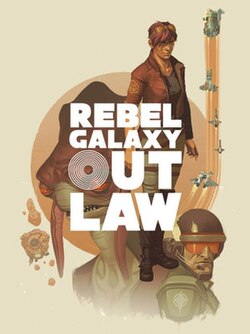
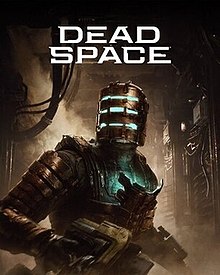 Dead Space on PS5










 Another SquareThought Site