

 Apr 2016
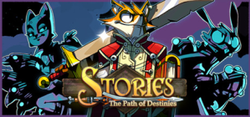

Stories: The Path of Destinities is the kind of game that sneaks up on you with a wink and then quietly tries to rearrange your feelings. On paper it's a third-person action role-playing game - a grappling-hooking, sword-crafting, combo-swinging romp across steampunk floating islands - but the real engine running under the hood is narrative: a magical book that lets its protagonist, Reynardo the fox, peek at possible outcomes and replay choices until he (or you) finds the one that sticks. The result is less about mastering a move set and more about mastering a life - or at least Reynardo's chaotic attempts at one. If you want a review that focuses on slash-per-second and frame-rate purity, this isn't it. This review unpacks character arcs and how the game's mechanics and structure serve them. I'll also be honest about where the combat and repetition drag the experience down. For readers who love a well-crafted character journey with a choose-your-own-adventure twist, Stories is a delightful, if slightly flawed, rabbit hole.
At a mechanical level Stories dresses itself like an action RPG: third-person combat that leans on combos, blocks, and a small but reliable toolkit of moves; a grappling hook to traverse the gaps between floating islands; altars where experience unlocks skills; workbenches to upgrade swords found in treasure chests. But the gameplay's clever trick is narrative persistence. Reynardo picks up a magic book early on that reveals probable outcomes of choices. When you reach a decision node the game narrates two or three possible paths and you pick one; some choices end the run immediately, some send you forward to another level and another choice. There are about twenty-four endings to discover and, crucially, four fixed "truths" hidden in the branching mess. That book changes how you play. Each run is less about learning button timing and more like an investigation. When Reynardo dies or the world goes kaboom, you flip back to the beginning but keep experience, skills, and upgrades. Suddenly doors you couldn't open before can be opened; swords you couldn't wield now cut through new encounters. The run-based progression rewards curiosity and memory: choices you made in prior runs are flagged, letting you chase unexplored branches with purpose. The meta-goal is to discover those four immutable truths and then use them to craft the single victorious path. The gameplay loop supports character development in a way few action games bother to: repetition isn't a punishment, it's the device through which the protagonist learns. Reynardo's arc - from reluctant retired corsair to battle-scarred, scheming veteran of temporal loops - is literally tied to the player's ability to retain mechanical progress while rewriting narrative mistakes. That retention transforms mundane systems like crafting and combat into symbolic tools: a stronger sword isn't just more damage, it's memory and confidence carried forward into a new choice. The cast's interplay is revealed through repeated play. Lapino, the goofy rabbit spy, metamorphoses across paths from comic relief to traitor; the knowledge that he can be a mole frames your decisions and forces moral calculus into play. Zenobia, the feline general and Reynardo's old flame, is the game's most interesting study in loyalty and contradiction: raised and adopted by Emperor Isengrim III but emotionally tethered to Reynardo, she is simultaneously the object of devotion and the executioner of the Empire's will. The Emperor himself is a narrative portrait of corruption: once a shy scholar, he's become a power-hungry tyrant searching for artifacts to wake banished elder gods. Those shifts aren't revealed linearly; you piece them together by sampling branches until the emotional truth comes into focus. Where the game stumbles is in combat variety. The core bouts are polished and fluid-many critics (and this review) have pointed out a certain Arkham-esque satisfaction in stringing hits together-but enemy types and move variety are limited. Because you'll replay many sections to map narrative truth, those limits become obvious: repetition that serves the story can feel grindy when the fights don't evolve enough. The game's smart design partially mitigates this by allowing access to previously blocked areas via retained upgrades, but if you're the sort who needs an ever-expanding move pool, Stories will feel a little light.
Visually, Stories sells its world through consistent, charming art direction rather than photoreal ambition. The setting is a steampunk archipelago of floating islands, populated by anthropomorphic animals dressed in corsair and imperial garb. The Unreal Engine 4 backbone gives the environments a crispness and the assets a solidity that suit exploration and platforming. Yan Mongrain's artistic fingerprints show in the designs: the islands feel like pockets of lore, each with touches that tell you who might have lived there before the Empire arrived. The aesthetic choices reinforce the characters' arcs - battle-scarred airships and ornate imperial machinery underline a narrative about technological hubris and personal consequence. Animation and presentation are serviceable; narration frequently takes over to present choices and reveal outcomes, which cleverly mirrors the book mechanic. The voice work and storytelling cadence give the game the tone of a fable told aloud: jaunty one moment, dour the next. Vibe Avenue's score provides a pleasant backdrop, matching steampunk brassyness with quieter melodic moments during revelation-heavy sequences. On PS4 the overall package looks tidy and holds together tonally, though the visual gloss is never intended to be the sole selling point - the focus is story, and the visuals politely step aside to let the personalities shine.
Stories: The Path of Destinities is a rare indie that treats replayability as a storytelling tool rather than an afterthought. Its premise - a fox who can preview outcomes and rewind to try again - allows the player to live through character arcs in layers, discovering dark truths about friends, lovers, and leaders by trial, error, and finally, deduction. Reynardo's growth from a reluctant retiree to someone who uses knowledge, manipulation, and love to shape an ending feels earned because the gameplay literally forces you to live through his mistakes. That narrative ambition is tempered by mechanical conservatism. Combat is competent and enjoyable in bursts, but enemy variety and move depth don't scale with the number of times you'll be asked to play the same encounters. If you love character-driven storytelling, witty narration, and the intellectual puzzle of branching narratives, Stories delivers in spades. If you want endlessly deep combat systems or constantly fresh action loops, it's likely to wear thin over multiple playthroughs. The game's Metacritic sits in the low 70s, and it picked up awards like Best PC Game and Best Indie Game at the 2016 Canadian Videogame Awards - recognition that seems fair: a thoughtful, sometimes brilliant indie that gets most things right and forgives its repetitive spots with charm. Final verdict: play it for Reynardo, Zenobia, Lapino, and the deliciously cruel Emperor. Expect to fall in love with the story, be frustrated by some fight repeats, and ultimately leave with a unique appreciation for what happens when a game treats replays as character development rather than padding.
 Path of Exile 2 on Xbox Series X/S
 Monster Hunter Stories 2: Wings of Ruin on Switch
 Combat Elite: WWII Paratroopers on PS2
 Onimusha: Dawn of Dreams on PS2
 Disney's Chicken Little: Ace in Action on PS2
 Action Man: Operation Extreme on PlayStation










 Another SquareThought Site