

 Mar 2022
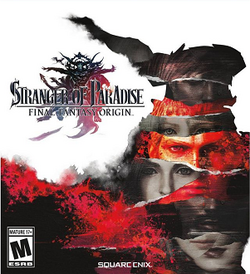

If Final Fantasy and a blender full of dark-humour fanfiction had a baby, Stranger of Paradise: Final Fantasy Origin would be the result - an occasionally brilliant, occasionally bewildering action-RPG that proudly tells you from the start it has very different tastes. You play as Jack, a man who wakes up with anger issues and a serious career goal: destroy Chaos. If you were expecting soft-spoken knights and pastel crystals humming inspirational background music, this game politely hands you a brooding protagonist, a splash of blood-colored art direction, and the kind of grim determination usually reserved for people who forgot to pay their rent. The game is a Team Ninja x Square Enix collab, so expect fast, sometimes brutal combat with a job system that borrows heavily from Final Fantasy V's infinite wardrobe of ways to stomp things. Tetsuya Nomura dreamed up the concept and Kazushige Nojima handled the scenario writing, which means the story swings wild: is it a prequel? A retelling? A meta-commentary on repetition and destiny? You'll probably yell "maybe" at your TV at least once. The reception was mixed for good reason: people either love the combat and oddball tone, or they hate Jack's personality and the occasionally messy storytelling. I fall squarely into the camp that enjoys the ride - as long as you don't expect a traditional Final Fantasy lullaby.
The immediate thing to love is how much the combat leans into Team Ninja's DNA. This is a Soulslike-tinged action game with a Final Fantasy job system stuck on top like a jaunty hat. Jack can swap between two assigned jobs in real time, chaining physical attacks and magic with a satisfying rhythm. Enemies have a "break gauge" that, when depleted, lets Jack land a finishing blow that crystallizes foes. This isn't just for dramatic effect - harvesting those crystals refills your magic gauge and feeds into the risk-reward loop. Want magic? Beat the enemy down and take the snack. Want to swipe at things with a giant sword? Go for a melee-heavy job and enjoy being a chaos-based meat grinder. Customization is the party trick here. There are more jobs than you can reasonably memorize without a spreadsheet obsession, and switching them opens up builds that range from "I am a lumbering tank who also casts Meteor" to "mobile stabbing machine who looks sad about everything." The freedom to mix and match skills is fun, deep, and often addictive. The game also does something clever with enemy design: many big foes are actually former heroes or characters who revert between forms, tying gameplay mechanics into the story beats in a way that's occasionally clever and occasionally cruel on your patience. Level design nods to classic FF locales - from swampy woods to ominous ruins - and maps are structured around repeatable missions rather than an open-world promenade. You'll tackle dungeons, return to base, talk to a cast who might as well be auditioning for a soap opera with a sword, and then dive back into the dark. The demo process leading up to release improved tuning and performance a bit, but the base design remains emphatically action-first. Multiplayer exists, and it's solid for people who want co-op chaos. If you're the kind of player who enjoys trading build tips with strangers and getting absolutely trounced by a boss because your new friend thought it would be hilarious to be a glass-cannon black mage, the multiplayer expansion options and subsequent DLC (like Trials of the Dragon King) beef up content and offer new toys to tinker with. Story-wise, the game loves mise-en-scène twists: Jack's arc culminates in a revelation-heavy finale that flips the traditional Warriors of Light script on its head. Whether that twist landed for you will depend on how much you enjoy tonal whiplash and morally dubious decisions accompanied by a grand piano soundtrack.
Graphically, Stranger of Paradise is a mixed bag - imagine a gorgeous piece of stained-glass art that's been left out in the rain and then placed next to a very enthusiastic action-cam. The key art and character designs (Nomura's fingerprints are all over this) look sharp in promotional material and close-up cutscenes; Princess Sarah in particular is styled with obvious reverence for the original Final Fantasy art. In-mission visuals can range from moody and atmospheric to a bit rough around the edges, especially on last-gen hardware where frame-rate instability and texture pop-in were noted by critics. Boss encounters often look spectacular: dramatic camera angles, lots of particle effects, and moments that feel ripped from an action anime. Smaller elements - NPC facial animations, some environmental details, and occasional performance dips - occasionally remind you this isn't a pure PS5 fairy-tale. The soundtrack, with contributions from Naoshi Mizuta and collaborators, does a lot of heavy lifting; it punctuates the game's theatrical beats and turns the more dramatic moments from solemn to gloriously operatic. If the visuals don't always blow the roof off, the presentation combined with music still hits the right notes when the game commits to spectacle.
Stranger of Paradise: Final Fantasy Origin is a love letter wrapped in barbed wire: it adores Final Fantasy lore enough to reference and remix it, but it also wants to bite you in the ankle and make you question your life choices. The combat is its undeniable heart - satisfying, deep, and sometimes ruthlessly fair - while the story and characters are the charmingly cracked ceramic vase that holds everything together and occasionally leaks plot all over your shoes. If you're in for a challenging, build-heavy action-RPG that treats Final Fantasy like an old myth it can reinvent, you'll have a great time. If you want a polished, narrative-first JRPG with all the polish turned up to eleven, this probably won't be your instant soulmate. The PS4 version gives you the full package: decent visuals, the core loop of breaking and crystallizing enemies, and a job system that encourages creative builds. Patches and DLC have expanded and smoothed things out since launch, but the game's personality - edgy, theatrical, and occasionally bewildering - is baked in. Final verdict: a compelling combat playground with a story that will either make you gasp with delight or tilt your head and mutter, "Wait, what?" Score: 7.5/10. Bring patience, an appetite for experimentation, and a friend who doesn't mind being yelled at by Jack.
 Dirge of Cerberus: Final Fantasy VII on PS2
 Theatrhythm Final Bar Line on Switch
 Combat Elite: WWII Paratroopers on PS2
 Onimusha: Dawn of Dreams on PS2
 Disney's Chicken Little: Ace in Action on PS2
 Action Man: Operation Extreme on PlayStation










 Another SquareThought Site