

 Jan 2018
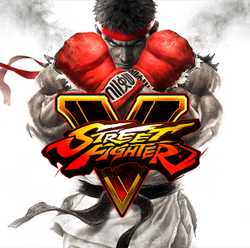

Street Fighter V arrived in 2016 like a headliner who showed up without any of the supporting band: the riffs were there, but the setlist was thin and the sound system occasionally hiccupped. By the time Capcom issued the Arcade Edition in January 2018 the lead singer had a new backing band, a couple of extra songs and a properly tuned PA. For those of us who remember reading glossy previews in the 1990s and trusting our instincts about a fighter's bones, Arcade Edition feels like the developer finally remembered to upgrade the venue as well as the roster. This is not a miracle reanimation. The Arcade Edition is an evolution, not a resurrection: it packages the first two seasons' DLC into a more satisfying whole, tacks on a proper single-player Arcade Mode and Extra Battle content, adds a second V-Trigger option for characters, and sprinkles polish where Capcom's launch day left it wanting. If you kept a grudging admiration for V's fighting engine but cursed at the empty menus and matchmaking meltdowns, this edition is Capcom's way of saying 'we heard you' - and then quietly handing you more match options and fewer excuses.
At its core Street Fighter V remains a two-dimensional fighting game dressed in modern three-dimensional art - a classic formula executed with contemporary finesse. The Arcade Edition does not overhaul the essentials; it refines them. The game continues to use an EX/critical gauge system that funds super combos (Critical Arts) and powers to spice up matches, while the new-to-this-series V-Gauge remains the defining mechanical experiment of SFV. The V-Gauge rewards defense and counterplay, enabling V-Skills (unique character tools), V-Reversals (a built-in counter while being pressured), V-Shifts (a defensive evasive option) and V-Triggers (high-impact, often match-changing activations). These mechanics give each fighter distinct contours: Ryu's V-Trigger augments his projectiles and offense, while F.A.N.G.'s poison and reach turn him into a slippery zoning specialist. The Arcade Edition's clearest gameplay boon is the inclusion of a second V-Trigger for each character. This is not mere window dressing; it rewrites matchups and strategies. Where once a single V-Trigger choice defined an approach, players now choose between two philosophies for the same character, which rewards experimentation and deepens the meta. Training mode improvements - including frame data and better tools - reward players who want to dig into the engine rather than simply mash their way uphill. The Stun Meter, visible beneath health bars, remains an excellent design choice that nudges both aggression and caution in meaningful ways. Roster matters more in a fighting game than in most genres, and Arcade Edition shores up what the original lacked. The base game launched with 16 characters; post-launch seasons added many more, and Arcade Edition bundles seasons one and two content, giving newcomers immediate access to a far healthier roster. New entrants such as Laura, Rashid, Necalli and F.A.N.G. bring fresh mechanics and match-up variety, and later seasons introduced crowd-pleasers and legacy characters. Capcom's season model - and the option to unlock characters with in-game Fight Money - remains controversial in 2018 terms, but the Arcade Edition's retail/upgrade packaging at least formed a more consumer-friendly avenue for those who wanted a complete experience without chasing downloads. Online health has always been the game's Achilles' heel. The original release suffered server outages, matchmaking woes and complaints about input latency on PS4 that prickled high-level play. Arcade Edition did not magically cure every netcode complaint, but the product's rework and post-launch fixes made for a far less embarrassing online face at competitive events. It should be noted: dedicated tournament and arcade communities still preferred wired setups and local play, but for the home fighter Arcade Edition finally offered an online experience that matched the quality of its core mechanics rather than undercutting them.
Visually, Street Fighter V has always been one of Capcom's best-looking fighters of the era. Built on Unreal Engine 4, the game presents highly stylized 3D models and richly detailed stages while keeping the fighting plane strictly two-dimensional. The art direction favors clarity and animation fidelity over photorealism, which matters: a fighter has to telegraph weight, reach and intent from a glance in a match's heat, and V's visuals communicate that beautifully. Arcade Edition supplements the package with a new CG opening cinematic and refreshed interface graphics. Battle stages are interactive in small, satisfying ways - finishing a foe on the edge produces a special animation - and costume presentation benefits from an improved 3D viewer in the in-game shop, a surprisingly useful touch for players considering purchases. Critics at the time praised these enhancements, and for once the visual sheen was matched by substantive mode additions. There are blemishes: early reviewers noted occasional graphical glitches and the odd animation quirk, and the game's later forays into monetisation (paid stages, costumes and even loot boxes introduced in mid-2018) sometimes soured the presentation with storefront clutter. Still, if you judge the game by how it looks and reads in combat - the essential test for a fighting title - Arcade Edition stands among the era's finest.
If you are the sort of player who judges a fighting game by its frame data, its matchup charts and the way you feel the stick translate intent into pixels, Street Fighter V: Arcade Edition is the product you probably suspected Capcom wanted to make in 2016. It takes a mechanically sound, rather austere original and fills out the hallways, throws in a proper arcade ladder, gives characters meaningful options with second V-Triggers, and tidies up menus and training tools so the competitive-minded can practise without frustration. This edition is not a panacea: the game's monetisation choices and later additions like loot boxes and in-game advertising drew reasonable ire, and those who suffered the original's server miseries will remember the launch drama. For the patient fighting fan, though, Arcade Edition is a substantial redemption. It earned improved critical reception - higher Metacritic scores and glowing 9/10 appraisals from outlets that found the original wanting - and restored Street Fighter V to a place where it could be played, practised and adored without apology. In short: buy the music, not the ticket - if you want the full concert, Arcade Edition is the performance worth attending. Score: 8.5/10.
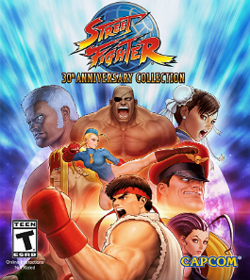
 Street Fighter 30th Anniversary Collection on PS4
 Oretachi Game Center Zoku: Trio the Punch on PS2
 Ultraman Fighting Evolution on PlayStation
 ACA Neo Geo: Art of Fighting 2 on Xbox One
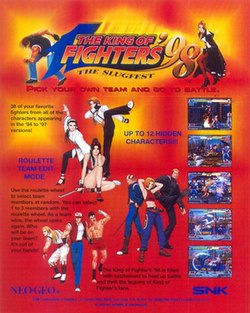
 ACA Neo Geo: The King of Fighters '98 on Xbox One
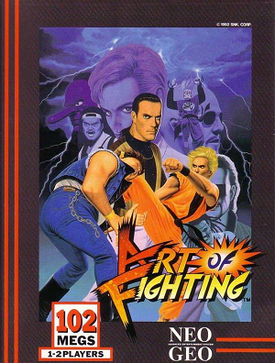
 ACA Neo Geo: Art of Fighting on Xbox One










 Another SquareThought Site