

 May 2018
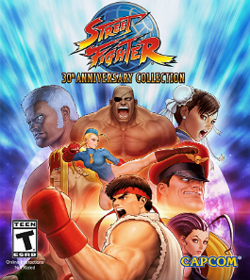

If you like your nostalgia with a side of pixel sweat, Street Fighter 30th Anniversary Collection serves it up in a big, delicious platter. This compilation gathers the arcade versions of a dozen (thirteen on Switch) classic Street Fighter arcade cabinets spanning from the awkward original 1987 entry through the high-water marks of Street Fighter II, Alpha, and Street Fighter III. On PS4 you get a faithful, unglossed set of arcade builds that were designed for coin-op grinders - which means the challenge is baked into the code. If you're chasing mechanical purity, learning real fighting-game fundamentals, or trying to argue on the internet that parry is the purest form of human expression, this collection is basically a textbook with extra punches.
What this collection is best at is presenting the raw, arcade-level demands of the Street Fighter lineage. These are not the modern safety-wrapped versions with generous training wheels. You get the classics: Street Fighter (1987); the many flavors of Street Fighter II (World Warrior, Champion Edition, Hyper Fighting, Super, Super Turbo); the Alpha trilogy; and the three iterations of Street Fighter III (New Generation, 2nd Impact, 3rd Strike). Each one teaches a slightly different language of the fight: the block-and-punish fundamentals of II, the meter-and-mix strategies of Alpha, and the frame-perfect, footsie-and-parry ballet of 3rd Strike. The skillset required across the collection is gloriously broad. Expect to grind footsies-learning how to whiff punish, space normals, and control the midrange with well-timed pokes. You'll practice special-move execution until your thumbs cry mercy. Combos in later entries demand timing and practice, and Alpha's custom combo mechanics ask you to choose whether to cash in meter for huge damage or keep it for defensive options. Super Turbo and Hyper Fighting are speed demons: reaction speed and strict discipline win matches there, while 3rd Strike elevates reading your opponent and parry timing into an art form where a single well-timed forward tap reverses your fate. A couple of modern conveniences make the collection more approachable without neutering the difficulty. Save states let you freeze a single-player run at any moment, which can be a godsend for learning a nasty CPU pattern or drilling a particular boss. Use them as training crutches if you must, but remember they're optional - the arcade builds still punish mistakes harshly. For online play, only four games have netplay: Hyper Fighting, Super Turbo, Alpha 3, and 3rd Strike. Digital Eclipse added "rewind" netcode and an in-game input-latency slider, which is a smart, modern touch; it makes online matches feel less like dutiful lag-slogging and more like actual competitive fights, provided both ends have reasonable connections. Challenge in this collection is not uniform. The earliest game, Street Fighter (1987), is fiddly and mechanical in a way that feels antiquated; its value is historical and as a reminder that fighting games have come a long way. The II-era games are where you'll learn and suffer gloriously: these entries teach spacing, punish windows, and match-up knowledge, and they'll force you to refine game management. Alpha games bring fast chain combos and mixup complexity, requiring multi-layer thinking-offense, defense, meter economy, and positioning. Street Fighter III - especially 3rd Strike - is often where the collection becomes unforgivingly precise. Parrying demands nerves of steel and lightning reflexes; it rewards practice with spectacular, momentum-swinging reversals that feel like cheating at the best possible moment. If you're after a challenge that improves your raw fundamentals, this collection is a boot camp. If you intend to go online, be selective: only four titles have ranked matchmaking and four-player lobbies, and the community tends to congregate around a few favorites (Super Turbo and 3rd Strike often see the most activity). The inclusion of an interactive museum, music player, timeline, and biographies is more than fan service; it's context that helps you understand why a particular trick or exploit exists, which in turn sharpens your meta-game. Pre-orders included a digital copy of Ultra Street Fighter IV on PS4, which gives yet another modern-focused training ground if you want a gentler transition into contemporary mechanics. In short: this collection forces you to learn real fighting-game craft. It punishes sloppy inputs, rewards spacing and timing, and contains some of the purest mechanical tests the genre has to offer. It's merciless by design, and that's exactly the point.
Graphically the collection wears its arcade provenance proudly. These are original arcade ROMs, not remasters, so you get the pixel-level charm and animation priorities of 1990s cabinets; in many cases that means clearer, more readable sprite work than you might expect. Super Turbo and 3rd Strike still look sharp-fluid animations and expressive sprites make it easy to read an opponent's intent, which is crucial when you're trying to time a parry or whiff-punish a sweep. The museum and biography sections add concept art and sprite animations, letting you appreciate the design work behind the pixels. There's no modern graphical overhaul, no fancy filters that blur hitboxes and ruin your punishment windows; what you see is what the arcade crowd saw, which is both a blessing for purists and a potential shock for players used to modern anti-aliased comforts. On PS4 the games run cleanly, and the presentation options are primarily about how you frame the original visuals rather than changing them.
Street Fighter 30th Anniversary Collection on PS4 is a love letter to players who don't mind being humbled frequently. It's not made for the casual button-masher who expects tutorials to hold their hand; it's for the person who wants to get better at fighting games the old-fashioned way: by losing a lot, learning matchups, mastering execution, and eventually stealing matches with perfectly timed parries and punishes. The collection's faithful arcade builds, save-state safety net, and thoughtful online features (rewind netcode, latency adjustment) strike a solid balance between authenticity and playability. Critics liked it (PS4 Metacritic around 83/100) and sales show it found an audience: millions have bought in worldwide. If you want a curated historical experience that will challenge your reflexes, your spacing, and your ability to stop flailing the moment you see a Shoryuken, this is a fantastic package. If you expect modern training regimens, universal netplay, and every variant of every re-release, temper those expectations. For people who play to improve, and enjoy a harsh teacher with excellent sprite animation, this collection is required reading.
 Ultra Street Fighter IV on PS3
 Ultra Street Fighter II: The Final Challengers on Switch
 Ultraman Fighting Evolution on PlayStation
 ACA Neo Geo: Art of Fighting 2 on Xbox One
 ACA Neo Geo: The King of Fighters '98 on Xbox One
 ACA Neo Geo: Art of Fighting on Xbox One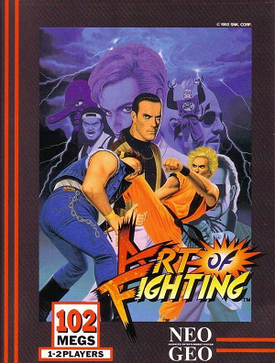
 Mortal Kombat: Legacy Kollection on PS4
 Tetris Forever on Xbox Series X/S
 Atari 50: The Anniversary Celebration on Xbox Series X/S
 Teenage Mutant Ninja Turtles: The Cowabunga Collection on Switch
 The Making of Karateka on PS5










 Another SquareThought Site