

 May 2017


Ultra Street Fighter II: The Final Challengers is Capcom's nostalgia-fueled reunion tour for the Street Fighter II cast, parked squarely on the Nintendo Switch. Conceived as a 30th anniversary celebration and built on the bones of Super Street Fighter II Turbo, this is equal parts retro shrine and polished nostalgia - two graphical styles, remixed audio, a handful of modern mechanics, and enough palette swaps to keep the darkest corners of character vanity satisfied. What sets it apart from the coin-op arcade cabinet you remember is not just the HD art or the Switch portability, but the cheeky inclusion of first-person 'Way of the Hado' mode and two roster curveballs: Evil Ryu and Violent Ken. If you came for arcade-perfect combat, you get a mostly faithful Super Turbo base with a few balance tweaks. If you came for character drama, Capcom quietly hands you a soap opera in pixel and HD form, where every fighter is a walking backstory waiting to be mashed into a Hadouken.
Ultra Street Fighter II keeps the Super Turbo ruleset at its core: six-button inputs, charge and motion attacks, and that deliciously brittle 1990s balance that rewards memorized combos and disapproving glares. Capcom sprinkled in modern flourishes - grapple breaks, retuned combo timing, and small balance fixes - but the game still feels like a quarrelsome arcade relic, which is exactly what the devs promised when they said they wanted to "go back to our roots." Local and online multiplayer are present (online has a point-based ranking system), Buddy Battle returns for two-versus-one co-op shenanigans, and a Color Edit mode lets you create up to 10 custom palettes per character, because nothing says personal growth like painting Dhalsim fluorescent pink. Where the mechanical meat intersects with character identity is where Ultra Street Fighter II becomes interesting to dissect. Ryu, as always, is the wandering monk with a joystick and an identity crisis. His arc in the series - the stoic search for strength while resisting the Satsui no Hado - is honored here by the presence of Evil Ryu. Evil Ryu is not just a palette and a fireball with attitude; in canon he represents the road not taken for Ryu, the version who let the dark power win. In gameplay terms he plays like Ryu with an edge: harder-hitting options and a more aggressive toolset that translate his corrupted philosophy into tangible risk/reward. The game offers glimpses of him in the intro, a visual reminder that Ryu's internal conflict is still the engine of the franchise. Ken and Violent Ken provide a neat foil pair. Ken's cheeky American brand of fireball diplomacy meets Violent Ken, who has been brainwashed by M. Bison's Psycho Powers. Violent Ken is originally a crossover oddity turned official roster spice here; he plays like Ken but warped, a living 'what-if' about rivalry and control. M. Bison remains the grand puppet master and antagonist: his presence as boss and as the force behind Violent Ken ties the game's mini-arc into the classic good-versus-evil throughline. Akuma's inclusion and the secret Shin Akuma - selectable locally with a code - doubles down on the theme of the warrior giving in, except this time the warrior fully embraces annihilation and shows up with a demon facial expression to match. The rest of the roster reads like a world-tour of motivations. Chun-Li is justice with kicks, Cammy is a conflicted operative who occasionally remembers she is a human being and not just airborne spin kicks, Guile is a revenge plot in flattop form, and Sagat is an honorable king of damage shaped by pride. Characters like Dhalsim and Zangief embody philosophical extremes: the yoga pacifist who stretches your hitbox, and the wrestling patriot who slams you until you apologize. Blanka and Vega bring spectacle and weirdness - one green jungle mutt and one narcissistic claw-dancer - which is precisely their charm. Fei Long channels Bruce Lee cinema bravado, Balrog is a punchy symbol of greed, and Dee Jay is somehow always on beat even as your health bar empties. The game doesn't invent new arcs for these veterans, but the roster's expanded presentation - especially the gallery with over 1,400 SF20 illustrations - acts like a coffee-table biography for each fighter: their past, their stage music, their costumes, and their emotional baggage available on demand. Way of the Hado attempts to make Ryu's inner training literal by putting you in his shoes (first-person) and asking you to perform Hadouken, Shoryuken and Tatsumaki motions with Joy-Cons. It is an earnest idea: training as narrative. In practice it stumbles. Motion input confusion and shallow content undercut the mode's potential to illuminate Ryu's discipline; instead of meaningful immersion it often feels like a gym class where the instructor forgot how to calibrate the sensors. The Joy-Con control scheme across the whole game drew criticism for D-pad and stick inconsistencies, which is a real-world roadblock for anyone trying to make characters 'speak' through precise inputs.
The game's two visual styles are its most defensible bragging points. Classic mode is a pixel-perfect love letter played in 4:3 that preserves the crunchy arcade vibes and the tiny, iconic character sprites that hooked arcade-goers in the '90s. New Generation (HD) mode, rendered by Udon Entertainment using Capcom's MT Framework, ups the ante with modern illustrations, smoother animations and widescreen presentation. Both sound banks mirror the visual choices: classic arcade audio or remixed tracks with Street Fighter IV-era Japanese voiceovers. The HD art does more than look pretty; it re-emphasizes character design and personality in ways the old pixels could only hint at. Ryu's scowl, Chun-Li's determination, and Bison's theatricality all read clearer and louder in HD, which helps communicate each fighter's story arc even in a match where the only dialogue is a grunt and a victory pose. The gallery mode is a gift for lore nerds: over 1,400 illustrations from the SF20 art book let you assemble a visual timeline for each character. If you're the sort of person who judges whether a fighter 'feels' like a character based on their splash art, this game's presentation will soothe and excite you. That said, the price point for what is essentially a remixed port was a sticking point at launch; updated visuals can justify a premium, but not if you were expecting content depth to match the price tag.
Ultra Street Fighter II: The Final Challengers sits somewhere between archival devotion and modern inconvenience. Capcom succeeded in making a version of Super Turbo that looks and sounds excellent for new screens, and the roster tweaks - Evil Ryu, Violent Ken, and the secret Shin Akuma - give long-time fans juicy little variations on familiar arcs. The gameplay preserves the classic feel, with small quality-of-life balance changes, and modes like Buddy Battle and Color Edit provide light, community-friendly options. Problems are real, though: the motion-heavy Way of the Hado is a narrative experiment that doesn't land reliably, and the Switch's Joy-Con controls are often the weak link in a game that demands precision. The retail price at launch also rubbed some players the wrong way given the game's heritage as an update of an existing HD remix. If you're buying it to relive Ryu's struggle with the Satsui no Hado or to explore the 'what if' of Violent Ken, this is an attractive, well-presented way to do that on the go. If you want a modernized fighter with deep single-player story beats and motion-accurate training, you may come away wanting more. For fans of character lore and fight-engine archaeology, it is an affectionate, occasionally flawed museum piece - entertaining, often beautiful, and worth a rent or a buy if you value replaying fighting tales with friends and proving once again that Guile's theme will always make your spine tingle.
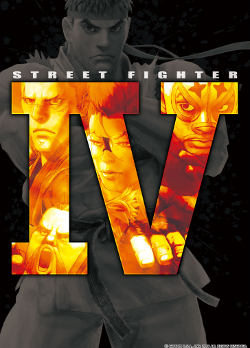 Virtua Fighter 5 Final Showdown on PS3
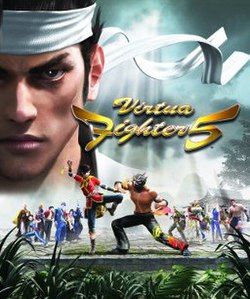 Theatrhythm Final Bar Line on Switch
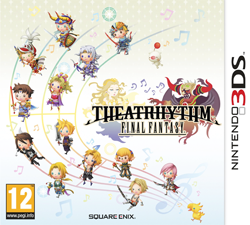 Ultraman Fighting Evolution on PlayStation
 ACA Neo Geo: Art of Fighting 2 on Xbox One
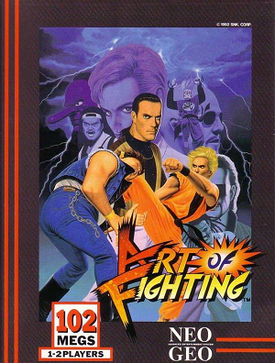 ACA Neo Geo: The King of Fighters '98 on Xbox One
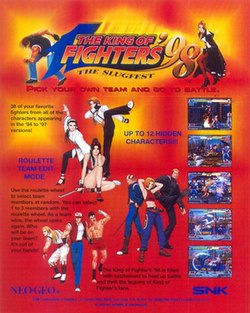 Touhou Hyoibana: Antinomy of Common Flowers on Switch
 Resident Evil 2 on PS4
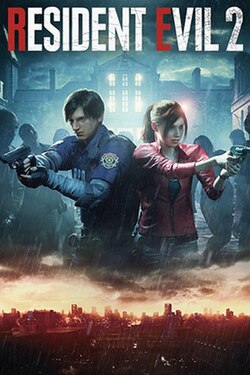 Devil May Cry 3: Dante's Awakening on PS2
 Resident Evil 7: Biohazard on PS4
 Resident Evil 4 (remake) on PS4
PS4.jpg)










 Another SquareThought Site