

 Feb 2014
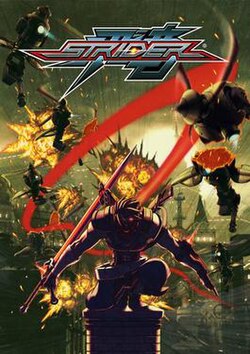

Strider on PS4 is a reboot that smells faintly of neon, old magazines, and a developer meeting where someone said, in a calm, reasonable voice, 'Let us make Hiryu very fast.' What arrived in February 2014 is a compact, efficient slice of action that remembers it was born on the shoulders of 1989's arcade original and then briskly runs laps around that memory until it gets tired and recharges its Cypher. The result is not a bloated open-world monstrosity pretending to be deep; it's a focused, level-based, Metroidvania-flavored action romp that expects you to bleed a little and then come back because the parkour is fun and the Cypher is a neat toy.
You play as Strider Hiryu, the immaculate assassin with a plasma blade and a penchant for parkour that borders on 1st degree acrobatics. The PS4 version keeps the action two-dimensional but layers it with exploration and progression so that every rooftop and derelict tower in Kazakh City hides something that will make you better at slicing things. Central to the fun is the Cypher: a plasma weapon that can change forms. Mostly the game tells you to explore, find upgrades, and then use those upgrades to access places you previously could not. It is Metroidvania logic with a shinier sword and faster reflexes. Combat is brisk and often ruthless. The developers leaned into the idea that Hiryu should feel speedy - about eight times faster than the original, which translates into fights that are short, sharp, and occasionally unfair in a way that feels intentional. Enemies will punish hesitation, and the game's balance sits somewhere between satisfying and smug. When it clicks, you are threading dashes, countering aerial assaults, and turning a room of foes into a confetti of limbs with minimal effort. When it doesn't click, you will die, reload, and learn why this game likes you better after repeated attempts. Progression is pleasantly tactile. The team wanted the player to earn abilities rather than show up maxed out and have everything taken away for narrative convenience. So you start with the basics and pick up Cypher upgrades and traversal tools by poking into crannies of the city. Design influences like Shadow Complex are present in the balance between speed, combat, and exploration - the feeling of finding a door you couldn't open before, then returning later with new tools and a hollow sense of smugness. Boss fights punctuate the campaign and often play like compact puzzles where stamina and timing matter. The game isn't overly long: expect 4-6 hours for a clean first run, with extra challenge modes and collectibles adding replay value. At its $15-ish launch price the package feels reasonable: it's short enough to not outstay its welcome and dense enough to make that $15 feel like a bargain, unless you count emotional distress from repeated Game Over screens.
Strider maintains a 2D plane while dressing it in modern polish. Capcom Osaka Studio handled character design, and it shows in Hiryu's silhouette - iconic, nimble, and photogenic in motion. Backgrounds are layered, industrial, and occasionally beautiful in the way that abandoned futuristic cities are. Animations are snappy; even the death animation is courteous enough to be satisfying. The soundtrack is a respectful nod to the originals, with homages and modifications that make the retro fan feel seen but not pandered to. There are no photorealistic lighting miracles here, because the game does not pretend to be a tech demo. Instead it uses clear visual language to communicate where you can jump, what is dangerous, and which object probably hides an upgrade. On PS4 the frame-rate and visual fidelity are stable, and the art direction favors readability over spectacle, which is exactly the sensible choice for a game that wants you to move fast and not get lost in a puddle of particle effects. A few stages are darker or more cluttered than others, but the aesthetic consistency keeps the whole thing coherent.
Strider for PS4 is a compact reboot that knows what it is: a fast, slightly punishing hack-and-slash with Metroidvania bones and a love of urban rooftop ballet. It won't revolutionize the genre, and it leans on nostalgia enough to make fans smile, but it modernizes in thoughtful ways - chiefly by pacing progression so that Hiryu gains tools and you feel the improvement. Critics were generally favorable; Metacritic sits around 77 for the PS4 release, Famitsu liked it, and various outlets praised its balance of old and new. The game's brisk length and challenge curve are the most divisive parts: some players will find the runs invigorating, others will call it short or repetitive. Sales suggest people liked it anyway - Strider has sold over a million copies as of 2023 - which is probably the most diplomatic compliment any game can receive. If you like your platforming with a hard edge and your combat sharp enough to slice mosquito wings, Strider is an efficient good time. If you want a sprawling RPG to lose months to, it is not that. For the price it typically commands and the tight, deliberate design it offers, this reboot is worth a rent, a purchase, or at the very least an evening spent trying to execute the perfect aerial slash while the game politely refuses to cooperate. It is not perfect, but it is exactly the sort of sensible, energetic nostalgia trip that avoids both cynicism and carrying-on-too-long syndrome.
 Dragon's Dogma: Dark Arisen on PS4
 Dark Angel: Vampire Apocalypse on PS2
 PlayStation Home on PS3
 Gaelic Football '25 on Xbox Series X/S
 Together! The Battle Cats on Switch
 Crash Bandicoot: The Wrath of Cortex on PS2










 Another SquareThought Site