

 Jun 2022
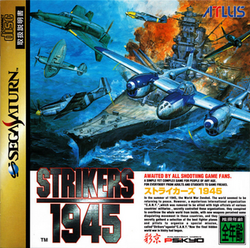

Strikers 1945 arrives on PS4 bearing sprite scars and arcade bravado, like a leather-jacketed veteran from a decade that thought more explosions equaled better gaming. Originally hatched in the coin-hungry arcades of 1995 by Psikyo, this vertically scrolling shoot-'em-up is a textbook example of mid-90s arcade design: brutally exacting, mechanically lean, and blessed with bosses so large they frighten small rodents. The premise is gloriously pulp - a post-World War II Earth threatened by a gaggle of superweapons and an obviously suspicious organisation known as C.A.N.Y. - and the game wears that premise like a neat lapel pin while it proceeds to shred waves of enemy aircraft, battleships and, eventually, the Moon. This is not a modern reimagining with bloom filters and play-catchphrases. It is the arcade original in spirit (and mostly in content) transported to modern hardware by Zerodiv. If you have nostalgia for coin-op quarters, a tolerance for relentless difficulty and an affection for precise, scoring-driven shooters, Strikers 1945 will feel like rediscovering an old friend who hasn't mellowed much with age. If you prefer narrative hand-holding, checkpoints every five seconds and a tutorial that reads like a novella, you may find it harsh and inscrutable - exactly as the 1995 audience intended.
Strikers 1945 keeps the control scheme stubbornly simple and rewards players who master its small toolbox. Each of the six selectable planes (piloted by the eponymous Strikers) shares three core offensive options: a normal shot, a charged shot, and a bomb. The normal and charged shots can be upgraded by picking up power-ups scattered among the debris of fallen enemies and destructible scenery. Bombs act as an emergency reset, clearing weaker foes and the majority of on-screen bullets - a precious commodity when the screen resembles a Jackson Pollock painting. The scoring system gives the title its teeth. Gold bars appear from certain destroyed buildings and enemies; collect enough and your level score climbs, which in turn affects the medal you receive at the end of a stage. For players who kept an arcade ledger in their jacket, this medal system and the tallying of time, gold collected and enemies defeated fuels the compulsion to replay levels and shave fractions off runs. At the end of each stage the game adds up your time, gold bars and kills, awarding silver or gold medals for the truly dedicated or absurdly good. Cooperative play for two players is supported, allowing for tandem strafing runs and the occasional friendly collision that results in mutual annihilation. The choreography of the game reveals a classic Psikyo philosophy: enemy patterns are precise, boss attacks are telegraphed but merciless, and progression is a dance of memorisation and reaction. The charged shot provides a satisfying risk/reward trade: holding fire leaves you exposed, but unleash a charged blast at the right moment and entire enemy formations thin out like a bad haircut. Bombs are limited but replenishable, and the judicious use of one will get you out of more than one deadly jam. The progression through stages escalates from grounded military threats to increasingly outrageous set-pieces, concluding with a literal trip to the Moon and a final confrontation with Mecha C.A.N.Y., the kind of boss name that would make a Saturday-morning cartoon show jealous. The game is not without its eyebrow-raising quirks. The original Japanese arcade release contains a hidden post-credits bonus that unlocked if you beat the entire game without losing a life: an image of the six pilots posing undressed. It's an odd, somewhat risqué vestige of 1990s arcade culture that modern sensibilities will find either laughable or problematic; the content is strictly an archival oddity and does not affect gameplay, but its existence is worth noting when evaluating the title's legacy. On the matter of balance, the game errs on the side of difficulty rather than accessibility. Medal chasing and high-score prowess are rewarded; casual progression is allowed but will frustrate those unaccustomed to the precise demands of classic shooters.
Graphically, Strikers 1945 is resolutely of its era - handcrafted sprites, richly detailed enemy designs, and boss art that consumes more screen real estate than some indie RPGs. The arcade sprite work remains serviceable on PS4 because the art relies on clear silhouettes and readable animation rather than high-resolution textures. Planes such as the P-38 Lightning are recognisable and the larger foes, like the Super Battleship Kii, are given an almost theatrical presence with layers of detail and attack arms that unfold in predictable but spectacular ways. The visual language is functional: enemy bullets are distinct, explosions are dramatic, and the background art provides variety without stealing focus from the action. Porting such a title to modern hardware risks blurring its aesthetic or over-processing the pixel work; the PS4 release retains the sprite clarity and arcade composition, preserving that 1990s immediacy. Expect occasional stages that lean on repeating motifs and limited colour pallets - a product of arcade hardware constraints - but also expect those same stages to be designed with gameplay readability as the primary objective. On a modern display, the old-school visuals trade polish for personality, and for many players that trade is more than fair.
Strikers 1945 on PS4 is an unpretentious, unvarnished slice of arcade history. It doesn't wrap its challenge in trendy modern conveniences, nor does it pretend the hours spent memorising boss patterns are anything but the video game equivalent of boot camp. For players who love scoring systems, tight controls and sprites with character, this port offers plenty to savour: the three-weapon setup is satisfying, the medal mechanics encourage repeat runs, and the bosses deliver spectacle and pain in equal measure. This is not a game for everyone. Its difficulty curve and emphasis on memorisation will frustrate players seeking a leisurely experience, and its arcade-era quirks (including the controversial hidden ending in the Japanese release) are reminders that game culture has changed since the mid-90s. That said, the title's pedigree in Psikyo's shoot-'em-up catalogue, its status as a high-performing arcade hit in 1995 and the continued appeal of its core mechanics justify a recommendation to fans of the genre. As a historical artefact and as a still-playable piece of arcade design, Strikers 1945 earns an 8 out of 10: a robust, sometimes ruthless shooter that wears its age like a medal - scratched, dented, and undeniably earned.
 Strikers 1945 III on PS4
 ACA Neo Geo: Strikers 1945 Plus on Xbox One
 PixelJunk Shooter 2 on PS3
 PixelJunk Shooter on PS3
 Constantine on PS2
 Psyvariar 2: Ultimate Final on PS2










 Another SquareThought Site