

 Jul 2017
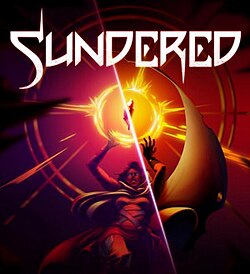

Sundered dresses up as a Metroidvania and waffles through procedural caves like a somber ballet, but at its center it is a two-person therapy session between a wandering woman named Eshe and a talking eldritch artifact called the Shining Trapezohedron. If you want a standard 'collect abilities, open shortcuts, beat bosses' spiel, the box covers that: yes, it has skill trees, shrines, and randomly rearranged passages after death. This review peels back the moss and examines what those mechanics mean for the characters and the narrative choices that drive the three very different endings. In short: the gameplay and the story are in a grudgingly romantic, codependent relationship that occasionally slaps you in the face with hordes of enemies to keep things dramatic.
Eshe is a cipher in the opening moments: nameless, thirsty, windblown, and sporting a wardrobe that screams 'I will survive because plot demands it.' She stumbles into the underworld and immediately meets her roommate-from-hell, the Shining Trapezohedron, an object that talks like a philosophy professor after too much coffee and far too little ethics. Mechanically, the Trapezohedron is the game's inciting device: it grants powers, explains lore, and-most importantly-offers corruption. The choice architecture of Sundered turns every combat drop into a small moral ledger. You collect Shards from enemies for permanent upgrades via a skill tree (the usual Metroidvania carrot). Bosses drop rarer Elder Shards, which are currency in a different kind of economy-one where your soul is on layaway. That economy is where character arc and mechanics do a little tango. Using Elder Shards to 'Corrupt' Eshe trades humanity for power: you get gargoyle forms, grotesque transformations, and flashy abilities that make combat more satisfying but narratively push Eshe toward becoming less human and more cosmic-whoops. On the other hand, throwing Elder Shards into a Valkyrie incinerator to burn them up gives mundane stat bonuses and keeps Eshe grounded. The gameplay thus literalizes classic RPG choices into a tension between spectacle and contentment. Do you want to shred bosses in a cloud of eldritch candy, or do you want to make it home with a working conscience? Procedural rearrangement of passages after death is the game's attempt at roguelike spice. It keeps the map from becoming too cozy, and from a character perspective it simulates an underworld that resents being tamed: Eshe's progress is never secure because the environment itself refuses to be narrated smoothly. The random enemy hordes-too many critics have called them 'cheap'-exist as externalized threat: the world throws violence at her, and the player must decide whether to accept the Trapezohedron's hand as a response. There is intentional friction here: the game wants you to feel the weight of desperation behind the decision to corrupt. When Eshe first becomes capable of gargoyle flight or other trippy powers, it is thrilling; later, when the game reminds you that each transformation is also a creeping erosion of self, the thrill becomes bittersweet. Eshe's arc is not delivered in tidy act breaks but in accumulative choices. The player writes the ending through a ledger of seven Elder Shards. If you destroy all seven, Eshe resists corruption and sacrifices the tempting powers-noble, tragic, and bleak. If you corrupt her fully, she annihilates the boundary between self and artifact to become a godlike arbiter, then returns to the desert as a cosmic tyrant, which is both an intoxicating power fantasy and a horrifying surrender. If you split the difference, Eshe escapes but brings the Trapezohedron with her, implying the corrosive nature of compromise. These mechanical-political stakes matter: every combat decision echoes in the final tableau, and it's an unusual design choice to make player skill and narrative ethics interdependent rather than adjacent. Combat design supports this theme imperfectly. Group encounters can become chaotic, and critics called some of that frustration 'fake difficulty'-a fair jab. The moments when the combat syncs with the arc-an opponent's fall translating to a new shard and a new temptation-are excellent. Boss fights, where Elder Shards and the Trapezohedron's whispers are most pronounced, are some of the game's most memorable sequences. They are where Eshe's internal debate becomes external spectacle, and the player feels the weight of trading integrity for survival in one explosive sequence. For story-focused players, the loops of death and rebirth are narratively coherent even if they sometimes make the path more grind than revelation.
Thunder Lotus has a visual vocabulary like a gothic watercolour that went to art school and developed a taste for eldritch couture. The hand-drawn levels are, as many outlets noted, genuinely gorgeous: layered backgrounds squirm with eldritch architecture, while foreground sprites move with a tactile, ink-on-paper elegance. The aesthetic choice fits the story like a glove-this is a myth that should look like a nightmare painted at dusk by someone who reads too much H.P. Lovecraft and too few bedtime stories. Bosses are large, 'epic' in the old-school sense, and their designs punctuate Eshe's diminishing humanity; when you fight a corrupted Valkyrie fused to a war machine or a shoggoth-born version of yourself, the visuals hammer home what the dialogue hints at. Sound design complements the visuals with a score that favors mood over melody. Ambience and subtle undertones make exploration rewarding even when the corridors rearrange and your patience thins. The Trapezohedron's lines are typically well-delivered and often feel like sinister coaching-'I can help you, you know'-which keeps the relationship dynamic and unnerving. The one visual caveat is that the procedural rooms, while functional, rarely match the craftsmanship of the bespoke areas, which is a little like finding a masterpiece painting in a thrift store right next to a slightly crooked print. That inconsistency can pull you out of the narrative at times, especially when you're trying to keep track of Eshe's emotional throughline.
Sundered is, at heart, a study of temptation told through runes and platforming. Eshe is not a parable slapped onto a game: she is the axis around which mechanics, enemy design, and narrative choice rotate. The Shining Trapezohedron is a delightfully slimy foil, equal parts mentor and parasite, and the Valkyrie remnants and Eschaton lore give the world enough context to make each choice feel consequential. The compromises are obvious: randomized passages and occasional mob-heavy fights dilute pacing, and some players will resent the game's insistence that power comes with a price. If you like your action with moral weight, drama, and visuals that look like your nightmares got an artist's grant, Sundered on PS4 is worth a look. If you want a tidy, perfect Metroidvania loop, you'll probably be irritated when the underworld keeps moving the furniture and nagging you about your life choices. Either way, by the end you'll remember Eshe-not just as a toolkit of abilities, but as a person who fell down, picked up a glowing box, and had to decide whether to stay herself or become something else. That, for a game that could have been content with being pretty, is an oddly ambitious achievement.
 Rad on PS4
 Superhot: Mind Control Delete on PS4
 Quest of Dungeons on PS4
 Jotun: Valhalla Edition on Switch
 Spiritfarer on PS4










 Another SquareThought Site