

 Jun 2018
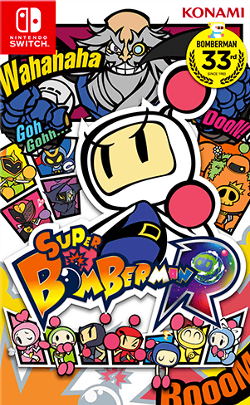

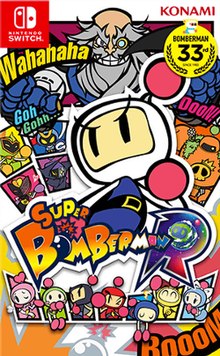
Super Bomberman R is the series' polite return to console life after a twenty-year nap, and while you might come for the four-way accidental betrayals, you should stay for the surprisingly earnest character dynamics hiding in the cartoonishly explosive mayhem. On paper it's a classic grid-based action-maze game with 50-stage story mode, local and online multiplayer and a stable of 27 characters with unique abilities. In practice it's a soap opera where bombs fill in for family therapy. If you're the sort of person who likes their multiplayer with a side of slapstick and their narrative with an unknowable urge to train your siblings into submission, this is the game that will both soothe and poke you. This review zooms in on the people and robots who give the game its tiny beating heart: White, the self-appointed drill sergeant of the Bomberman clan; his seven less-than-cooperative siblings; Emperor Buggler and his resurrected Five Dastardly Bombers; plus a rotating cameo cast of Konami weirdos who crash the party. Expect character arcs, soap-style redemption, and exactly the level of emotional closure you get from animated protagonists who spend a lot of their time detonating crates.
The mechanical core of Super Bomberman R is gloriously simple: move on a 2D grid, drop a bomb, and try not to become a confused crater. But the story mode - fifty stages of increasingly ornery robots and environmental gimmicks - dresses up those rules with a roster of characters whose personalities actually matter to how encounters play out. White, the eldest Bomberman brother, functions as the story's inciting force. He's disciplined to the point of weaponising punctuality: he sees Buggler's transmission and basically drags his siblings along like a headmistress on a field trip. That insistence on training is the game's narrative engine; each stage is a tiny lesson plan where White tries - and often fails - to instill competence in his kin. The siblings themselves read like a catalog of sitcom flaws. Black is the lazy ego of the group; if you play as him in multiplayer, expect abilities that reward opportunistic, smug play. Pink is a social media influencer before the concept existed: naturally concerned with fashion and gossip, her moves are flashier than effective. Blue sleeps a lot, and the game loves the joke of a Bomberman who naps his way through peril - likewise his kit is streamlined for less mobile, more tactical bomb placement. Red's temper translates into riskier, more explosive options. Yellow's naivety makes for a character whose abilities sometimes give unexpected boons, because optimism is apparently game balance now. Aqua has 'anger management issues' in the plot and bites off chunks of the game with aggressive, in-your-face mechanics. Green, the manipulative sneak, is the delightful chaos agent: his kit encourages subterfuge, backstabs and all the little betrayals you've come to expect in a Bomberman lobby. Across the five conquered planets, White's attempts to educate his siblings mirror the gameplay ebb and flow. Early levels are training wheels: simple rooms and obvious puzzles that let the player feel White's frustration and the siblings' incompetence. As the story progresses, the levels demand coordination - exactly the kind of thing White has been nagging for - and that gives the narrative some teeth. When your squad actually learns to chain explosions and bait enemies, you can see the arc: from chaotic family bickering to functional disaster squad. The payoff is satisfying, even if the writing mostly plays things broad. Emperor Buggler is a melodramatic cartoon villain, the kind who watches conquest montages and thinks 'not enough lasers.' He resurrects five robots to act as generals, the humorously named Five Dastardly Bombers. Initially they are the classic henchmen trope, stomping around wreaking havoc. Their arc is surprisingly sweet: after being defeated they are freed from mind control and donate energy from Buggler's black hole to help the Bombermen defeat the final boss. It's short, but it gives the world a small, coherent emotional beat - enemies who become allies because being controlled by evil is awkward for everyone. The late-game spectacle where Buggler builds a composite robot out of his fallen generals and then merges with it to grow into a vaguely tragic final boss is textbook anime escalation, and the game leans into it with gusto. The siblings' teamwork is narratively rewarded, and the Five Dastardly Bombers' redemption provides a neat foil to White's stubborn moralizing: the brothers didn't change everyone's minds by shouting; they did it by out-bombing a cosmic tummyache. Outside the story, the battle mode is where character quirks shine. Twenty-seven characters across 19 battlegrounds means you can choose a Bomberman who complements your temper. The Konami cameo roster (Dracula Bomber, Vic Viper Bomber, Goemon Bomber and later crossover guests like Solid Snake or Ratchet for the PS4 release) acts like fan-service napalm: they look cool and sometimes bring wacky abilities that tilt matches toward quirky, memorable moments. Multiplayer is where the family's dysfunction becomes fun: pick Green if you like betrayal, choose White if you want to pretend you're in charge, or pick a Konami cameo if you want to watch your opponents rage-quit in branded style. There are some mechanical grumbles: the league system and online matchmaking felt tepid for a while, and some updates were needed post-launch to stabilize things. But the core interplay between character identity and stage design mostly holds up; the Bombermen aren't just skins, they're personality-driven tools for play.
Visually, Super Bomberman R trades photorealism for bright, cartoony clarity, and that's very much its point. Rendered in the Unity engine, the stages are colourful and readable, which is crucial when your primary concerns are 'where is that hidden passage?' and 'why did my brother place a bomb there?' The character designs lean into archetype: White is all earnest straight lines and posture, Black is slouched, Pink is glittery, and the robot henchmen are gloriously metallic and ridiculous. The Konami cameo characters are recognisable without needing to be pixel-perfect: they slot in and immediately make the roster feel like a family reunion where everyone brought a weird cousin. The cinematics are simple but effective. When Buggler's transmission hijacks the TV, it's staged like classic Saturday morning cartoon tyranny; the black hole finale looks suitably chaotic without losing the clarity of the grid-based combat. There are no jaw-dropping lighting effects here, but the animation sells personality - tiny squishes, stomps, flails and triumphant poses give the characters a surprising amount of emotive range for such simple sprites. It's a confident art direction choice: readable, joyful, and just weird enough to make playing feel like you're watching a cartoon sitcom that explodes every five minutes.
If you're in it for the multiplayer chaos, Super Bomberman R delivers reliably: crisp arenas, a diverse cast, and enough bizarre crossovers to make any Konami fan grin. The story mode is where the game surprises by treating its Bombermen like actual characters with arcs - White's frustrated mentorship, the siblings' begrudging growth, the henchmen's short redemption - and wrapping those beats around competent stage design. It's not Shakespeare with bombs, but it is a funny, unexpectedly affectionate family tale funded by explosions. The PS4 version benefits from its platform-exclusive bonus characters and the general polish Konami added after launch. Some people will point to online hiccups, the mixed reviews, or the game's refusal to pretend it's something other than a colourful party game, but those are mostly footnotes. Super Bomberman R's strength is its personality: a roster of archetypes that translate into meaningful play differences and a story that manages to be sweet without ever losing the option to blow someone up. For a seven-out-of-ten return to the console stage, it's plenty of fun - especially if you're willing to accept that band-aid therapy for family problems in this universe is a well-timed bomb.
 Power Pro Kun Pocket 14 on DS
 New Super Mario Bros. U Deluxe on Switch
 Oretachi Game Center Zoku: Super Volleyball on PS2
 Disney's Chicken Little: Ace in Action on PS2
 Onimusha: Dawn of Dreams on PS2
 Action Man: Operation Extreme on PlayStation
 Vividred Operation: Hyper Intimate Power on PS3
 Super Bomberman R 2 on PS5










 Another SquareThought Site