

 Apr 2017


Syberia 3 arrives like a plodding snow ostrich: big ambitions, ornate plumage, and a disturbingly wobbly gait. The game picks up the travels of Kate Walker as she finds herself rescued by the Youkol nomads and swept into an oddly ritualistic migration across a frozen, post-Soviet landscape. It's a single-player, story-driven graphic adventure built in Unity and shepherded back to life by series creator Benoît Sokal and Microïds after a very long development limbo. If you've played the earlier Syberia games, expect more of the same slow-burn exploration and puzzle-solving - but also expect the occasional technical and design hiccup that turns a contemplative stroll into an exasperating slog. This review zeroes in on what the game demands of you: the skills it tests, the frustrations it requires you to tolerate, and whether the mental workout it offers is worth the effort.
Syberia 3 is primarily a puzzle and narrative game masquerading as a scenic road trip. It rarely asks for reflexes; instead it expects your gray matter to be in gear. The core challenges are environmental puzzles, inventory combinations, dialogue-driven decisions that gate progress, and the patient, sometimes repetitive investigation of locations. The good news: many puzzles reward observation and lateral thinking. A well-placed detail in the background or an offhand NPC remark can be the key to advancing. That makes the game satisfying when you connect dots - you feel like a detective piecing together a peculiar, mechanical world. Skill set required: pattern recognition, patience, reading comprehension, and logical deduction. You'll need to read dialogue (dubbed into multiple languages but with varying translation quality), parse character behaviors, and compare items in your inventory against environmental clues. Basic inventory management and the ability to remember or jot down small facts - codes, symbols, or the odd Youkol custom - are essential. Since the progression is mostly point-and-click in 3D, spatial awareness helps: some puzzles depend on using the camera or repositioning Kate to view things from the right angle. Where Syberia 3 trips over its own skis is in execution. Multiple critics and players reported software bugs and awkward animations that break immersion; I found moments where interactions didn't register cleanly or characters teleported mid-conversation. These technical issues change the skill profile. Instead of purely relying on puzzle-solving chops, you're also asked to develop patience and a tolerance for trial-and-error born of patchy responsiveness. On PS4 that can mean reloading checkpoints, repeating dialogue, or restarting simple actions that should have worked first time. Puzzle difficulty skews toward the moderate side, but design choices make some encounters feel unfair. Several puzzles are not intuitive and lack sufficient in-world signaling, nudging you toward pixel-hunting or random item combinations. That's less about raw intelligence and more about persistence and methodical testing. A helpful approach is to treat the game like a thesis: gather every scrap of information, test likely item uses, and lean on dialogue to reveal context. If you're the sort who rage-quits when a logic puzzle demands a non-obvious leap, this might not be your cup of tea. The game also demands social inference skills. NPCs are the information hubs: their odd rituals, gossip, and verbal tics contain puzzle hints. Unfortunately, awkward voice acting and shaky translations sometimes garble intent, forcing you to rely on subtitles or reread lines to extract meaning. That ups the cognitive load - you're parsing imperfect audio and trying to infer designer intent rather than the story itself. The DLC "An Automaton with a Plan" switches perspective to Oscar, an automaton, offering a slightly different mechanical challenge (more focus on robotics-oriented puzzles), which can feel refreshing if you're fatigued by Kate's narrative loops. Exploration is deliberate, not frenetic. Expect a slow pace that favors those who enjoy micro-problems that feed into a macro-plot. If your strengths are lateral thinking, note-taking, and a patient temperament, Syberia 3 gives you space to shine. If you require crisp UI, faultless controls, and puzzles that always telegraph their logic clearly, the game will test your tolerance more than your intellect. Overall, the challenge is mental and methodical rather than reflexive, but the enjoyment you extract strongly depends on how forgiving you are of its technical shortcomings.
The game is powered by the Unity engine, and its artistic ambitions are clear: a wintry palette, ornate mechanical contraptions, and a design aesthetic that carries the Syberia DNA. The environments - from snowfields to village interiors - often have a postcard-ready sense of atmosphere. Where the visuals falter is animation and polish. Multiple reviewers flagged poor animation and occasionally lifeless character models. On PS4 this translates to stiff facial movement, odd body clipping, and NPCs that sometimes teleport instead of walking. These flaws chip away at immersion in a genre that relies heavily on character and scene to sell its puzzles. Textures and lighting are serviceable but not show-stopping; the charm is in the worldbuilding more than photorealism. Sound design and score (Inon Zur) try to carry emotional beats, but dubious English localization and variable voice acting can undermine dramatic moments. Subtitles are available in many languages, which is helpful given the dubbing inconsistencies. If you value atmosphere more than technical sheen, you'll find pockets of beauty. If you expect cinematic animation and seamless performance on PS4, the experience will often feel like a technically compromised dream sequence.
Syberia 3 is a game for people who like their challenges with a side of contemplation and an extra helping of patience. The puzzles engage pattern recognition and deductive reasoning, and success rewards careful observation and methodical inventory play. Unfortunately, the package is encumbered by translation issues, spotty voice acting, and software bugs that intrude on the challenge in the worst possible way: they make the game harder for reasons unrelated to player skill. The end result is a mixed bag. When the pieces click, there's genuine satisfaction; when they don't, you'll be cursing poor collision detection rather than the riddle itself. If your adventure-game toolkit includes tolerance for jank, a willingness to reread lines, and a love of slow-burn puzzles, Syberia 3 can still be a worthwhile mental workout. If you demand polished mechanics, crystal-clear localization, and puzzles that always feel fair, save your coins for a less glitch-prone brainteaser. For the aspiring Kate Walker in you: sharpen your observation, practice patience, keep a notepad handy, and remember that sometimes the biggest boss in Syberia 3 is the game's own temperamental code rather than the puzzles it presents.
 Syberia on Switch
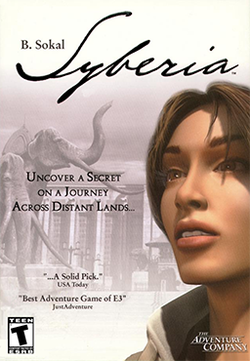 Syberia 2 on Switch
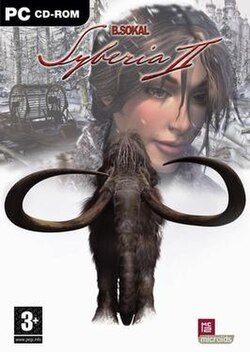 Tintin: Destination Adventure on PlayStation
 One Piece Grand Adventure on PS2
 Taiko no Tatsujin: Dokodon! Mystery Adventure on Switch
 Taiko no Tatsujin: Don to Katsu no Jikū Daibōken on Switch
 Syberia: The World Before on PS5
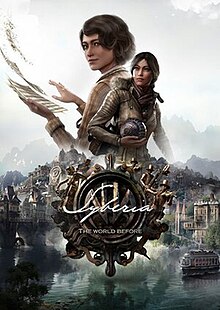 Asterix & Obelix: Slap Them All! on Switch
 Amerzone on PlayStation










 Another SquareThought Site