

 Apr 2018
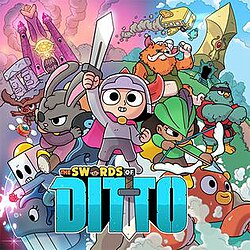

There is a curious pleasure in playing a game that proudly wears its influences on its sleeve while still trying to make a few of its own. The Swords of Ditto, a compact action-RPG from British indie studio Onebitbeyond and published by Devolver Digital, is such a title. Launched on the PlayStation 4 in the spring of 2018, it positions itself at the intersection of old-school top-down adventure sensibilities and modern roguelike repetition. The creative engine behind it is Jonathan Biddle, who led Onebitbeyond and is credited as director, designer and programmer - a fact that will either impress you or terrify you, depending on whether you believe in the benevolence of polymath game-makers. This is not a sprawling epic of the sort that fills the backs of magazines with flowcharts and wry developer interviews. Instead it is a short, cyclical romp: you play a randomly generated hero who must face down an enemy called Mormo within a ticking time limit. Fail or succeed, and the world resets; a fresh protagonist, some altered geography and a new set of seeds are planted for the next run. That structure makes Ditto part roguelike, part fable, and wholly opinionated about how much patience it expects from the player. For those who still enjoy an arcade-like loop - the boot-up, the trial, the small victories - this will feel familiar and, more importantly, mercifully concise.
At the heart of The Swords of Ditto is a deceptively simple loop: explore, fight, improve, and race against a deadline to confront Mormo. The game is viewed from a top-down perspective and channels the action-RPG grammar that players of classic console adventures will recognise - sword swings, shield blocks, bombs, potions and a parade of eccentrically named enemies. Where Ditto complicates the formula is with roguelike trappings: protagonists are randomly generated, the world is altered between playthroughs, and runs are bracketed by a time constraint that forces a brisk, focused approach rather than leisurely exploration. This approach creates tension in a small package. The time limit gives purpose to otherwise quaint quests and scatters of treasure; every minute wasted in backtracking is a minute shaved from your chance to face the boss. The cyclical structure works because the game is not shy about making each run feel distinct. You will find new items, trinkets that modify abilities, and one-off events that can turn a mediocre run into something memorable. The story - penned by Ed Fear - deliberately keeps itself unobtrusive, an appropriate decision given that the roguelike rhythm would make heavyweight narrative cumbersome. What remains is a light, often witty connective tissue that gives your sword a reason to exist beyond statistics. Combat is immediate and responsive. Hits feel weighty without being sluggish, and encounters frequently demand more than mindless button-mashing. Enemy design encourages tactical consideration: some foes punish reckless approaches while others force you to prioritise movement and positioning. For players who enjoy co-op, the game supports two-player cooperative play, which turns skirmishes into a collaborative dance and increases the chaos in a riotous, enjoyable way. Runs can, however, become repetitive if you find yourself grinding the same mechanics without discovering fresh toys; the post-launch Mormo's Curse update attempted to address pacing and structural issues, overhauling the game's framework and smoothing performance where needed. That update broadened the game's appeal and corrected several rough edges evident at launch. The balance of risk and reward is a persistent theme. You will often be tempted to chase optional dungeons and side tasks for upgrades, which is sensible, but the clock does not forgive dawdling. The random generation keeps things lively enough that each attempt can feel new, but the core loop will only satisfy players who appreciate short, repeatable adventures rather than a single, sprawling narrative campaign. If you want long-form character progression and save-the-world gravitas, Ditto will feel like a snack rather than a feast; if you prefer bite-sized, satisfying runs with a cheeky personality, it hits the mark.
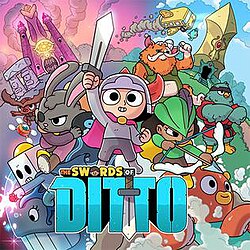
The Swords of Ditto wears a hand-illustrated skin that is immediately appealing. David Hankin's art leans into bright, cartoon-inflected linework and a palette that favours vivid, consoling hues over muddy realism. The world is composed of compact islands of play space, and each tile feels deliberately crafted to communicate enemy telegraphing, item placement and environmental hazards. On the PlayStation 4 the presentation is smooth and the aesthetic choices suit the game's brisk tenor: there is an economy to the visuals that enhances readability, which is a vital trait in top-down action where clarity saves lives. There is little pretense of pushing the hardware to its limits; this is not a showcase for ray-traced puddles and photoreal forests. Instead, Ditto opts for personality. Animations, while not hyper-detailed, are charming and have a pleasing snappiness, and the enemy roster is given enough visual character to be memorable without occupying too much memory. Niklas Ström's music complements the visuals with jaunty themes that underscore the game's whimsical tone. Performance hiccups were noted at launch, but the subsequent Mormo's Curse update included performance improvements that addressed many complaints, particularly on consoles. The result is a tidy, focused look that suits the game's ambitions and rarely distracts from the gameplay.
The Swords of Ditto is a game content to be small and sneaky about its pleasures rather than blustering with oversized promises. It succeeds best as a compact, replayable action-RPG that understands the value of tight loops: the short runs, the randomized heroes, the nippy combat and the time pressure all coalesce into an experience that respects the player's time while still providing moments of genuine delight. The title's roguelike leanings and cyclical structure will not suit everyone; those seeking an epic, continuous journey may find the repetition wearing. Critics and players met the game with mixed but generally favorable impressions, and a Metacritic average in the mid-seventies reflects that balanced reception. Those who remember poring over late-90s previews in printed magazines will find something curiously modern yet warmly familiar in Ditto's DNA. It is an indie game with the confidence of focused design, and where it stumbles it corrects: the free Mormo's Curse update demonstrated that Onebitbeyond listened to criticism and improved the product. For PlayStation 4 owners who like their adventures served in manageable courses, accompanied by bright art and a cooperative option for a friend, The Swords of Ditto is worth a look. It may not be a legend written in stone, but it is a pleasantly carved trinket that will keep you coming back for one more run.
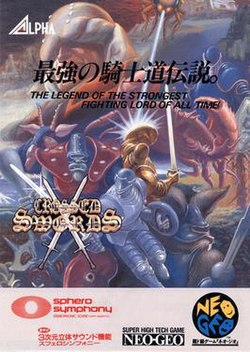
 ACA Neo Geo: Crossed Swords on Xbox One
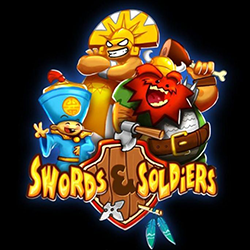
 Swords & Soldiers II: Shawarmageddon on Switch
 Combat Elite: WWII Paratroopers on PS2
 Disney's Chicken Little: Ace in Action on PS2
 Onimusha: Dawn of Dreams on PS2
 Action Man: Operation Extreme on PlayStation










 Another SquareThought Site