

 Oct 2014
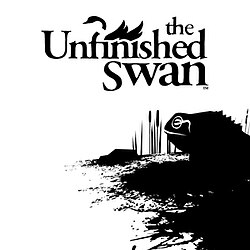

The Unfinished Swan greets you with a trick question: what do you do when the world is a blank page? You throw paint at it, obviously. Originally dreamed up by Giant Sparrow and later shepherded onto the PS4 with help from Armature Studio, this single-player adventure turns a minimalist conceit into a lesson in patient observation and gentle problem solving. On paper the game sounds like an arts-and-craft exercise gone legit-a boy named Monroe chases a swan out of a painting into a white void while a sleepy king narrates the kingdom's slow decline. In practice it's a short, smart puzzle walk that trains you to see where the developers hid the obstacles and to listen to Joel Corelitz's score for subtle progress cues. If you play expecting twitch reflexes and boss fights, you will be disappointed; if you want a game that polishes your spatial reasoning and attention to sensory detail, you're in the right gallery.
Challenge in The Unfinished Swan is delivered like a polite riddle: not frantic, not cruel, mostly coaxing. The core mechanic is simple and almost meditative - you use a magical silver paintbrush to interact with a world that begins as a completely blank, white space. The act of throwing paint reveals geometry and objects, and the game slowly evolves that mechanic across its chapters. Early encounters are essentially tutorials dressed as whimsy: you throw a blob, the world reveals a wall or a ledge, and you learn the mapping between the physics of paint and the level structure. The real challenge is not mechanical dexterity but calibration of perception. You must learn how many paint bursts it takes to reveal a distance, how surfaces hide or suggest passages, and when to stop splattering and start looking. From a skills perspective this game is a quiet toolbox. Spatial reasoning is king: the white-on-white staging forces you to build a mental model of space from minimal returns. A single paint blotch can sketch an outline of a staircase or expose a shadowy alcove; chaining those reveals into a route requires working memory and simple geometry skills. Pattern recognition matters too - the environments are designed with subtle visual cues that reward players who notice recurring shapes and textures. Exploration is encouraged but bounded; the game nudges you toward discovery instead of letting you roam aimlessly, which means a player who can infer likely paths from a few revealed pixels will move more efficiently. Auditory skills play an unexpectedly strategic role. Joel Corelitz's score mixes electronic elements with a string orchestra, and the music shifts as puzzles are solved. The soundtrack functions like a soft hint system: textures change when you're on the right track, and tonal shifts often mark progress or reveal emotional beats in the King's story. Listening carefully can compensate for missed visual cues, especially in later sections where the environment begins to sculpt itself into more complex puzzles. Patience and observational habit are rewarded: take a moment after each paint throw, listen, and interpret the world's reply. That's the rub - the game is built for players who enjoy hypothesizing, testing, and iterating rather than those who reflexively mash buttons. The difficulty curve favors curiosity over challenge spikes. Puzzles don't punish failure harshly; instead they encourage experimentation. That design choice may make the game feel easy to players who want obstacles to punch through, but it's deliberate-this is less a gauntlet and more an interactive storybook that teaches you to think differently about space and consequence. Later areas introduce layered puzzles that combine platforming sense with an ability to track multiple clues across a chamber. These sequences ask you to multitask mentally: remember a previously revealed layout, spot an off-kilter silhouette, and time a paint throw to cross a newly revealed gap. That combination of working memory, timing, and interpretation is the peak skill test The Unfinished Swan offers. There are no difficulty sliders to crank, and you won't find optional challenge modes or leaderboards. If you're coming in for competitive scoreboard-driven thrills, this isn't it. If your brain gets a kick out of turning fuzzy information into a map in your head, and if you enjoy puzzle progression that leans on intuition and pacing rather than brute-force mechanics, then the skill set the game asks of you will feel genuinely rewarding.
Graphically the PS4 version preserves the game's signature aesthetic: a largely white canvas punctuated by inky black paint and the occasional burst of color. The minimalism is deceptive - the world's sculpted shapes rely on your eye to complete them. High-resolution rendering on PS4 sharpens the contrast and makes paint splashes feel tactile, which matters because each blob is an experimental data point for your mental map. The art direction supports the challenge loop rather than overshadowing it; every visual choice is functional as well as pretty. The King's narration and the visual storytelling work hand in hand, and small environmental details that only appear when revealed are satisfying little payoffs for attentive players. Frame rate and responsiveness are solid, so the mechanical act of throwing paint never feels sluggish, and that reliability is important because the game's puzzles depend on precise feedback.
The Unfinished Swan is not trying to be a marathon of brain-busting puzzles or an endurance test of platforming skill. It's a thoughtful, modestly ambitious adventure that asks players to develop a specific set of soft skills: spatial reasoning, careful observation, auditory attention, patience, and a willingness to experiment. The game's innovation - turning a blank canvas into a navigable world - earned it deserved recognition (including BAFTA awards for Game Innovation and Debut Game), and the PS4 build benefits from crisp visuals and faithful audio cues. If you want a short, emotionally resonant experience that will make you feel smarter about looking and listening, give it a paint throw. If you need explosions, competitive scoring, or hair-tearing difficulty, you'll be left wanting. For what it is, The Unfinished Swan is an elegantly constructed puzzle walk that trains your brain to turn nothing into something, and that's a rare kind of fun.
 Trepang2 on Xbox Series X/S
 WRC 5 on PS3
 Tintin: Destination Adventure on PlayStation
 One Piece Grand Adventure on PS2
 Taiko no Tatsujin: Dokodon! Mystery Adventure on Switch
 Taiko no Tatsujin: Don to Katsu no Jikū Daibōken on Switch










 Another SquareThought Site