

 Jul 2015
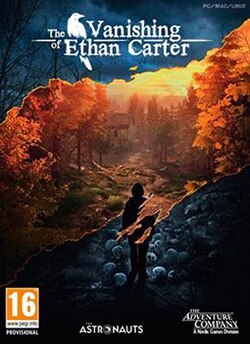

The Vanishing of Ethan Carter is the kind of game that politely refuses to hold your hand, then slowly convinces you that your own brain is the best flashlight you've got. On PS4 the Redux edition arrives with improved saves and a slightly tidier finish, but the heart of the experience is the same: an open-world, story-first mystery where the mechanics are almost entirely cerebral. If you like detective work that involves walking slowly, squinting at puddles, and imagining how a chair might have been involved in someone's untimely demise, this is the single-player trip for you. The game's difficulty isn't measured in bullet-sponge bosses or frantic reflex tests - it's the slow burn of deduction, attention, and stubborn curiosity. That means the real challenge here is learning to think like a detective and not a twitch-gamer.
Gameplay lives and breathes in exploration. You're dropped into Red Creek Valley with a paranormal investigator's hat - metaphorical, sadly - and only a handful of supernatural tricks to help you make sense of the carnage. The world is open and unsentimental: there's no quest marker carpet telling you where to go, no glowing interact prompts guiding your gaze like a golden retriever on a mission. That design decision is the first deliberate difficulty spike. If you're used to waypoint therapy, prepare for withdrawal. The core 'puzzle' loop is investigative reconstruction. When you find a corpse, the game asks you to sense missing objects, restore a scene, and then assemble a timeline. This sounds simple until you realize the game rewards curiosity more than a brute-force button press. Skills required include observational patience (spots of blood, positions of furniture, and tiny environmental clues are often crucial), spatial reasoning (how things fit together in a room and how they might have moved), and narrative inference (you're piecing motives and sequences together from scraps). It's a logic game disguised as a walking sim. Some sections change pace: optional 'stories' scattered through the valley are mini-challenges that vary wildly. A few are classic lateral puzzles - find objects, combine clues, think outside the obvious. Others are stealth-like segments where being seen forces a reset. Those stealth sequences are where the otherwise sedate game demands precision and timing: you'll learn to move slowly, use cover, and memorize patrol paths the hard way. The punishment for failure here is not a cheap death but a scene reset, which can be infuriating if you just made a 10-minute slip-and-fumble. That raises the stakes on patience and short-term memory: you'll repeat segments until you find the right rhythm. The game's 'no hand-holding' ethos also forces meta-skills: note-taking and self-direction become almost mechanical necessities. Players who habitually open their map and sprint to objectives will struggle; successful players are those who stop and look, who read handwriting on a wall, who remember a scrap of dialogue from ten minutes ago and test it against the scene in front of them. There's a completionist challenge baked in, too: collect all of Ethan's stories and you unlock the true final revelation. That's optional but meaningful: it rewards thoroughness and consistent attention to detail. In short, difficulty here is intellectual and procedural rather than twitchy. You'll be challenged by ambiguity, by subtle pattern-recognition, and by the grind of repeating stealth sections if you fail. The Redux improvements - notably the new save system and removing awkward backtracking - smooth out frustration spikes, making the challenge feel fairer without dumbing down the deductive work.
Visually, the game is a feast for people who like their environments to be photorealistic enough to make your console feel guilty. The Astronauts leaned on photogrammetry to sculpt the world, and it shows: rocks, trees, and abandoned houses look lived-in rather than gamey. On PS4 the Redux port runs on a newer engine (Unreal Engine 4 for the Redux), which tidies textures, lighting, and the general polish. The payoff for the investigative skillset is massive here - clues are embedded in the scenery, and the better the graphics, the better they reward careful observation. The environment does as much storytelling as the written script, and sometimes more. If your detective skills are weak, gorgeous visuals will still tempt you to explore; if your detective skills are strong, those visuals will constantly feed your hypotheses.
If you're buying The Vanishing of Ethan Carter on PS4 because you expect a combat-heavy scare-fest, you'll quickly learn that the game's difficulty comes from thinking, not shooting. It asks for a patient, curious mind, comfortable with ambiguity and willing to get lost on purpose. The stealth segments add small bursts of mechanical tension, so there's a tiny twitch element, but the main tests are observation, spatial reasoning, and narrative deduction. Redux's improved save system and reduced backtracking make those tests less annoying and more rewarding. The game is best for players who enjoy letting a mystery unfold at a glacial, immersive pace, and who find satisfaction in connecting tiny, quiet dots. It's clever, beautiful, and occasionally maddening - in a way that forces you to grow better at paying attention. Consider it an expensive eye-exam that pays off in chills and a tidy brain-workout. Score: 8.5/10.
 The Vanishing of Ethan Carter on Switch
 Resident Evil 7: Biohazard on PS4
 Tintin: Destination Adventure on PlayStation
 One Piece Grand Adventure on PS2
 Taiko no Tatsujin: Dokodon! Mystery Adventure on Switch
 Taiko no Tatsujin: Don to Katsu no Jikū Daibōken on Switch










 Another SquareThought Site