

 Sep 2018
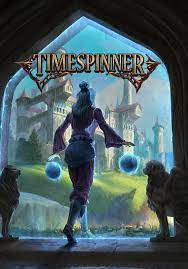

Retro revivalism is a dangerous hobby. One can either resurrect the soul of a beloved genre or produce an elaborate cosplay that looks great under club lights but falls over when asked to dance. Timespinner, the crowdfunded Metroidvania from Lunar Ray Games, mostly chooses the former: a carefully stitched patchwork of Castlevania reverence, moody pixel handiwork and one neat gimmick that actually alters how you think about platforming. Funded on Kickstarter back in June 2014 and arriving on PS4 on September 25, 2018 after a scope-driven delay, Timespinner feels less like a hurried nostalgia trip and more like the sort of CD-era effort written in blocky font on the back of a game manual. It knows its ancestors, borrows their best moves and, in the best 1990s tradition, occasionally reminds you that it was built from love rather than market research. If you spent your youth reading strategy guides by candlelight and saving up quarters for a weekend arcade binge, this one will feel comfortable. If you missed that bus, Timespinner will still explain the fare politely and then sock you with a time-stop.
Timespinner casts you as Lunais, a laconic Time Messenger with the emotional range of a well-written RPG protagonist and a propensity for dramatic pauses. The core loop is textbook Metroidvania: explore a sprawling, gothic castle and its environs, collect upgrades that reshape the map, and tackle bosses that are equal parts puzzle and endurance test. Lunar Ray wears its influences on its sleeve; Symphony of the Night is an explicit ancestor, and you will recognize the rhythm of exploration, backtracking and ability-gated secrets. The game dresses that familiar structure in a pair of original socks. The headline act is a time-pausing mechanic powered by sand. Fill your sand meter by defeating enemies, then halt time for a few seconds to dodge attacks, hitch a ride on frozen foes to access unreachable ledges or perform clever platforming that reads like genealogy for Metroidvania ingenuity. It's not merely a button that makes fights longer; it's a spatial tool. You will find yourself seeing enemies as temporary scaffolding, and that change in perspective is exactly the kind of mechanical twist that keeps a genre exercise from becoming a rote imitation. Lunais also gains the usual array of Metroidvania accoutrements: a double jump to correct missed leaps, a water mask that converts aquatic death traps into optional detours, and a familiar that follows you and lends a hand in combat. The familiar system is modest but satisfying: think of it as a tiny ally who mistakes everything for a chew toy and thus draws fire. Combat is approachable and generally responsive; reviewers at the time praised the controls for feeling satisfying and precise, which is essential when a fraction of a second separates victory from the loading screen. Progression is measured more by map changes than by RPG number-crunching, though there are enough stat upgrades and spells to keep players tinkering. The pacing leans toward measured exploration rather than constant action. Dungeons are lavishly designed and occasionally repetitive in their motifs - there are stretches where tile set repetition makes the castle feel like a well-decorated echo - but the puzzles and boss encounters usually provide counterpoints to the backtracking. The narrative, wrapped in political undertones and war-torn nations, gives the proceedings a weight that indie Metroidvanias sometimes skirt. It's not merely set dressing; several reviewers singled out the plot for weaving political themes into a personal story, and the game uses its time mechanics to deliver a handful of moments that land because the stakes feel real. There are occasional conservative design choices - if you've played a few dozen Metroidvanias you'll predict several beats - but Timespinner compensates with polish and a few clever set pieces.
Timespinner's pixel art looks like it should have come with an instruction booklet and a DDR advice column. Jeff Ball's palette work and the art direction combine to produce moody, richly textured environments that recall the heyday of 16- and 32-bit console fantasy while adding modern sensibilities in animation and layering. The sprite work is expressive: characters have personality in a few pixels, and enemies are designed so you can read their threat level at a glance. Lighting and parallax effects give the castle a sense of depth, and even when the level geometry repeats, the tiles are assembled with a craftsman's eye for silhouette and composition. Critics largely praised the visuals for atmosphere and style. The PC Gamer review singled out the pixel art as a highlight, while Destructoid and Push Square noted that the level design felt lavish - which is high praise for any side-scrolling exploration game. The soundtrack supports the aesthetic with a brooding score that slides naturally between quiet exploration and boss-room grandiosity. The whole production has the feeling of a lovingly refurbished classic: familiar parts, but tightened joints and replaced springs, so it doesn't rattle the way an old machine does. If there is a visual quibble it's repetition. The castle has a few extended stretches where the same visual motifs repeat enough to make the map feel less varied than it should. It's a common pitfall for indie teams working within pixel constraints, and Timespinner mostly avoids it through careful set dressing, but the occasional loop of similar rooms will make attentive explorers reach for their maps.
Timespinner is a competent, occasionally brilliant Metroidvania that wears its influences proudly and turns them into a tidy, modern package. The time-stop mechanic elevates standard exploration and platforming into a set of puzzles that reward creativity. Control responsiveness, familiar-assisted combat and a moody soundtrack round out an experience that ranks among the better indie Metroidvanias of its era. Critics were mostly pleased: Metacritic shows a split across platforms (PC sitting around a 73 aggregate while PS4 and Switch scored in the low-to-mid 80s), which mirrors the small divergences in how the game's repetition and conservative design were received. If you demand absolute originality in every beat, Timespinner will feel safe. If you appreciate careful design, strong art direction and a handful of genuinely clever mechanical flourishes, it will feel like a blast of cool, dusty air from the past - in the best possible way. Score: 8 out of 10. It's not reinventing the wheel, but it sharpens the spokes, repaints the rim and adds a functioning sundial to the hub.
 Monster Boy and the Cursed Kingdom on Switch
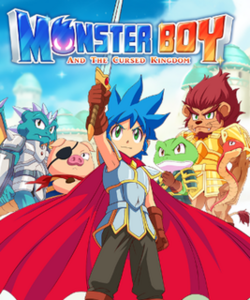 The Mummy Demastered on Switch
 Record of Lodoss War: Deedlit in Wonder Labyrinth on PS4










 Another SquareThought Site