

 Dec 2017


Tiny Metal arrives with the modesty of a debut studio that knows its limitations and still dares to march tanks across a grid. Developed by Area 35 - a six-person outfit founded in 2016 and led by director Hiroaki Yura - the game landed on PlayStation 4 (alongside Switch and Windows) in December 2017. It proudly wears its inspirations on its sleeve: Advance Wars for tactics, Warhammer 40,000 for grim militaria, and a clean indie spirit for the parts that can't be traced to a big franchise. Reviews were polite but reserved; Metacritic calls the reception 'mixed or average', which sounds like the game's official personality. If you enjoy methodical chess-with-explosives, Tiny Metal is the sort of thing that will file your teeth into the quiet grooves of strategic pleasure. If you wanted fireworks every five seconds, it's less your jam. This review will explain why that is fine, why that sometimes isn't, and why Tiny Metal feels both like a tribute act and an original band playing covers because it can't quite afford its own instruments.
At its core Tiny Metal is a military-themed turn-based tactics game: move units, take objectives, blow up other units, repeat. That is not a complaint; it is a description. The game channels Advance Wars so hard you can almost hear the distant chime of sequels you never bought. Units occupy tiles, terrain matters to movement and defence, and there is an emphasis on positioning and incremental advantage rather than RNG-driven chaos. If you're the kind of player who enjoys baking slowly in the oven of a campaign while occasionally checking the map to confirm your empire is not on fire, this will suit you. The campaign is a straightforward string of missions that let the player learn systems at a steady pace. For a debut from a six-person team, the pacing is sensible. Area 35 clearly studied what makes the tactics formula satisfying and replicated those scaffolds: mission variety, a slow introduction of complexity, escalating challenges. The influence of Advance Wars is not a criticism so much as a design shorthand. The homage is explicit: predictable, comfortable, and occasionally clever. There are two ways to assess Tiny Metal's gameplay: what it aspires to be, and what it delivers. Aspirationally, it wants to be a compact, tight tactics game with serious strategy under a friendly exterior. Delivered, it often succeeds, especially in early to mid-game. Battles reward foresight and unit synergy; skirmishes feel like small puzzles. The AI is competent enough to force you to plan, though it will sometimes behave like someone who learned strategy from a pamphlet and then fell asleep mid-sentence. The result is satisfying without being infuriatingly brilliant. Where Tiny Metal trips over its own boot treads is in the thinness of mechanical variety. The game's systems are focused rather than expansive. If your tastes run to giant tech trees, elaborate unit customisation, or wildly asymmetrical factions, Tiny Metal will feel like going to a rice-and-miso restaurant when you wanted experimental molecular gastronomy. That focus is not a sin; it is a choice. The cost of that choice is the occasional repetition, and a sense that the early-game strategies remain serviceable deep into the campaign. For a first-time studio, the omission of certain modern conveniences is forgivable but noticeable. The UI does the job without fanfare. There are no heady innovations to distract you; that can be a virtue when the goal is tactical clarity. Still, some interface rough edges remain, the sort you file off later in updates when you have the luxury of a larger team and a budget that does not involve a lot of ramen-based morale boosting. Multiplayer and skirmish options exist but do not steal the spotlight. Tiny Metal is happiest when you play it like a single-player tactics novel: careful, considered, and intermittently triumphant. For players seeking a long tail of emergent, community-driven play, the game provides a foundation rather than a city. Reception-wise, critics ranged from lukewarm to enthusiastic. Scores vary - from Destructoid's more skeptical 5/10 up to Nintendo Life's surprisingly warm 9/10 - which is to say the game hits different people in different ways. If you arrive expecting a mini-Advance Wars with a few quirks, you'll likely leave satisfied. If you expect a reinvention of tactical combat you haven't seen before, you'll be somewhat underwhelmed.
Graphically Tiny Metal adopts a neat, workmanlike style. It is the visual equivalent of a cleanly ironed uniform: functional, respectable, not trying to win any art-school scholarships. The visuals communicate information without fuss. Units are readable on the map, terrain is distinct, and explosions have the necessary crunch to make tactical victories feel earned. There's no photorealism here and no baroque spectacle. Instead, it opts for clarity - which, for a tactics title, is a defensible aesthetic decision. Given the small team behind Area 35, the presentation punches above what the budget might suggest. The PS4 build looks competent, with a few pleasant touches to delight, but it doesn't reinvent the medium. Sound design and music are unobtrusive; they exist to support decision-making rather than to hawk emotion. If the game's visuals were a dinner, they'd be honest comfort food: comforting because they tell you what you need to know, food for the brain rather than the eyes. If you like your strategy slick and cinematic, Tiny Metal's graphics will not be the main selling point. If you want a battlefield you can read at a glance and that doesn't distract you with unnecessary flash, you'll appreciate the restraint. The art direction is tidy, and the overall package reflects the sensible priorities of a small studio trying to deliver a solid game rather than a spectacle.
Tiny Metal is the sort of debut that demonstrates competence, taste, and the occasional bout of ambition. It will not shock the genre into a new era; it will not make you question the nature of strategy itself. What it will do is provide a steady, well-paced turn-based tactics experience on PS4 that remembers why players enjoy the genre: thoughtful positioning, satisfying exchanges, and the small high of a well-executed flank. This is a game made by people who know what they like and decided to do that well. The influences are clear and worn with the calm confidence of someone who has studied the classics. Critics were mixed, which makes sense - Tiny Metal offers a focused experience that rewards patience and a taste for tidy mechanical design. For fans of Advance Wars-style tactics and for anyone who wants a careful strategic meal rather than a buffet of flashy gimmicks, Tiny Metal is worth the price of admission. Final thought: Tiny Metal is not a revolution. It is a competent, occasionally charming step in a direction that deserves more footsteps. If you're ready to deploy units, think two moves ahead, and enjoy a game that takes strategy seriously without taking itself to the opera, this is a small but worthwhile entry in the turn-based traditions.
 Tiny Metal: Full Metal Rumble on Switch
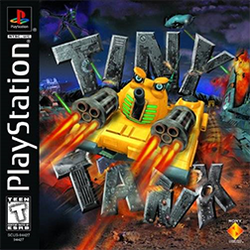
 Tiny Tank on PlayStation
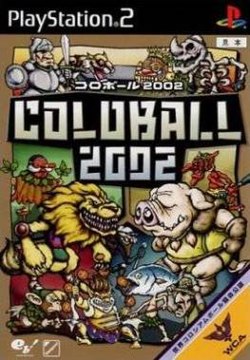
 Coloball 2002 on PS2
 Achtung! Cthulhu Tactics on Switch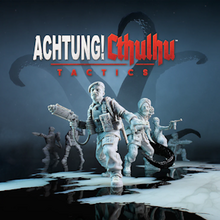










 Another SquareThought Site