

 Sep 2019
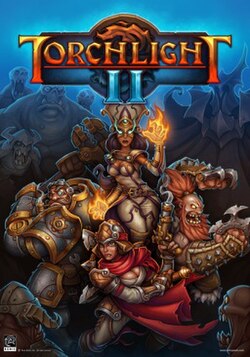

Torchlight II is the sort of game that smells faintly of molten gold and broken keyboards: a tight, class-based dungeon crawler built to make you feel clever for optimizing a skill tree and morally ambiguous for clicking 'identify' on an item that looks vaguely smug. The PS4 release is a port of Runic Games' 2012 action-RPG, originally built on the OGRE engine and designed around procedurally generated dungeons, rich loot tables, and peer-to-peer multiplayer. Panic Button handled the console conversions in 2019, so what you're getting is not a new game so much as a decade-long set of design and engineering decisions translated to a controller. This review focuses on the technical plumbing and systems engineering that make Torchlight II run, play, and scale on PlayStation hardware, while still trying to be funny enough that you don't fall asleep mid-sentence.
On a systems level Torchlight II is classic ARPG architecture: random-level generation, loot-driven progression, three skill trees per class, and modular itemization. The randomization engine generates dungeons and overland tilesets while the drop tables and affix systems feed a steady stream of player-directed optimization. A key technical decision carried over from the PC original is class-locked gear in addition to class skills, which introduces a lightweight ruleset for item filtering that reduces the combinatorial chaos of 'equip everything' while still offering deep build choices. From a networking standpoint the original design emphasizes peer-to-peer multiplayer and LAN support, with up to six players in a session and per-player loot drops. Peer-to-peer architecture reduces server costs and latency overheads for small co-op groups but comes with well-known synchronization challenges: authority for world state, loot assignment, and enemy behavior must either be deterministic or reconciled frequently. Torchlight II handles loot segregation so that players don't have to fight over drops, which simplifies network reconciliation for inventories and avoids a lot of grief engineering around duplicated items and race conditions. The engine backbone is OGRE, an open-source rendering system that favors flexibility over black-box performance tuning. OGRE's scene management and material systems are a good match for Torchlight II's top-down isometric-ish viewpoint and frequent instantiation/destruction of many small actors. The development history notes that memory and loading-time optimizations from the XBLA port of the first Torchlight improved Torchlight II; those optimizations likely targeted asset streaming, texture LOD, and faster serialization of world chunks. On consoles this matters: constrained RAM and slower storage I/O compared to a modern gaming PC mean the port had to preserve those optimizations and possibly add more aggressive pooling, compressed textures, and background streaming to maintain steady frame pacing. The game also has several QoL and systems-level features that are worth calling out. Time-of-day cycles and weather effects are cheap-but-effective systems for masking repetition in procedurally generated spaces; they don't require unique geometry but add shader and particle work per scene. Pets and the fishing minigame are small subsystems with light state and UI requirements that nevertheless increase the amount of persistent player data, inventories, and script events the engine must track. The New Game Plus mode replaces a retirement system and implies that save-game and progression serialization had to be robust enough to support multiple runs without corruption. Modding is a major technical pillar on PC: the April 2013 patch introduced the GUTS editor and Steam Workshop integration so users can alter game content and share mods. Technically that's significant because it forces the game to expose data-driven hooks and robust content loading. Console ports rarely carry over that level of user mod support; the PS4 version being a Panic Button port does not promise Workshop parity, so expect the console experience to be the curated trunk of content rather than a community-extensible sandbox. Cinematic sequences produced by Klei Entertainment are an interesting technical insertion. These bring pre-authored animations and cutscene pipelines into a largely procedural game, which requires transitions between authored and engine-driven states. Smooth transitions are purely engineering work: blending animation, locking/unlocking player control, and ensuring audio sync all require careful state machines.
Graphically Torchlight II is not trying to win photorealism awards; instead it prioritizes readability and consistent performance. OGRE's material and particle systems are used to good effect: spells, status effects, and loot glows are visually distinct so the player's attention system can apply an efficient filter in the chaos of combat. The art pipeline favors stylized assets with medium-resolution textures and shader-driven effects rather than ultra-high-res single textures, which plays well on PS4 where VRAM is finite. Technical porting work by Panic Button probably focused on controller-friendly UI scaling, remapping mouse-driven inventory management to D-pad and shoulder button navigation, and ensuring HUD legibility on a TV. Those are deceptively large tasks: inventory screens that are trivial with a mouse become iterative UX flows with a controller, so input buffering, cursor acceleration equivalents, and quick-swap shortcuts are important. Texture compression and MIP bias likely had to be tuned for the PS4 GPU to avoid shimmering or pop-in while preserving the crispness of item icons. Performance-wise the PS4 Metacritic score indicates a competent translation rather than a technical miracle. The original game's optimizations for memory and loading time give the port a solid foundation; Panic Button has earned a reputation for tight console engineering, so it's reasonable to expect that frame pacing and load times are acceptable. However, because the core visuals are shader and particle-heavy during battles, the engine's actor pooling and draw-call batching are what dictate framerate stability. OGRE can be tuned for that, but the underlying art needs to be designed around batching-friendly meshes and texture atlases, which Torchlight II mostly adheres to.
Torchlight II on PS4 is a pragmatic, well-engineered port of a decade-old ARPG that places systems design and technical robustness ahead of flashy next-gen bells and whistles. The OGRE engine, peer-to-peer multiplayer model with per-player loot, and the incorporation of cinematic sequences and mod tools on PC all show a team that balanced feature parity with clean engineering. Panic Button's console ports gave the game a second life on PS4, and the result is a solid experience: the core gameplay systems are intact, the technical optimizations from earlier ports carry through, and controller-based UI and input mapping have been handled thoughtfully. If you are buying Torchlight II on PS4 expecting revolutionary design, you will be disappointed; one of the documented criticisms is a lack of innovation. If you want a polished, technically coherent ARPG that rewards build optimization, enjoys streamlined co-op, and runs without requiring you to be a systems architect to keep it playable, then this port is a very good value. The GUTS editor and Steam Workshop remain a bright spot on PC for tinkerers, but on console the engineering focus is delivering an accessible, stable product which is exactly what Panic Button set out to do. Score: 8/10.
 Kingdom Come: Deliverance II on Xbox Series X/S
 Terraria on Switch
 PlayStation Home on PS3
 Gaelic Football '25 on Xbox Series X/S
 Ōkami on PS2
 Together! The Battle Cats on Switch










 Another SquareThought Site