

 Jun 2019
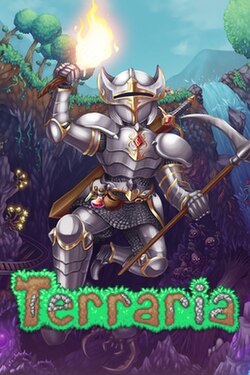

Terraria is the rare indie beast that looks like an arcade-era sprite collection and behaves like a kitchen-sink engineering project. Developed by Re-Logic on top of Microsoft XNA and shepherded through years of free, massive updates, Terraria marries a 2D procedural world to a surprisingly deep systems stack: procedural world generation, resource pipelines for crafting, asymmetric combat systems, staged progression via boss-triggered world states, and a physics/interaction layer that reviewers have called technically solid. On the Nintendo Switch the game arrives not as the 2011 launch build, but as a living, heavily-patched organism-eventually carrying the 1.4 "Journey's End" additions on Switch in January 2022-so what you're buying on Switch is the result of nearly a decade of iterative design, cross-platform porting, and community-enabled modding on other platforms. This review approaches Terraria like an engineer with a mod list: I care about how the systems interlock, how input maps to mechanics on the Switch hardware, how the renderer handles retro sprites + modern lighting, and whether the port respects the game's technical DNA while staying usable on Joy-Cons.
At its core Terraria is a systems-first sandbox: procedural generation creates a horizontally sprawling 2D world segmented into biomes, each with its own resource set, enemy table, and exploration incentives. The procedural layer is conservative but effective-ores, chests, cave networks, and biome placement all obey deterministic generation rules with enough variance to encourage replays without devolving into chaotic maps. The progression model is notably milestone-driven: defeating certain bosses (Wall of Flesh, mechanical bosses, Moon Lord) flips the world into new states (for instance, "hardmode"), which unlocks new resources and enemy behaviors, effectively gating access to higher tiers of equipment and mechanics. This is a smart design: it lets the world feel hand-operated despite being algorithmically produced, and it provides clear technical signals to the player about when new subsystems (e.g., advanced crafting stations, biome-specific loot tables) should become relevant. The crafting system is impressively granular. Items require specific resources and sometimes specific crafting stations, which effectively creates a resource dependency graph players must traverse. That graph scales nonlinearly: simple tools lead to ore mining, which unlocks armor and weapons, which in turn enable access to deeper areas and tougher bosses. The UI for crafting in the base game is functional but dense-reviewers historically called the crafting complexity "deep" or "intricate," and that holds true on Switch. Without PC-style mod aids like Recipe Browser (which live in the tModLoader ecosystem), console players rely more on memory, guides, or in-game NPC hints. The Switch version carries over this complexity; Journey's End added quality-of-life tweaks, but the underlying combinatorics of items and accessories remain a major part of the mechanical experience. Combat and classes are handled as a flexible loadout system rather than rigid archetypes. Melee, ranged, magic, and summoner "classes" are emergent properties of equipped gear. From a technical perspective, this decouples ability systems from rigid class objects and instead treats equipment as the primary modifier of rules. The combat engine has been praised for its responsiveness and for pleasing physics: projectile trajectories, knockback, hitstun, and platforming interactions cohere into a tactile loop. PC Gamer's reassessment specifically highlighted the physics engine as a strong technical pillar; it's the kind of code that rewards accurate timing and positioning rather than button-mashing. Multiplayer and platform differences are worth calling out. Console ports introduced local cooperative play early; the PC side emphasized modding and online community features (tModLoader was adopted officially on Steam). The Switch port arrives in an ecosystem where controls and networking expectations differ: Switch's local co-op and portable mode are natural fits, but reviewers (notably Nintendo Life) found fault in certain input mappings. Mitch Vogel explicitly criticized the Switch controls-an important note because Terraria has a dense inventory and fast item-swapping demands. On PC you have hotkeys, mouse-driven inventory navigation, and mod-driven shortcuts; the Switch must compress that into Joy-Con buttons, analog stick selection, and an inventory UI designed for a stick or touchscreen. The result is functional but occasionally clunky; expect to spend cognitive bandwidth on control ergonomics, especially during high-pressure boss fights or inventory-heavy building sessions. From a meta perspective, Re-Logic's development model is technically atypical: the game was built by a small dev team (initially Andrew Spinks with volunteers and later an eleven-person Re-Logic) and maintained through enormous free updates (1.1, 1.2, 1.3, 1.4, and continuous patches thereafter). That history matters because the Switch build you play is not a single, monolithic release but the output of a long chain of refactors, new subsystems, and performance engineering aimed at multiple platforms. Porting teams (console/mobile partners listed historically) had the job of adapting the XNA-based code and the content pipeline for Nintendo hardware; the end result is impressive given the scope, but not identical to the PC experience-particularly in terms of modability, UI ergonomics, and some control nuances.
Visually, Terraria deliberately leans into sprite-based, 16-bit-era aesthetics. The art direction is an intentional design constraint that simplifies rendering while enabling a huge asset catalog: sprites for enemies, players, tiles, furniture, and projectiles. That asset-first strategy has two technical implications. First, the rendering pipeline is primarily about efficient sprite batching, palette swaps (dyes, vanity colors), and layered tilemaps rather than heavyweight shader effects. Second, the game's identity is tightly bound to those assets, so updates tend to add more sprites and particle effects rather than replacing the visual language. Where Terraria modernizes the retro look is in its lighting and environmental systems. Lighting underwent improvements in early updates (1.1 and onward), moving from a flat, tile-by-tile illumination to a softer system that can handle torchlight, biome glow, and dynamic weather effects. PC Gamer's more recent reviews praise the improved lighting and the way sound and SFX have been iterated to match visual polish. On the Switch, the engine has to balance fidelity with the console's GPU and memory constraints-pipeline optimizations such as texture atlasing, conservative overdraw, and particle budget caps become necessary. Practically, this means the Switch presentation is faithful to the original sprite work and improved lighting but sometimes scales back particle intensity or disables expensive post-effects to hit a steady framerate. Performance and display modes are also part of the visual equation. Docked mode allows the Switch to push higher internal resolution and steadier framerates; handheld mode must juggle power-saving thermal envelopes and battery life. The porting teams historically optimized console versions to maintain consistent gameplay speed, and the Nintendo Switch release includes the full content set up through 1.4 and subsequent patches. Despite those efforts, players should expect occasional UI scaling artifacts (inventory panels on smaller handheld screens can feel cramped) and the occasional frame hit in extremely busy scenes (boss arenas with lots of projectiles, large NPC villages with many active AI scripts). These are not catastrophic but are technical trade-offs of bringing a mammoth, content-rich title to a mobile-grade SoC.
Terraria on Switch is a feat of systems preservation and pragmatic porting. You get the full arc of Re-Logic's long-term design: procedural biomes, a milestone-driven boss progression, a sprawling crafting dependency graph, and a combat/physics engine that rewards mechanical precision. From a technical-reviewer standpoint the Switch version succeeds at the hard problem of translating a PC-ish, hotkey-rich, mod-happy game into a console-friendly package while retaining the game's mechanical heart. The compromises-inventory ergonomics, Joy-Con button mapping, and occasional performance smoothing-are real and explain why Switch-focused outlets were mixed (Nintendo Life's 7/10 and Mitch Vogel's control critiques), even while aggregate scores (Metacritic's ~82/100 for Switch) skew positive. If you care about the purity of systems and the breadth of content, the Switch edition is a strong, portable way to experience Terraria's engineering. If your priorities are modded content, lightning-fast inventory management, or mouse precision, the PC will remain the superior technical playground. For everyone else, Terraria on Switch is a compelling, well-supported sandbox that showcases smart procedural design, robust update engineering, and retro visuals that age gracefully because they're backed by solid mechanical tech. It's one of those rare games where the code's scaffolding-the lighting tweaks, the boss spawn rules, the progression triggers-feels intentionally designed rather than tacked on, which is why it still sells like hot ore: millions of copies and years of updates have made Terraria not just a game but a technical ecosystem.
 Tintin: Destination Adventure on PlayStation
 One Piece Grand Adventure on PS2
 Taiko no Tatsujin: Dokodon! Mystery Adventure on Switch
 Onimusha: Dawn of Dreams on PS2










 Another SquareThought Site