

 Jul 2016
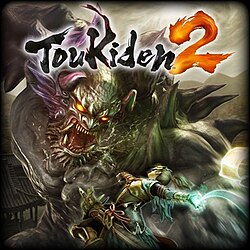

Toukiden 2 is an evolution of Omega Force's Oni-hunting formula: it keeps the series' meat-and-potatoes monster-bashing while grafting on a number of systemic changes that push it toward open-world action-RPG territory. If you're coming from the first Toukiden, expect a bigger sandbox, more interconnected systems, and a suite of toys designed to turn fights into precise, surgical encounters - or chaotic flails, depending on your skill and attention span. The game sits comfortably between methodical monster design and accessible action, with Mitama and the new Demon Hand mechanics at the core of its mechanical identity. This review focuses on those mechanical gears and how they mesh on the PS4 build: progression loops, encounter design, system interactions, and the developer's trade-offs in pursuing a more expansive game.
Toukiden 2 reworks its flow around two main pillars: Mitama-driven customization and field-first encounters. Mitama are essentially equipable souls of fallen heroes that unlock stat boosts and modular 'Boosts' - small, often conditional perks that scale through use. Each Mitama can learn up to nine Boosts, but you can only slot three at a time, which forces meaningful choices about role specialization. Boost progression is proficiency-based: you must meet upgrade conditions and earn proficiency with each Boost to raise its level. That design encourages targeted playstyles rather than passive stat inflation; play like a heavy-hitter and the boosts that support brawling will grow, whereas finesse players will unlock different synergies. From a systems perspective, this is a compact, well-signposted way to funnel diverse play into distinct mechanical identities without bloating the UI or overwhelming new players. The transition to an open world is the single largest mechanical shift. Hunting grounds from previous entries return, but there is now a navigable world map with locked sections gated by story progression. The hub, Mahoroba Village, acts as the operational center with a day-night cycle that affects immersion and some request content. Exploration is not window dressing: chests placed around the field double as portable inventory and loadout access points. That reduces downtime for equipment swaps and creates a more continuous combat loop where the player rarely needs to return to town just to change gear. Fast travel and altered item farming - both noted improvements - help keep the loop tight and support longer play sessions on the couch. Combat has been reframed as seamless, field-based encounters rather than pre-telegraphed mission instancing. Enemies appear directly in the world so transitions from exploration to combat are immediate. Weapon movesets have been expanded, new weapons (notably sword-and-shield and the trick whip) are introduced, and every weapon class has additional actions appended to their kit. From a mechanical standpoint, the arrow of progress here is increased depth without replacing the original arcade feel: fights still reward pattern recognition and timing, but they now also reward loadout planning and on-the-fly adaptation. The Demon Hand is the most mechanically intriguing addition. It serves both traversal and combat roles: it can hook onto objects or small demons to close distance, obliterate obstacles, or alter the battlefield topology. Against giant Oni it becomes a targeted tool capable of stunning, locking onto specific body parts, or outright severing limbs. This effectively turns certain encounters into a series of sub-objectives; instead of whaling on a health bar, you're conducting targeted surgeries to make the monster susceptible to follow-up attacks. On the Vita the Demon Hand leverages the touchscreen, demonstrating thoughtful platform differentiation; the PS4 maps these actions to controller inputs and retains the tactical implications. The Demon Hand's presence is an example of design that adds a deterministic layer to combat: rather than RNG-ing a break, you create openings through player agency. Supporting systems emphasize resource efficiency and risk management. Automatons act as a remote scavenging mechanic; you send them out to gather items, but they can return damaged - introducing a micro-risk where aggression in resource gathering can cost maintenance overhead. The Professor's research facility lets you fuse item drops into higher-tier crafting components, and the probability of success scales with the number of inputs. This is a simple, transparent crafting economy that favors deliberate resource allocation. Environmental hazards matter: cursed zones have a miasma gauge that, if filled, kills the player. Removing the miasma requires defeating the demon seeding the corruption, which ties exploration directly to combat objectives. Regions also have hazard levels that increase in safety as you clear enemies, unlocking new items and weapons. This meta-loop turns map cleanup into a deterministic gating mechanic for loot progression rather than mere XP grinding. Small design touches elevate the whole package: Tenko pets can be raised and named, providing occasional item finds and companionship; golden Slayer seals offer optional collection challenges scattered across the world; the blacksmith prodigy Kiyomaro sometimes appears with superior upgrade bonuses, creating stochastic spikes of equipment power. Multiplayer is retained, which leans into cooperative optimization of Mitama and Demon Hand strategies during larger boss fights. There are trade-offs. Locked regions tied to story progression can make parts of the map feel curated rather than truly open, and the addition of many subsystem layers increases cognitive load for completionist players. The game nudges you toward specialization (three Boost slots, equipable Mitama), which is a strength for build clarity but a weakness for players who want to experiment without frequent micromanagement.
Graphically, Toukiden 2 is stylistically consistent with the series: cel-tinged character art and ornate Oni designs contrast with relatively modest environmental fidelity. Artist Hidari's character work shows in the portraits and armor silhouettes; it carries through to in-game models with solid, readable silhouettes which are critical when you're targeting limbs during Demon Hand play. The open world is functional rather than photorealistic - navigation and enemy placement take precedence over dense texture work. On PS4 the frame pacing is generally stable during normal exploration and small-scale fights, though the game clearly leans into clarity over fidelity. Giant Oni encounters are designed to prioritize readable telegraphs and hit zones, so visual clarity takes precedence over spectacle. Lighting and day-night cycles contribute to atmosphere but are not used as heavy mechanical levers beyond some request content and immersion. Overall, the visual direction serves gameplay, ensuring that when you lock the Demon Hand onto a limb you can actually see and act on the target without confusion.
Toukiden 2's technical identity is coherent: it layers modular systems around a core of deliberate action combat. Mitama customization, the Demon Hand, hazard-driven exploration, and field-accessible inventories cohere into a loop that rewards planning, proficiency, and tactical execution. The open world is more curated than truly emergent, but that curation keeps mission flow tight and progression meaningful. For PS4 players looking for a monster-hunting game that leans into systems design over raw spectacle, Toukiden 2 is an engaging compromise - mechanically richer than its predecessor, accessible enough to get started quickly, and deep enough to keep you experimenting with builds. The game earned generally favorable reviews (PS4 Metacritic: 77/100) for a reason: it improved the formula in places that matter while keeping the core enjoyable and comprehensible. If you enjoy optimizing loadouts, dissecting bosses into targetable problems, and swapping Mitama boosts like a chef switching spices, this is a solid title to sink hours into.
 Combat Elite: WWII Paratroopers on PS2
 Onimusha: Dawn of Dreams on PS2
 Disney's Chicken Little: Ace in Action on PS2
 Tokyo Xanadu eX+ on PS4
 Wild Hearts S on Switch 2
 Dynasty Warriors 8: Empires on PS4
 Dynasty Warriors: Origins on PS5
 Attack on Titan 2 on Switch
 Attack on Titan 2: Final Battle on Switch










 Another SquareThought Site