

 Aug 2020
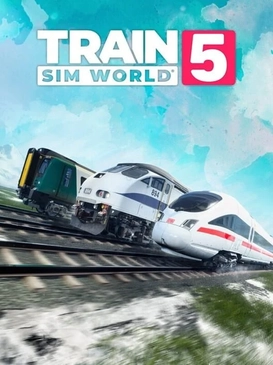

Train Sim World 2 arrives bearing the careful mien of a program designed for people who read timetable PDFs for fun. Released in August 2020 by Dovetail Games, this successor refines the series' core aim: realistic train operation delivered across a collection of lovingly modelled routes and locomotives. If the 1990s taught us anything about simulation games it is that fidelity and fiddly controls are not flaws but features; TSW2 embraces that tradition with a modern Unreal Engine 4 sheen. The announcement promised two headline routes - Schnellfahrstrecke Köln-Aachen and the Bakerloo Line - plus improvements such as a Livery Editor and Scenario Designer. Those promises are largely kept, though with the caveat that the game wears its ambitions on its sleeve and its compromises on its platform badge.
Train Sim World 2 is not a game you devour in an hour. It is the sort of title that invites you to sit in a simulated cab, read gauges as if they were scripture, and coax tons of metal to an on-time arrival. The driving model is deliberate: traction, braking, signaling and timetables matter. For newcomers there are tutorials and a first-person walk-around mode that serves more than aesthetic purpose - refuelling, coupling, and switch operations require the player to leave the cab and interact with the environment. That detail will delight the equipment nerd and frustrate the impatient. Two fresh routes shipped with the base release. Schnellfahrstrecke Köln-Aachen pairs the ICE 3M with Bombardier Talent 2 units, letting players experience high-speed German electrics and regional EMUs over a familiar European corridor. The Bakerloo Line brings the 1972 Tube stock into the fold and delivers a charmingly claustrophobic underground driving experience that contrasts nicely with open-air mainline work. Sand Patch Grade, a veteran of the franchise, was updated and optimised for consoles, giving PlayStation 4 owners access to heavy-haul freight duties with AC4400CW, GP38-2 and SD40-2 locomotives. The headline additions are less about new steel and more about authorship. The Livery Editor and Scenario Designer allow players to paint and script their own services; this is a nod to players who like creating as much as piloting. The game's Preserved Collection feature is an especially sensible piece of goodwill: previously purchased routes and DLC from Train Sim World and Train Sim World 2020 could be imported into TSW2 so players were not forced to rebuy content. This approach preserves customer investment and, more importantly, preserves the player's library of routes and trains for the new feature set. Dovetail supported the title with an aggressive post-launch plan. The Rush Hour season pass and subsequent DLC added three routes - Boston Sprinter, London Commuter (Brighton Main Line), and Nahverkehr Dresden - along with a passenger system update. These additions broaden the game's scope from high-speed intercity work to dense commuter operations and American corridor running, demonstrating that the engine is capable of varied operational flavours. The game layers legacy stock and locos onto new routes too, so owners of prior DLC will spot familiar names and machines across new terrain. There are, however, a few pragmatic caveats. Some previously released content was excluded from the Preserved Collection due to technical complications; in a craft that mixes third-party content and legacy code, such outcomes are unavoidable. The Scenario Designer also required a delay to ensure compatibility with preserved add-ons, which speaks frankly to the complexity under the hood. For the sim purist this is not a dealbreaker; for the casual player it can feel like feature limbo. In short: if you enjoy careful, methodical operation, timetable discipline and editing tools that let you build services, TSW2 provides hours of exacting, rewarding play. If you prefer fast thrills and instant gratification, the title will test your patience.
Visually Train Sim World 2 is a study in contrasts. Built in Unreal Engine 4, the game produces convincing cab interiors, believable weather and convincing station detail. Steam whistles are replaced by attention to texture work and lighting; the ICE 3M and Talent 2 look authoritative, and the Bakerloo Line's cramped platforms are rendered with a pleasingly grimy authenticity that recalls the practical sets of the late twentieth century. On PlayStation 4 the developers applied major optimisation to make these assets run within the console's constraints. The result is generally attractive, particularly when trains glide past well-modelled stations or when sun breaks over a German high-speed alignment. Yet the console experience is not without strain. The leap from PC to last-generation console forces compromises: pop-in and occasional frame hiccups are present on the PS4 build, especially on more complex scenes or when AI services are layered into the traffic mix. These are not catastrophic failures but reminders that fidelity costs performance. The user interface is serviceable but occasionally verbose; getting to grips with the Scenario Designer or Livery Editor on a gamepad is doable, but feels more natural with mouse and keyboard. Sound design is unflashy and effective - mechanical clacks, engine roars and station announcements are all present and generally convincing - but it is the visual and interactive fidelity that does the heavy lifting here.
Train Sim World 2 is an earnest, well-crafted simulation that will make a certain kind of player very happy. It extends the series' established strengths - plausible driving physics, precise vehicle models and a growing catalogue of routes - while introducing tools that let players personalise and author scenarios. The Preserved Collection is a generous lifeline for long-term fans, and the post-launch DLC broadened the game's operational palette in sensible ways. The principal criticisms are pragmatic rather than philosophical: console optimisation smooths many rough edges but does not remove them entirely, and the layering of legacy content with new features required delays and compromises. The interface and editors are powerful, but they reveal the limits of using a gamepad for creation work. For anyone seeking a high-fidelity, patient simulation of modern railroading and urban tube operations, TSW2 offers depth and longevity. If your interest in trains extends only as far as occasional joyrides, this is probably more locomotive than you need. For those willing to learn the controls and respect the timetable, this is a rewarding journey - conductor's cap optional but recommended.
 Harvest Moon: One World on Switch
 Tennis World Tour on Switch
 Nobody Saves the World on Xbox Series X/S
 Pro Evolution Soccer 2015 on PS4
 MotoGP 19 on Switch
 Derby Stallion 04 on PS2
 Power Pro Kun Pocket 13 on DS
 Train Sim World 5 on Xbox Series X/S
 Train Sim World 2020 on PS4
 Train Sim World on PS4










 Another SquareThought Site