

 Jan 2021
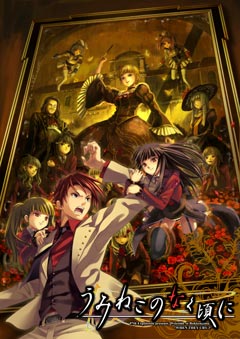

Umineko When They Cry is the kind of story that will politely murder your expectations, bury them in a riddle, and then challenge you to deduce whether the corpse was done in by human malice or supernatural shenanigans. The PS4 package (the Saku compilation ported by Entergram) collects the entire, labyrinthine saga that Ryukishi07 unleashed across eight main episodes plus extras. On the surface it's a locked-room whodunnit set on an island mansion, but peel back the wallpaper and you find a meta-game of logic duels, witchcraft metaphors, and character arcs so intricately woven they could knit a sweater for a drowning seagull. This review leans into those arcs: who grows, who breaks, who's lying, and who's carrying explosives in a golden chest.
If you came for twitchy thumbs and button combos, you will be politely reminded that Umineko is a visual novel in spirit and practice. Gameplay is advancing text, flipping through Tips Mode, unlocking epilogues, and occasionally making a choice (mostly in Episode 8, Twilight). But to call it "not a game" is to miss the point: Umineko frames itself as a battle - not of reflexes but of reason. Battler vs Beatrice is essentially chess with paragraphs. Battler's red-text/blue-text logic weapons, Erika Furudo's detective theatrics, and the witches' contradictory proclamations are the moves. When you finish an arc you don't stop expecting clues; you start cataloguing motives and retooling your internal Occam's razor. Characters are not props for murders; they're the engine. Battler starts as the archetypal skeptic - loud, bewildered, and emotionally punchy - refusing magic as a default explanation. His arc is a slow and messy unlearning. The battles in the meta-realm Purgatorio force him to articulate what counts as evidence and, crucially, to empathize. By the later episodes he's not just denying fantasy; he's learning what fantasy does for human beings: beautify, obfuscate, and protect. Beatrice, initially the elegant villain of the epitaph, migrates from vaguely omnipotent witch to tragic construct. The story peels layers off her persona until you can see the human scaffolding inside - the person who learned to be a story. Ange is the series' emotional anchor in the later acts. As a survivor raised by Eva and bullied by a world that prefers tidy narratives, Ange's journey to the truth is about identity reclamation. Her arc crescendos into a devastatingly quiet acceptance: sometimes truth does not equate to comfort, but it grants agency. Eva's survivor arc is brutal and morally thorny; her self-defense murder of Rudolf and Kyrie and the subsequent concealments show how survival can create new prisons. Maria, the child who believes in witches, is less comic relief and more a case study of magic-as-coping. Her diary scenes are emotional landmines - equal parts heartbreaking and illuminating. The series' central reveal - the human behind "Beatrice" - is handled with the kind of grotesque care Ryukishi07 relishes. Yasu (the person who embodies multiple identities like Shannon, Kanon, Lion) is an exercise in unreliable sympathy: the backstory ties together Kinzo's monstrous legacy, secret adoption, sexual abuse implications, and the desperation of someone building entire fictional murders to make sense of their life. Yasu isn't just a twist; they are the axis that explains why these hypotheticals were thrown into the sea in bottles. Their choices, culminating in suicide in one timeline and explosive theater in another, are the series' darkest notes and they make the earlier mysteries ripple differently in hindsight. Secondary characters steal scenes with forensic precision. Erika Furudo is the theatrical detective who treats logic like performance art, and her presence forces Battler (and the player) to meet the mysteries on their terms. Willard H. Wright's summoning in Episode 7 rewires the rules again, demonstrating how different investigative lenses produce different truths. Bernkastel and Lambdadelta - witches who treat humans like chess pieces - are the puppeteers of ambiguity, and they push the story into questions about authorship, responsibility, and the ethics of narrative. Mechanically, PS4 players get the full Saku compilation, meaning every episode, the Tsubasa/Hane extras, and the two new Saku scenarios. Tips Mode is invaluable: it functions like a game's codex and a hint system when you want to trace a motive or verify a detail. The occasional interactive beats in Twilight break the text-only rhythm just when you need them, and the two endings give a sliver of player agency after dozens of hours of textual duels. Umineko demands effort. Its mysteries are intentionally difficult - the author treats the reader as an opponent. But if you enjoy character-based puzzles where understanding a person can be as decisive as finding a fingerprint, Umineko rewards obsessively.
Graphics are intentionally simple and stylized. Ryukishi07's original sprites and background photos create an uncanny, theatrical atmosphere more than immersion by illusion. The PS4 Saku port includes sprite work that nods to Kei Natsumi's manga visuals, giving some scenes a cleaner, more modern look while preserving the original's rougher charm. The game isn't trying to photorealize the mansion; it wants you to inhabit a stage. Where the presentation truly shines is audio. Umineko is described by its creators as a "sound novel" for a reason: music and sound design (Akiko Shikata's haunting openings among others) do the heavy lifting in mood. The score is operatic, occasionally baroque, and always keyed to manipulate suspense. Because the original PC releases lacked voice acting, your imagination fills the gaps - which, in a game about storytelling and belief, is exactly the point. The PS3 remakes added full voicework; the Saku compilation respects that legacy by offering richer audio presentation without turning the script into a mere cutscene.
Umineko When They Cry on PS4 is not an easy date. It will argue with you, break your assumptions, and then politely hand you the audiobook of your own worst instincts. But its strength lies in character: Battler's rage-into-reason evolution, Beatrice's unmasking into human tragedy, Ange's reclamation of truth, and Yasu's horrifyingly human backstory create a tapestry where each mystery is a thread of someone's life. The gameplay is minimal by modern standards, but the meta-game of logic and the layered epilogues give you puzzles that feel personal rather than decorative. If you want a mystery that treats characters like evidence and emotions like clues, this is your island. If you want quick gratification, flashy graphics, or button-masher catharsis, this will test your patience. For readers who enjoy being played by a narrative that is smarter and meaner than they expected, Umineko delivers a long, complicated, exhausting, and ultimately honest reckoning with how humans use stories to survive. Score: 8.5/10 - a masterpiece of character-driven mystery that asks you to solve people, not just crimes.
 Digger HD on PS3
 Army Men: World War on PlayStation
 Root Film on PS4
 Tokimeki Memorial Drama Series Vol. 3 Tabidachi no Uta on PlayStation
 Oshiete! Popotan on PS2
 White Album on PS3
 Higurashi no Naku Koro ni Hou on Switch
 Gensō Rōgoku no Kaleidoscope on PS4
 Kaleidoscope of Phantom Prison on Switch
 Gensō Rōgoku no Kaleidoscope on Switch









 Another SquareThought Site