

 Sep 2020


Unrailed! is a cooperative, procedural railroad-building chaos machine that started life as an ETH Zurich student project and graduated into a commercial release. The PlayStation 4 version is a console port overseen by Sickhead Games, built on the MonoGame framework, and it brings the same frantic multiplayer loop that made the PC original notable: keep a train from derailing by laying track, harvesting materials, upgrading the engine, and surviving an increasingly hostile, randomly generated environment. This review focuses on the technical underpinnings and design choices that make Unrailed! tick (and occasionally trip over its own rails), with a sprinkle of humor for anyone who has ever panicked while holding a pickaxe controller-side.
At its core, Unrailed! is an exercise in emergent systems interacting under time pressure. The gameplay loop is straightforward on paper: a train moves continuously along a path, and up to four players must place rails ahead of it by collecting raw resources (wood and iron) from the procedurally generated environment. The game exposes several subsystems that interact in ways that reward coordination and expose weaknesses in both design and execution. Procedural generation is a major technical pillar. Each level's terrain, resource placements, obstacles (trees, stone blocks, wildlife), and NPCs that sabotage your track are generated on the fly, giving the title roguelike flavor. From a systems perspective this reduces designer workload for content density while maximizing replayability. It also places heavy demands on the state synchronization and streaming model used by the engine; the world must be deterministic enough that online multiplayer clients remain in sync without massive bandwidth overhead. MonoGame, being a lightweight, cross-platform framework, is a pragmatic choice that prioritizes portability. It doesn't offer a bloat of built-in systems, so a lot of the deterministic simulation, network syncing, and procedural seeding have to be hand-rolled by Indoor Astronaut (with Sickhead handling console-specific integration), which is likely why the game emphasizes tight, small-state objects (tiles, inventory counts, train segments) rather than sprawling physics simulations. Resource management is intentionally low-fidelity but high-tension. Trees and stone blocks are discrete nodes that yield wood and iron after player actions. This discrete resource model is friendly to consoles because it reduces continuous state updates and instead trades on event-driven changes (tree felled, block mined, inventory incremented). The upgrade economy - bolts earned during runs and spent at stations to improve the engine or unlock biomes - provides meta-progression, which helps offset the limited save model common to roguelikes. Limited saves and the permadeath-ish feel of a failed run complement the procedural systems by making upgrades feel meaningful without escalating complexity per run. Multiplayer is where Unrailed! shines and where it can also grimace. Local couch co-op is mechanically elegant: inputs are local, latency is zero, and the UI focuses on role-based emergent behaviors (one player mines, another lays track, one mans the switch). Online multiplayer introduces typical challenges: authority, rollback, and latency compensation. The decision to keep most game actions discrete and deterministic helps here - chopping a tree or placing a rail are atomic events that can be serialized and reconciled more easily than continuous physics. Still, the engine choice and indie resources likely constrained more advanced netcode features. Expect a generally smooth experience with occasional desyncs or prediction quirks on less stable connections. The inclusion of versus and other modes adds variety and stress-tests the matchmaking and balancing systems. AI and world hazards are deceptively important for the game's difficulty curve. Non-player characters that can remove parts of track force players to incorporate defensive tasks into their workflow. Wildlife that blocks the train adds another class of interrupt-driven tasks. These behaviors are rule-based and event-driven, making them cheap to compute and easy to replicate across networked clients. The game's difficulty scaling appears to be driven by a combination of resource scarcity, hazard frequency, and track complexity, which map well to procedural parameters that can be tuned without altering core mechanics. Level design philosophy favors modular, tile-based construction, which reduces edge cases in pathfinding and collision detection. Rail placement is grid-aligned and adheres to simple adjacency rules, minimizing complex geometry calculations. This design choice simplifies collision checks with the train and NPCs and allows the game to focus CPU/GPU resources on rendering and input responsiveness - critical on a mid-generation console like PS4. The five modes (endless, versus, fast, sandbox, time) demonstrate an awareness of different session lengths and player goals. Sandbox mitigates the procedural friction for players who want to experiment or practice, while endless pushes the full simulation and meta-progression loop. This separation is a thoughtful quality-of-life design that aligns with different technical constraints; sandbox can disable some procedural chaos for predictable testing and teaching, reducing the need for heavy debugging during early exposure for new players.
Visually, Unrailed! uses a clean, low-poly, hand-friendly aesthetic that's more about clarity than photorealism. The MonoGame foundation doesn't aim to compete with engines that offer advanced lighting or PBR; instead, it yields a crisp 2D/2.5D presentation that's cheap to render and legible during frantic play. Tile art, sprites, and particle effects are optimized for readability: trees and stone blocks have distinct silhouettes, the train's rails are high-contrast, and UI overlays for inventory and bolt counts are straightforward. From a console porting perspective, Sickhead Games' involvement suggests an emphasis on memory layout, controller mapping, and performance tuning for PlayStation 4. MonoGame's cross-platform capabilities ease asset pipelines, but consoles require attention to GPU state changes, draw call minimization, and efficient texture atlasing to hit stable frame rates. The game's graphical demands are modest, so the PS4 port should be able to maintain consistent performance with minimal frame drops under normal circumstances. The Switch port received more mixed reception, which hints at the added challenge of optimizing for a less powerful handheld - more compression, tighter draw call budgets, and possibly downgraded particle density. UI and audio cues carry a lot of the gameplay feedback. Because actions and state changes happen rapidly, the visual and sound feedback needs to be immediate and unobtrusive. Unrailed! generally succeeds here: the UI is minimal, lockstep audio events (chopping, mining, rail placement) provide critical confirmation, and the station upgrade menus are concise. These choices reduce the cognitive load on rendering and input systems and improve player reaction time during high-stress sequences.
Unrailed! on PS4 is a technically thoughtful port of a clever cooperative concept. The game's procedural systems, discrete resource model, and tile-based track logic reflect design choices made with performance, determinism, and multiplayer synchronization in mind. MonoGame provided portability and simplicity at the cost of some modern engine conveniences, which the developers and Sickhead Games navigated by keeping the game's systems event-driven and modular. The result is a generally stable and readable experience that rewards coordination and punishes chaos; it's also forgiving enough that mistakes become funny rather than catastrophic most of the time. The main caveats are the usual ones for indie multiplayer titles: online stability can vary depending on your connection, and console ports require careful optimization to match the original's feel. If you enjoy emergent multiplayer puzzles, appreciate minimal but precise presentation, and want a game that scales from a chilled sandbox session to frantic endless runs, Unrailed! is an excellent technical showcase of how focused design can mitigate engine and platform limitations. If you hate cooperative screaming, bring noise-cancelling headphones - and maybe a friend who knows how to lay down rails without turning your world into a pile of very angry cows.
 Disney's Chicken Little: Ace in Action on PS2
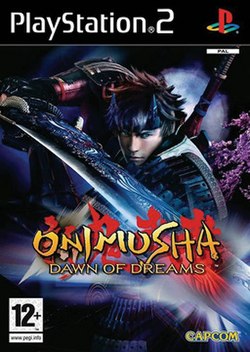
 Onimusha: Dawn of Dreams on PS2
 Tokyo Xanadu eX+ on PS4
 Action Man: Operation Extreme on PlayStation










 Another SquareThought Site