

 Dec 2016
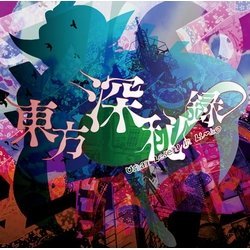

Urban Legend in Limbo is the 14.5th entry in the Touhou Project fighting offshoots, developed by Twilight Frontier in collaboration with Team Shanghai Alice. Its arrival on PlayStation 4 in December 2016 marked the series' first official appearance on a gaming console, and the port bundles a PS4-exclusive character (Reisen Udongein Inaba) plus a short extra story. At its core it's a 2D versus fighter that wears its danmaku roots on its sleeve - think tight, technical 2D combat with a thematic layer of "urban legends" baked into the super attacks. This review will lean hard into the mechanical and technical side: systems, balance implications, and what the PS4 release actually brings to the joystick-wielding table.
Urban Legend in Limbo follows the established 2D versus fighting template: two characters square off on a single plane and try to reduce an opponent's health with normals, specials and higher-cost "spell" type attacks. The documentation is explicit about lineage - the game is structurally similar to its immediate predecessor but with targeted balance tweaks and an "improved spell card system." That phrasing matters for players who dissect frame data and system design. From a systems perspective, the designers prioritized iterative tuning rather than a full overhaul. Expect character archetypes familiar to fighting-game veterans: zoning characters who control space with projectile-heavy patterns, rushdown types that thrive on pressure strings and frame advantage, and those that exploit unusual movement or special mechanics (Touhou games like this often reward unconventional inputs). The presence of an "improved spell card system" suggests two technical points: first, spell cards are treated as discrete resource-based options rather than pure cinematic finishers, which affects decision trees during neutral and on-block scenarios; second, improvements likely address predictability and counterplay - critical for keeping matches from turning into sequence guessing. The roster is relevant to balance discussion: up to 14 playable characters, including the cast carried over from Hopeless Masquerade plus four entrants (returnees from older entries, one manga-origin character, and one new character). That density forces designers to patch and tune interactions across a sizeable matchup table. Each character is tied to an "urban legend" that manifests as their ultimate attack, which means ultimate/spell animations are not just cosmetic but are part of the mechanical identity of each fighter. In practice this creates asymmetric win conditions: some ultimates serve as large area denial tools while others are high-damage, narrow-window reversals. The PS4 port's significant gameplay contribution is the inclusion of Reisen as a playable character and an extra post-Legacy of Lunatic Kingdom story. Reisen's addition isn't merely roster padding - introducing a console-exclusive fighter shifts the meta subtly by providing new combos, normals, and spell interactions that must be accounted for in balance conversations. For competitive players, that implies a revised matchup table and fresh exploit vectors where Reisen's tools meet existing characters' defensive options. Control mapping and player input merit scrutiny because moving a doujin-developed 2D fighter from PC to console can introduce differences. A well-executed port preserves input responsiveness, button remapping and deadzone calibration so frame-exact links remain possible on a DualShock/DS4. The source material doesn't list specifics about input latency or netcode on PS4. If you care about frame advantage and execution windows - and you should if you care about technical fighting - confirm via your own timing tests whether the PS4 build maintains the crispness of the Windows original. Where the build is faithful, the reward is a pure technical duel: frame traps, bufferable specials, and spell-card mind games that feel deterministic rather than fuzzy.
Graphically the game is notable for being the first Touhou entry illustrated by Moe Harukawa (previous work includes Forbidden Scrollery). That illustration credit matters because sprite and portrait work is the primary visual language of a 2D fighter. The character art styles are refreshed, and the ultra/ultimate attacks lean into the urban-legend themes for dramatic, high-contrast effects. The source material highlights a tenet of the series: ultimate attacks manifest the character's associated legend, so they're both a visual spectacle and a telegraphed mechanical event. Technically speaking, the visuals break down into a few measurable components: sprite fidelity, animation frame count, background parallax and UI clarity. The art direction leans toward dense portrait-style character art with high-color palettes and sharp outlines - the kind of style that scales cleanly on a 1080p console output. Animation tends to prioritize readable attack telegraphs over hyper-fluid motion, which is appropriate for a game where hitbox clarity and collision feedback must be unambiguous. That design choice helps players parse incoming threats: you see the attack, you react, you don't have to guess intent from a blur of frames. Stage design and background work contribute less to gameplay but more to feel. The urban-legend motif gives each ultimate attack a narrative context, and the resulting particle effects and overlay work do a fair job of selling high-impact moments without cluttering the playfield. The UI is functional and classically 2D-fighter: health bars, spell gauges and round indicators are laid out with an emphasis on information density. For technical players, that's a plus - unnecessary screen clutter can hinder reaction reading and split-second decision-making.
Urban Legend in Limbo is a focused, mechanically-minded 2D fighter that will appeal to players who tinker with frame traps, matchup nuances and resource-driven specials. Its technical identity is conservative but deliberate: the developers updated balance and the spell card system rather than reinventing the wheel, and the PS4 port makes the franchise accessible to a controller-owning audience while adding a meaningful roster piece in Reisen and a short narrative bonus. Strengths: tight 2D combat rooted in Touhou's danmaku DNA, a substantial roster with distinct mechanical identities, and an improved spell-card layer that increases decision depth. Weaknesses: the port documentation leaves some technical questions unaddressed (exact input latency and netplay characteristics are unclear), and the conservative approach to systems means players looking for radical innovation in fighting mechanics might be underwhelmed. If you're a competitive-minded player who appreciates a high-density matchup map and readable, purposeful visuals, Urban Legend in Limbo is an engaging console port with enough technical meat to keep you analyzing frame advantage over long sessions. If you're after flashy, modern mechanics or a deeply reworked system, temper expectations - this is refinement, not revolution. Final score: 7.5/10 - a solid technical fighter that earns points for balance-minded iteration and being the series' first, generally faithful step onto console.
 Urban Trial Freestyle on PS3
 Urban Chaos on PlayStation
 Ultraman Fighting Evolution on PlayStation
 ACA Neo Geo: Art of Fighting 2 on Xbox One
 ACA Neo Geo: The King of Fighters '98 on Xbox One
 Touhou Hyoibana: Antinomy of Common Flowers on Switch










 Another SquareThought Site