

 Sep 2018
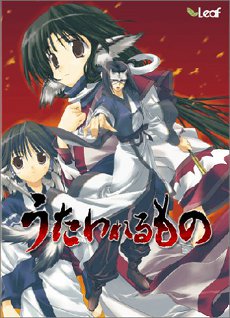

Utawarerumono: Zan is the muscle-bound cousin of the main Utawarerumono trilogy - a Tamsoft-made hack-and-slash that takes the franchise's sprawling political drama and character tapestry and funnels them into gleefully violent levels of mashing and combo-ing. It's billed as a spin-off based on events from Mask of Deception, which means the plot is less about mystery and more about 'hit more, talk less, occasionally cry about the past between waves of enemies.' For fans of the series the pitch is obvious: you get to control well-loved characters from the visual-novel/tactical-RPG saga in real time, smacking hordes of generic soldiers until the camera does a dramatic slow-mo on a finishing flourish. If you came to Zan expecting the slow-burn emotional development and long-form scenes of the original games, you will find those elements present, but edited down and distilled into bite-sized set pieces that serve the combat far more than the nuance.
Zan trades the turn-based deliberation of the original Utawarerumono for the instant dopamine of a hack-and-slash. You pick a character, learn a move ladder, unlock special finishers and then murderously choreograph face-plants for enemies until the stage ends. The gameplay loop is typical Tamsoft: clear rooms, take on named boss units, trigger character-specific skills and watch the party execute cinematic team attacks. The designer choice to base the game on Mask of Deception means many playable characters arrive with clear personalities and combat identities already baked in, which is both Zan's biggest strength and its narrative weakness. The core appeal for players who care about characters is that Zan turns emotional beats into mechanical windows. Hakuowlo - the masked protagonist and the steady core of the saga - plays like a commander who still wants to get his hands dirty. His arc in the original series revolves around amnesia, reluctant leadership and the slow forging of family; in Zan that arc becomes tangible through his combat: heavy hits that punish groups, skills that boost nearby allies and a sense of leadership that is mirrored by on-field buffs. Where the visual novel version explores his charisma with long conversations and political decision-making, Zan compresses it into gestures: he charges into the thick of things and the game mechanically rewards the player for pulling allies through chaos, which fits the character even if it loses subtlety. Eruruu and Aruruu translate to different playstyles. Eruruu is the caregiving anchor - think support but with teeth. Her moveset leans toward crowd control and healing-ish theatrics; she often plays like the character who keeps the family together in the middle of a battlefield. Aruruu is the small-but-meaningful presence: a light, quick attacker with a kittenish, protective bond to Mukkuru, the tiger-beast cub. Their emotional thread - the household that adopts Hakuowlo and the tenderness that follows - is kept intact by short, well-placed cutscenes, and those moments work best when they are allowed to breathe, which is rare in Zan's gauntlet-focused pacing. Side characters are where the game both wins and stumbles. Oboro's brash dual-sword style, his twin archers Dorry and Guraa, and the broken-but-stalwart Benawi and Kurou are translated into archetypal archetypes: the dual-wield glass cannon, the ranged support, the stoic tank. These make for fun, distinct loadouts, but the deeper arcs - Oboro's bandit past and his sister Yuzuha's illness, Benawi's irritation at bad governance, Karulau's history with slavery and her shackle as a memento - get compressed into a handful of voiced lines, a statue-sized finisher and the occasional flash of personality in a mission briefing. For an action game that has to move quickly, these are reasonable compromises; for someone expecting the long, slow revelations of the main series, the result can feel like reading a character résumé in the middle of a mosh pit. Ulthury and Camyu - the winged Onkamiyamukai sisters - introduce one of the franchise's few genuine tonal contrasts: mysticism and familial tenderness laced with tragedy. In the tactical/RPG originals their magic breathes wonder into political scenes; in Zan their magic is a spectacle, and spectacle is Zan's native tongue. Watching Ulthury cast massive area spells that look like winged arcs ties into her priestess role from the source material, but it also emphasizes Zan's tendency to turn emotional stakes into showy finishes. Narrative structure in Zan owes more to an anime recap than to the patient plotting of a visual novel. Story beats are triggered between stages, often in the form of short voiced sequences that reassert each character's motivation: loyalty, protectiveness, guilt, hope. The game treats arcs as flavor that buffs attacks rather than the central dish. That approach will satisfy players who love seeing their favorite warriors in motion and want the emotional shorthand, but it risks reducing major tragedies or developments (like the later science-fiction revelations of the saga) to a stunned reaction cutscene followed by another wave of cannon fodder. The game's strongest moments occur when it briefly pauses the action and allows characters to behave as people - Eruruu soothing Aruruu, Hakuowlo quietly shouldering responsibility - proving that Zan can still create moments of genuine warmth when it chooses to. There's also a meta-appeal: if you know the characters' full arcs from the trilogy (Hakuowlo's rise to found Tuskur, Eruruu's caretaker growth, Karulau keeping her shackle, Touka's protective awkwardness), Zan rewards you with little confirmations and recontextualizations. If you don't know the backstory, these confirmations might read as melodrama with big swords.
On PS4 Zan looks competent: character models are faithful to the series' designs and the stages are large, varied arenas meant to accommodate legions of enemies. Tamsoft's engine does a decent job with flashy finishers and the occasional slow-motion camera that loves to linger on a character's expression right after they land a meaningful blow. Backgrounds aren't going to make you take screenshots for your phone lock screen, but they do the job of supporting chaotic combat without getting in the way. Performance is mostly stable, though on-screen enemy counts sometimes induce the familiar pop-in or animation stutter you expect from the genre. Voice work is serviceable and, crucially, the cast channels the emotional tones from the franchise well enough that the compressed story beats land more often than not. If you came for a photorealistic fantasy or cinematic vistas, Zan isn't the show-off; it's the brawler who keeps the cake, eats it, and offers you a piece that still has frosting on it.
Utawarerumono: Zan is best approached as a fan's playground: an arena where beloved characters get new moves, flamboyant finishers and a condensed tour through the franchise's emotional beats. Tamsoft takes a sprawling tapestry of family, loyalty, grief and strange future-reveal science-fiction and converts it into a sound-and-fury-but-not-entirely-meaningless package. If you crave deep, slow-burn character development you should still play the trilogy in its original form; if you want to punch through hordes while being reminded, in between flurries of combos, why these characters matter to one another, Zan delivers with gusto. It's a pleasantly loud, occasionally shallow, and ultimately affectionate adaptation - a side-quest of the heart with sword swings as punctuation marks. Recommended for fans and curious action-RPG players; a pass for those who want the full narrative depth without the combo counter. Score: 7/10.
 Utawarerumono: Zan 2 on PS5
 Utawarerumono: Mask of Truth on PS4
 PlayStation Home on PS3
 Gaelic Football '25 on Xbox Series X/S
 Together! The Battle Cats on Switch
 Crash Bandicoot: The Wrath of Cortex on PS2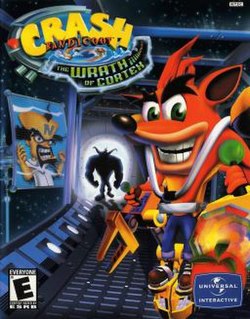
 Bleach: Rebirth of Souls on PS4
 Bleach: Rebirth of Souls on Xbox Series X/S
 Choro Q 2 on PlayStation
 Choro Q on PlayStation
 Captain Tsubasa: Rise of New Champions on PS4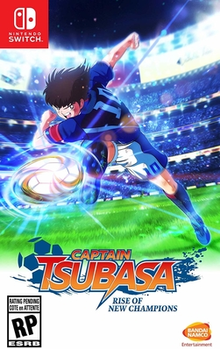










 Another SquareThought Site