

 Oct 2025
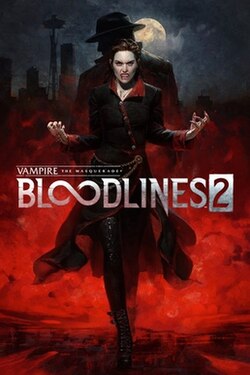

Vampire: The Masquerade - Bloodlines 2 arrives like a grand, dishevelled guest to a funeral: charismatic, opinionated, and a little damp from the weather. The Chinese Room took on a famously fraught sequel and rebuilt much of it into a nocturnal Seattle drenched in snow, conspiracies, and the kind of interpersonal nastiness only immortal politics can deliver. This review zeroes in on what the game does best (characters and storytelling) and what it fumbles (systems and polish), because Bloodlines 2 ultimately lives or dies by its cast. Spoiler: the cast keeps it alive even when the city coughs a little blood.
Bloodlines 2 casts you as Phyre, a 400-year-old Elder vampire who wakes up in modern Seattle with a brand burned into their flesh and a Malkavian named Fabien constantly narrating like an overly caffeinated detective in your skull. The game leans on first-person perspective and an open-world city presented across five districts, but the real meat is in how choices and dialogue shape how other characters treat you. Phyre's arc is the spine: they are written as a legend-someone whose reputation precedes them-and the writers fork historical mystery into player agency. You can tailor Phyre's exterior (gender, hair, outfits) and pick a clan identity, but the game repeatedly nudges you to treat Phyre not as a blank slate but as an ancient force whose decisions echo. Phyre's journey is a study in identity and consequence. They begin fractured: a torpor-risen monster who briefly lapses into Beast-mode, then regains enough decorum to stumble into vampire civil war. The brand that suppresses Phyre's powers becomes a metaphor for lost agency. As you peel back the city's conspiracies-Lou Graham's fainted influence, Ryong Choi's brittle stewardship, Safia's double life-the arc resolves into a question: will Phyre seize power, restore the old order, or walk away? The writing smartly uses reputation and rumor as mechanical levers; NPCs argue about who Phyre 'was' and who they might be now, and those gossip threads affect how the same conversation plays out across different neighborhoods. That is an underrated delight: immortality used as narrative currency rather than mere costume. Fabien Laguna functions as the unreliable narrator and emotional counterweight to Phyre. Voiced with a performer's relish, Fabien's private-eye persona filters Malkavian madness into prophetic clarity. Where Phyre is slow-burn and ambiguous, Fabien is impatient, bittersweet, and occasionally infuriatingly correct. His arc-trapped inside Phyre's mind, complicit in ancient vengeance-turns several late-game reveals into gut punches. The Malkavian writing avoids cartoonish lunacy and leans hard into tragic insight: Fabien believes what he believes, and that earnestness gives his unreliable narration weight rather than cheap twistiness. The supporting cast is a parade of morally complicated archetypes. Lou Graham is the old guard whose visions and political maneuvering trace a sorrowful path from puppet prince to a woman who still knows how to command a room. Ryong Choi is the insecure puppet-prince with enough ideology to make you suspicious and enough pragmatism to make him oddly sympathetic. Safia Ulusoy's arc is the game's delicious betrayal: introduced as a Tremere researcher and grief-drenched love interest, she later reveals Sabbat leadership and a vengeance-fuelled plan that reframes earlier encounters. Safia's turn from sympathetic scholar to vengeful Sabbat leader is one of the best-executed arcs-motivations are given roots in personal trauma (the murder of Gideon) rather than cartoon evil, which makes the showdown emotionally complicated. Gideon Hall and the Rebar Killer plotline morph the game's mystery from political infighting into a haunted personal vendetta. Gideon's torpor and the Gardener imagery-sunflowers, sleep, and the demand to be consumed-give the story a mythic spine. When the truth that Lou and Campbell were using the Rebar Killer identity to purge enemies is revealed, the narrative stops being purely factional and becomes an indictment of how power sanitizes murder under the guise of 'order.' That thematic shift elevates several otherwise typical faction quests into something weighty. Smaller arcs-Ysabella Moore's revelation as a Sabbat operative, Benny Muldoon's violent vigilante streak, and Katsumi Ishizaka's Anarch resistance-work as human vignettes that color Seattle's nights. The game often rewards attention: side-characters who seem throwaway get moments that reframe your understanding of the factions and of Phyre's possible rulership. Multiple endings (nearly 40 storyed outcomes mapped during development) mean choices carry currency beyond a single stat screen; your final status-prince, exile, or puppet of the IAO-feels narratively earned. Mechanically, Disciplines and blood resonances tie into character arcs smartly: feeding on people with certain emotional resonances to unlock clan skills makes vampiric predation feel like roleplay, not just resource management. Combat is an amalgam of powers-telekinesis, blood curses, mass hypnosis-that can be paired in gleefully creative ways, but its execution feels inconsistent. Dialogue uses paraphrased speech so tone can be ambiguous, a clever design concession that supports roleplaying an ancient vampire who manipulates intent more than precise words. Unfortunately, the systems sometimes butt against technical roughness and a lean scope: exploration is moody but not densely packed, and some of the RPG trimmings feel shy compared to the story's ambition.
Bloodlines 2 dresses Seattle in high-contrast noir: taller buildings, deep shadows, reflectively wet snow and exaggerated lighting that makes every alley feel like a stage. The choice to stylize the city to a vampiric perspective-brighter lights, deeper darknesses-pays off for atmosphere. Character outfits are a consistent visual joy: Brujah denim and leather, Tremere's ritualistic flourishes, Banu Haqim's layered stealth garb and Ventrue's opulent tailoring all telegraph identity at a glance. Unreal Engine 5 underpins the look, but there's a mismatch between art ambition and technical finish; reviewers noted crashes and janky NPC behaviour across platforms, and a PS4 port (if you find one) would likely accentuate performance issues given the engine's demands. Still, where it clicks, the city's dioramas-procedural kits arranged as storytelling vignettes-create memorable locales: a conservatory dripping with rot, a lab buried under snow, Weaver Tower looming like a promise and a threat. The score and sound design further refine the aesthetic: a mix of Garfinkle, Noone, and Schaffer themes that swing from film-noir melancholy to ritual chant, making characters' moments linger beyond cutscenes.
If you came for a technical triumph, Bloodlines 2 will be infuriatingly human: brilliant in voice and story, mortal in execution. Where the game succeeds spectacularly is in character work. Phyre's arc-from torpor-monster to candidate for princely rule, haunted by Fabien and manipulated by a city of ghosts-feels like a proper vampire epic. Safia's betrayal, Gideon's mythic requests, Lou's quiet command and the cast's many private tragedies elevate the narrative to the sort of dramatic soap opera that earns binge-night devotion. The systems that support those arcs-Disciplines, resonances, reputation-are clever and often gratifying, but they're hampered by limited scope, uneven gameplay polish, and technical problems that diluted many reviewers' enjoyment. The mixed critical reception and Paradox's later financial write-down reflect that split: a game admired for its writing and cast, criticized for its form. For players who live for character work, noir moods, and morally messy endings, Bloodlines 2 is worth enduring a few bugs and pacing problems to meet a cast that mostly rewards patience. If you want a seamless, modern RPG systems showcase, this isn't your cleanest bite. Score: 6.5/10 - a must-play for the story-curious, a cautionary tale for perfectionists, and a reminder that sometimes a great script can keep a shaky production breathing long enough to tell an unforgettable tale.
 Vampire: The Masquerade – Bloodlines 2 on Xbox Series X/S
 Vampire: The Masquerade – Bloodhunt on PS5
 Combat Elite: WWII Paratroopers on PS2
 Onimusha: Dawn of Dreams on PS2
 Disney's Chicken Little: Ace in Action on PS2
 Tokyo Xanadu eX+ on PS4
 Everybody's Gone to the Rapture on PS4










 Another SquareThought Site