

 Jan 2019
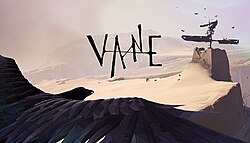

Vane is the sort of game that shows up to the art gallery opening wearing a trench coat, humming an ambient synth track and refusing to explain whether it came for the hors d'oeuvres or to reinvent the rules of existence. Developed by Tokyo studio Friend & Foe and produced by Matt Smith, Vane launched on PlayStation 4 in January 2019 and later flew - literally - to PC. The premise is simple on paper: you control a lonely child who can shift into a bird, and you wander a strange, collapsing world full of half-explained rituals and mood lighting. If you like your games tidy and explicit, Vane will behave like a cryptic roommate who hides the TV remote and leaves interpretive sculptures in the fridge. If you like ambiguous, meditative experiences that reward patience and a forgiving controller grip, Vane can feel like discovering a scratched-up cassette of an amazing soundtrack and not minding the skips. Unfortunately, this title wears atmosphere like a superhero cape and occasionally trips over its own shoelaces-spectacular in places, infuriating in others.
Gameplay in Vane is built around exploration, the shape-shifting between child and bird, and a handful of puzzles that are more mood pieces than brain-bending affairs. Most of your time is spent either trudging along windy shorelines as a small humanoid or soaring clumsily as a bird, peeking into cavernous ruins, and following cryptic landmarks. The bird controls are the game's most charismatic party trick: flapping into the sky feels freeing in short bursts, and providing access to vistas that are genuinely pretty in a haunting way. Where Vane stumbles is in its insistence on mystery without sufficient scaffolding. Objectives are vague to the point of being invisible, and mechanics are often obfuscated. Expect to spend more minutes staring at a screen trying to deduce what the game thinks you should do than feeling clever for having solved anything. Puzzles here are not logic puzzles so much as environmental nudges - move something, stand somewhere, and hope the world reorders itself in a satisfying way. When those moments click, there's a real sense of discovery. When they don't, the experience can feel like being gently pushed out of a window and told the landing is 'part of the art.' Controls can be clunky. Turning, camera work, and interaction combos have a stubborn quality that makes simple tasks feel like negotiating with a sleepy octopus. The camera especially has a poor habit of being in the wrong place at the exact time you need it in the right place. Combine that with occasional glitches and a stingy save system - which several reviewers found maddening - and you have an experience that requires patience and a degree of masochistic affection for technical rough edges. There's no combat to speak of, which will delight players allergic to button-mashing and frustrate anyone who'd like stakes attached to the action. Instead the game leans on atmosphere and environmental storytelling: ruins crumble, the sky shifts color, and strange symbols hint at a bigger myth. If you want explanations served on a platter, look elsewhere. If you want to sit quietly and piece together a narrative from fragments, Vane supplies an abstract puzzle box. That box, though, sometimes has a squeaky hinge and an internal manual written in invisible ink.
Visually, Vane is often striking. The art direction favors stark silhouettes, broad landscapes, and long vistas that make the PS4 grunt in the best possible way. Environments change and mutate as you progress, and the game hits a few moments of genuine cinematic beauty: fog rolling over jagged cliffs, ruins lit by moody electronica-tinted skies, and tiny, melancholy figures dwarfed by an indifferent world. Reviewers tended to agree on this front - the visuals are a clear highlight. The soundtrack matches the visuals with an atmospheric electronica/synthwave vibe that does a lot of heavy lifting in selling the mood. Music and sound design frequently rescue scenes that would otherwise feel empty, turning aimless wandering into contemplative exploration. Unfortunately, presentation is mixed with a smattering of technical complaints: frame dips, clipping, and errant camera behavior crop up often enough to break immersion for some players. When everything behaves, Vane looks and sounds like an artful small-scale indie epic. When it doesn't, it can feel like being shown a beautiful painting through a cracked window.
Vane is a polarizing little oddball: part ambient walking sim, part fever dream, part glitch anthology. It's an experience that will captivate players who enjoy letting games breathe and are willing to forgive rough edges for artistic intent. For others, it's frustratingly obtuse, with clunky controls, a fussy camera, and a save system that tests your tolerance for repetition. Critics were split for good reasons - the game scores poorly on aggregators for the PS4 version, roughly in the high 40s out of 100, while some outlets praised its ambition and aesthetics. If you adore moody soundtracks, dramatic vistas, and a narrative that whispers instead of explains, Vane is worth a rent or a wait-for-sale curiosity purchase. If you prefer your games to hold your hand, explain the rules, and not make you repeat a ten-minute slog because the camera decided to tango with a wall, steer clear. I'll be generous and give it a 5 out of 10: a fascinating idea with flashes of beauty that's held back by polish problems and design choices that will have you either nodding in contemplative awe or rage-quitting while muttering about publishers and patch notes. In short: bring patience, bring curiosity, and maybe a comfy chair for all the sitting and contemplating. Vane won't tell you what it means, but it will show you something pretty while it's doing so - assuming nothing purple and inexplicably soggy happens to the frame rate first.
 Tintin: Destination Adventure on PlayStation
 One Piece Grand Adventure on PS2
 Taiko no Tatsujin: Dokodon! Mystery Adventure on Switch
 Taiko no Tatsujin: Don to Katsu no Jikū Daibōken on Switch










 Another SquareThought Site