

 Sep 2016
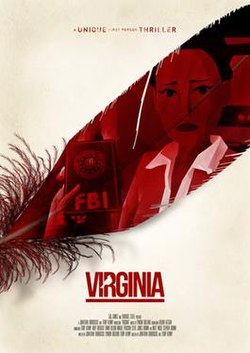

There are designers who pursue ever-larger budgets and ever-higher polygon counts, and then there are a small, stubborn breed who believe a game can be poetry without reciting its lines aloud. Virginia, the debut from British indie studio Variable State, belongs to the latter school. The team-led by Jonathan Burroughs and Terry Kenny and scored by Lyndon Holland-set out to make a compact, filmic mystery that borrows as freely from Twin Peaks and The X-Files as it does from the experimental editing of indie games like Thirty Flights of Loving. The result is not a blockbuster; it is a deliberate, sometimes infuriating exercise in atmosphere and implication, presented on PlayStation 4 with a commitment to cinematic technique that will delight some players and vex others. The premise is simple enough to print on a postcard: August 1992, a missing boy in the small town of Kingdom, Virginia; you are Anne Tarver, a rookie FBI special agent paired with the experienced and enigmatic Maria Halperin. The game runs for roughly two hours and prefers silences to explanations. Rather than dialogue, Variable State relies on carefully staged performances, cuts and dissolves, and an evocative soundscape to tell its story. It is an experiment in storytelling that often reads like a short, well-directed television pilot that insists the viewer do the work.
Virginia is played from a first-person perspective but it refuses to behave like a run-and-gun shooter or a traditional point-and-click adventure. Interactivity is modest: you walk, you examine, you accompany Maria between locations, you pocket a tiny vial of LSD, and you occasionally use simple tools like a lockpick. The most striking mechanical choice is the way scenes are stitched together. The game employs real-time cinematic editing-cuts and dissolves arrive with editorial force, slicing time and space in the service of atmosphere rather than puzzle complexity. The central relationship-Anne and Maria-carries the game. Much of the experience consists of shared moments: a quiet breakfast in a car, tense conversations conveyed through gestures, a raid on an abandoned observatory, and a mind-bending drug-induced vision sequence that unfolds as a montage of images and memory fragments. Players are not asked to solve elaborate puzzles or manage inventories; they are expected to read the mise-en-scène. That will be intoxicating for those who appreciate inference and montage, and maddening for those who demand explicit exposition. Critics were divided on this point: the game received praise for its narrative ambition from outlets like Game Informer and TIME, but reviewers such as PC Gamer noted that interaction is limited and that the story loses focus in its final act. Plotwise, the beats are clear: investigate the disappearance of Lucas Fairfax, find photographs and clues pointing to an observatory, discover a web of agency secrecy and personal histories-particularly Anne's complex relationship to her own family and Maria's past-and confront the possibility that what you are witnessing is as much psychological ritual as it is criminal conspiracy. The omission of spoken dialogue is not a gimmick but a design constraint that shaped production: the studio wanted to remain small and nimble and to experiment with editing without the overhead of voice casting and complex dialogue systems. The trade-off is that much of the emotional work lives in the face and body language of animated characters; Pink Kong Studios provided animation support to give those performances the heft they needed. If you come to Virginia expecting branching choices or deep mechanical systems, you will leave disappointed. If you approach it as a short, tightly edited thriller that trades line-by-line exposition for suggestion and image, you will likely find it rewarding. The middle ground-players who enjoy both story-heavy walks and more active gameplay-will feel like Virginia is missing some pages from its own diary.
On the PlayStation 4, Virginia presents a stylised visual palette that favors mood over photorealism. The environments-gas stations, small-town streets, a claustrophobic cave, and the abandoned observatory-are rendered with deliberate simplicity: flat planes meet carefully placed detail, and the camera framing often mimics the television and film influences that inspired the team. This is not a game trying to showcase next-gen shaders; it's a paper-cut stage where each silhouette and light source is composed to serve a cut or a dissolve. The choice suits the game's editorial ambition. Animation is a constant talking point. With no spoken lines, the burden of storytelling falls heavily on character movement and expression. The animators-internal and contracted through Pink Kong Studios-do admirable work conveying nuance: a hand placed on a radio knob, a hesitation before stepping through a doorway, the small domestic acts that create intimacy. There are occasional stiffnesses-some NPC animations read as mechanical rather than lived-in-but these are less jarring than they might have been because the game's editing intentionally draws your eye to the most significant beats. Lyndon Holland's score and Foley complete the picture, and the BAFTA for Music that followed the game's release is well-earned: sound design often does the heavy lifting where dialogue would have been the lazy option.
Variable State set out to make a short, severe piece of interactive cinema and, for the most part, they pulled it off. Virginia is a lean, confident experiment in narrative form: bold in its refusal to explain everything and meticulous in its construction of mood. The omissions-limited player agency, the abruptness of the final act for some viewers-are not accidental; they are the price of a creative decision to prioritise montage over monologue. For players who grew up on grainy FBI noir television and who enjoy filling in blanks with their own imagination, Virginia is a compact masterpiece that rewards repeat viewings. For those who prefer their mysteries spoon-fed, it will feel incomplete. The game's critical reception reflected this split: respectable Metacritic scores on the PS4 (around 77) and plaudits for its writing and music, coupled with reasonable criticism about its short runtime and diminishing clarity toward the end. It won the Writers' Guild Award for Best Writing in a Video Game and a BAFTA for Music-recognition that signals technical and artistic success even if the emotional ride is not to everyone's taste. In the marketplace of ideas and games alike, Virginia will not be everyone's favourite, but it will be remembered as a brave, elegantly produced experiment. Consider it a well-directed two-hour television pilot that asks you to be an active viewer instead of a passive consumer-and that, for many players, will be precisely the point.
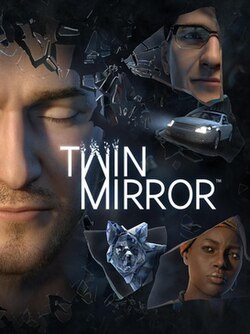
 Twin Mirror on PS4
 Tintin: Destination Adventure on PlayStation
 One Piece Grand Adventure on PS2
 Taiko no Tatsujin: Dokodon! Mystery Adventure on Switch
 Taiko no Tatsujin: Don to Katsu no Jikū Daibōken on Switch
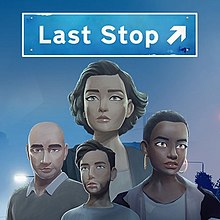 Last Stop on Xbox Series X/S










 Another SquareThought Site