

 Dec 2020
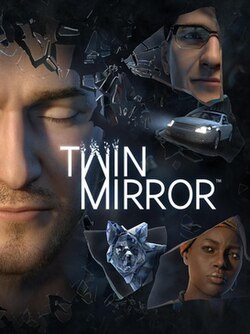

There was a time-somewhere between the heyday of glossy print reviews and the slow creep of the internet-that games were measured in mood, not microtransactions. If that era had an honest-to-god handful of titles that tried to be novels with a joystick, Twin Mirror arrives wearing a trench coat and carrying a battered notebook. Released for PlayStation 4 on 1 December 2020, this single-player adventure from Dontnod and Shibuya Productions trades in the spectacle of today's blockbuster for the quieter business of asking unpleasant questions: who are you, what did you see, and why does everyone in this small town hate you? Sam Higgs, the game's protagonist, is an investigative journalist back in Basswood, West Virginia to look into the suspicious death of his friend Nick. The premise fits the investigative mold like a polished fedora: return to a sullied hometown, ruffle a few feathers, and peel back a grubby little secret. Twin Mirror dresses the affair with psychological flourishes-a device called the Mind Palace and an inner voice dubbed the Double-that aim to lend weight to an otherwise intimate, deliberate adventure.
Twin Mirror plays out from a third-person perspective, and it wants you to take your time. The environment is clickable and interactable; objects can be picked up and examined, conversations are optional, and your choices steer the investigation toward multiple endings. This is not a game of twitch reflexes. It is a game of rooms, faces, overheard mutterings, and moral margin notes. The headline mechanic is the Mind Palace: a mental space Sam enters to reconstruct events and link clues. You shuttle between the physical world and this stylised interior to assemble evidence and test explanations. The Mind Palace isn't a metaphysical power trip so much as a narrative microscope-its purpose is to let you lay out possibilities and-ideally-make deductions that change how the real world reacts. An example of this is when Sam recreates an MP version of the Coal Miner's Haven Bar to figure out who he was with the previous night. It is a tidy, cinematic trick that rarely attempts to outshine the mystery itself. Riding shotgun in Sam's skull is his 'Double,' an inner voice with both helpful and obstructive tendencies. The Double can nudge you to recall details, urge restraint, or derail an inquiry with cynicism. It represents the game's commitment to duality: mind versus body, truth versus projection, journalist versus his own past mistakes. The writing team-Hélène Henry and Matthew Ritter-wears those themes proudly, and the dialogue often wants to be smarter than the situations surrounding it. Gameplay criticism from contemporary reviewers was not unfairly generous. Some found the mechanical scaffolding thin; those expecting complex puzzles or investigative synthesis closer to a detective simulation may come away underwhelmed. Several outlets remarked that the protagonist could feel underdeveloped, which is an awkward charge for a game about identity: if your lead isn't compelling, the cop-show trappings begin to creak. And yes, the experience is short-lean enough that some players will finish it in a time-slot that normally buys a pizza and a movie. Dontnod initially conceived Twin Mirror as an episodic project, but development shifted the title into a single, uninterrupted experience. The move to a continuous release makes sense given the game's thematic focus on continuity of memory; it also saves the player from the tedium of waiting between episodes. Underneath the Mind Palace and the choice trees is a simple but deliberate structure: talk, search, reconstruct, and watch the consequences. For fans of narrative adventure with an investigative bent, that pattern can be quietly satisfying even if it never becomes revolutionary.
Visually, Twin Mirror leans on atmospheric realism with a painterly edge. Built in Unreal Engine 4, the game stitches together a small-town Appalachia that's both familiar and slightly off-kilter, a palette of washed denim blues and murky autumn browns. GameReactor singled out the visuals for praise, and that commendation is sensible: the locales have character, the interiors are full of plausible clutter, and the Mind Palace sequences are stylised enough to contrast with the mundane world without becoming gaudy. The character models do competent work. Facial animation occasionally slips into the slightly uncanny, a modern hazard in narrative-heavy games where players fixate on a mouth that doesn't quite match the words. Lighting and composition do the heavy lifting; they sell the mood when the script needs to whisper instead of shout. With about forty people credited on the team by late 2018 and Pierre-Etienne Travers guiding the art direction, the visual identity was always going to be a selling point, and in most frames Twin Mirror delivers a tidy, magazine-ready aesthetic worthy of its investigative tone.
Twin Mirror is a game that wants to be taken seriously in a way today's blockbuster crowd often resists. It does not always succeed. The Mind Palace is an effective storytelling device, and the investigative structure rewards patient players who enjoy laying out evidence and living with ambiguous conclusions. Sam Higgs' return to Basswood is narratively compact and thematically consistent-duality courses through the writing and the design-but the execution sometimes feels thinner than its ambitions. Critics complained about the mechanics and the lead's lack of spark, and the game's condensed length leaves a hungry sensation more often than a satisfied one. Reception was mixed: the PlayStation 4 Metacritic score sits around 60/100, a middling grade that reflects both appreciations for the visuals and reservations about pacing and personality. Dontnod self-published the title after starting development in 2016 alongside Bandai Namco's distribution plans, and the project underwent a pivot from episodic format to a single release. The studio later reported recouping roughly 75% of production costs and expected only marginal revenue going forward; that financial footnote suggests Twin Mirror landed in the middle in more ways than one. If you approach it as a compact, well-styled piece of interactive fiction-one that prefers questions over tidy solutions-you'll find moments of genuine craft. If you demand mechanical depth, a protagonist who leaps off the page, or a long, sprawling investigation, Twin Mirror may feel like an intriguing concept that failed to grow up. Consider it a somber, 1990s-style feature in the back of a gaming magazine: thoughtful, occasionally elegant, and ultimately a reading experience that rewards the patient but won't be mistaken for a blockbuster cover story. Score: 6/10.
 Ugly Americans: Apocalypsegeddon on PS3
 Virtual On: Cyber Troopers on PS3
 Tintin: Destination Adventure on PlayStation
 One Piece Grand Adventure on PS2
 Taiko no Tatsujin: Dokodon! Mystery Adventure on Switch
 Taiko no Tatsujin: Don to Katsu no Jikū Daibōken on Switch










 Another SquareThought Site