

 Jul 2020
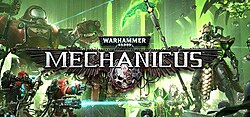

Mechanicus arrives in the Warhammer universe like a beetle with a dissertation: slow, precise, and somehow full of arcane schematics. Bulwark Studios' turn-based tactics entry is the first video game to give the Adeptus Mechanicus its time in the grimdark sun - a faction of cybernetically enhanced warrior-priests who treat technology like scripture and probably whisper to servos in the privacy of their quarterdeck. If you came expecting broad action sequences or a space marine fistfight montage, this is not that. If you came for meticulous planning, oppressive lore, and the satisfaction of making cold, mechanical decisions that feel vaguely theological, welcome. Mechanicus borrows the tactical bones of XCOM: a squad-based, grid-light skirmish system where positioning matters and mistakes are met with death or, worse, administrative reprimand from the Machine God. The game launched on PC in November 2018 and staggered onto consoles, including PS4, in July 2020. The PS4 version rides in with the same deliberate pace as its protagonists: thoughtful, occasionally crunchy, and prone to long expository passages about pagan circuitry. Critics mostly liked it on PC; the PS4 port received more mixed reactions, but the charm of seeing the Adeptus Mechanicus breathe and bicker about cogitators is intact.
Mechanicus is fundamentally a thinking person's tactics game with the appetite of a servo-skull. You command a roster of Magos, Tech-Priests and their entourage of augmented troops through ritualized missions against ancient xenos and malfunctioning machines. The key mechanical twist is Cognition Points (CP). CP is effectively the action economy: how many moves, shots, special abilities, and ritualistic interventions your crew can perform during a turn. CP forces you to prioritize: do you spend it on an extra burst from a Galvanic rifle, a diagnostic to heal a limb, or some arcane ability that might reveal a secret upgrade? Choices have a satisfying weight because upgrades and permadeath-ish consequences matter in the kind of way that makes you mutter to your controller in a voice usually reserved for exams and tax returns. Customization is where Mechanicus really struts. You tinker with your squad like a priest on a holy engine: cybernetic upgrades, weapon mods, and specialisations let you carve distinct roles. The game doesn't pander with loadouts that feel identical. Instead, you are handed a pleasingly precise toolkit to craft a squad that behaves like the team you intended to field. Nintendo Life called this flexibility 'impressively flexible customisation,' and it's hard to disagree - the choices are meaningful and often lead to emergent strategies. Combat leans into timed decisions and positional play rather than shotgun spam. There is no multiplayer here; Mechanicus is staunchly single-player, content to let you scheme in private. The mission pacing varies: some missions are tight, claustrophobic affairs that reward slow, methodical progress. Others feel like laddered corridors where you discover skirmish design at its most efficient. The story and world-building underpin everything: banter, logs, and flavor text paint a picture of a dogmatic organisation that treats data like relics. That atmosphere is often the glue that makes repeated battles feel purposeful. The game isn't perfect. Critics noted the difficulty balance can be odd: some encounters flatten you like a servo-plate, others fizzle without much consequence. Rock Paper Shotgun's take was that there's 'no bite' to the difficulty, which can make the tactical edge blunt - although opinions differed, with some outlets praising the depth. The Heretek expansion, added in mid-2019 on PC and folded into subsequent releases, tried to add content but drew complaints about limited new features and a handful of bugs. It felt less like a holy upgrade and more like a firmware patch with attitude. One of Mechanicus' hidden strengths is how failure feels narrative rather than punitive. Losing a squad member is framed within the lore as a tragic, almost liturgical event; you don't rage-quit so much as send in a replacement while mentally drafting an elegy for the fallen servo-lancer. For players who enjoy slow-burn progression, careful resource management, and the satisfaction of out-thinking an enemy rather than overpowering it, Mechanicus is a feast of gears and grimness.
Graphically the game wears Warhammer 40k's grimdark tux quite well. The aesthetic is industrial gothic: brass, rust, hissing pipes, and architecture designed by someone with a devotional commitment to rivets. Character models are serviceable on PS4, with enough detail in the armour and augmentations to make each Tech-Priest feel like an individual sermon to the Machine God. Environments have atmosphere rather than photorealism; foggy corridors, glowing sigils, and the odd altar to obsolete circuitry sell the mood more effectively than a flashy particle system ever could. Performance and polish are where the PS4 version drew some of its cooler reception. Metacritic marks the PS4 port lower than the PC release, which suggests console compromises - perhaps in framerate, load times, or UI navigation. The interface itself is thoughtful on a mouse, and while it translates adequately to a controller, some menus occasionally require patience and a calm voice talking to your d-pad like it's a reluctant apprentice. If you are someone who values mood, lore, and crisp tactical feedback over cutting-edge visuals, the PS4 presentation will satisfy. If you expected cutting-edge spectacle, you might find it modest but earnest.
Mechanicus is a slow, deliberate hymn to tactical patience. It won't hold your hand or pretend your choices don't matter; it will instead hand you a wrench, a prayer, and a roster of cybernetic perfectionists and ask you to justify their existence. The positives are strong: focused tactical systems rooted in the Cognition Point mechanic, deep and meaningful customization, and world-building that genuinely understands and respects the peculiar theology of the Adeptus Mechanicus. The negatives are also real: uneven difficulty tuning, a console port that didn't please everyone, and an expansion that under-delivered for some players. On PS4, Mechanicus is best approached like a tabletop campaign you play while sipping something strong and black. It's atmospheric, clever, and occasionally frustrating in a very adult, bureaucratic way. If you're a Warhammer fan or a strategy player who enjoys deliberate decision-making and rich lore, this is worth your time. If you're looking for twitchy action or an accessible casual romp, you might find it dry. My score lands at a pragmatic 7/10: a solid mechanical brain with a devout heart, even if the sermon sometimes runs a little long.
 Warhammer 40,000: Inquisitor – Martyr on PS4
 Warhammer 40,000: Shootas, Blood & Teef on PS5
 Coloball 2002 on PS2
 Warhammer 40,000: Battlesector on PS4
 Tiny Metal on Switch
 Achtung! Cthulhu Tactics on Switch










 Another SquareThought Site