

 Jan 2027
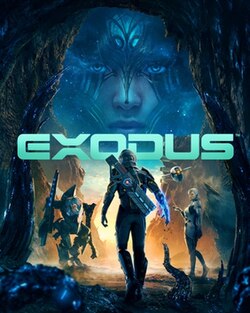

Exodus is that rare breed of sci-fi RPG that smells faintly of BioWare DNA but is trying on some very different clothes. Built by ex-BioWare veterans at Archetype Entertainment and written with heavyweights like Peter F. Hamilton and Drew Karpyshyn attached, the game promises a sprawling, morally messy tale threaded through tens of thousands of years. On PlayStation 5, Exodus trades tight corridor drama for galaxy-scale family gatherings where everyone keeps checking their watches because relativistic travel has turned time into the uninvited guest. This review focuses less on combat minutiae and more on what actually makes a role-playing game sticky: its people. Or, in Exodus' case, its people and their weird, time-bent emotional mortgages.
Exodus positions you as a player embedded in a universe that treats time dilation not as a scientific footnote but as an engine for drama. The core narrative revolves around Travelers - a faction obsessed with locating "Remnants," advanced relics that feel like story macguffins with emotional consequences. From the available material, choice and consequence are the spine: branching storylines, shifting alliances, and the promise that decisions reverberate across political and personal spheres. Where the game gets juicy for anyone who likes their characters to matter is in the way those choices intersect with time. Ultrarelativistic travel and time dilation aren't just wallpaper; they're the mechanic that will (presumably) warp relationships. Imagine romancing someone who returns from an interstellar run decades older biologically but emotionally still stuck in the two-hour coffee date you had before launch. Or making a political bargain that ages your ally into a different ideology by the time they get home. The setup practically screams for arcs that are dissonant and heartbreaking: reunions that are awkward because the people involved lived through different centuries, betrayals that feel inevitable because one side lived through cultural revolutions the other missed, friendships that curdle with time zones measured in centuries. Character composition appears ambitious. The Elohim - a dominant faction responsible for the "Gates of Heaven" interstellar transport network - read like the in-universe church-state hybrid with an agenda and a lot of capital. They're fertile ground for morally gray antagonists: leaders who sincerely believe they're shepherding civilization while stamping out dissent. Then there are the Celestials, genetically engineered human descendants, who give the writers a chance to run full-tilt into identity and prejudice arcs. Between the Elohim, Celestials, Travelers, human remnants of long-lost fleets, and alien civilizations, the game promises intersecting personal arcs that are political by necessity. Casting choices deepen the intrigue. Matthew McConaughey voices C.C. Orlev - a fact that will draw headlines and, likely, a handful of memes about cowboy philosophers in space. McConaughey's presence signals that Archetype wants voice performances to carry weight; an actor of his gravitas can turn a cryptic exposition dump into a moment of human revelation. The writ-large involvement of story veterans (Hamilton and Karpyshyn among them) hints at arcs built more like sprawling novels than four-hour quests. Expect layered NPCs who evolve in response to the player's moral wiring: companions whose loyalties and personalities shift as you make pragmatic or idealistic choices. This isn't nostalgia cosplay for old-school RPGs; it's more like the new kids learned how to make relationships hurt. The timeline (tens of thousands of years) allows for arcs that thread descendants and ideological heirs into a single narrative tapestry. A betrayal now could produce an empire later; conversely, a small kindness could echo as a cultural reform centuries later. That scope is intoxicating if the writing can keep individual narratives focused: the risk is that with so many moving parts and factions, characters become chess pieces rather than people. The involvement of novelists and veteran RPG writers makes me hopeful that the team understands the difference between an interesting faction and an actual person you want to bring coffee to in the morning. Mechanically, the promise of AI-driven encounters and choices affecting character outcomes suggests that companions won't be mere quest markers. If the systems work, NPCs will not only react but grow - not just switching dialogue trees but genuinely shifting allegiances, motivations, and worldviews. The flip side is the age-old RPG danger: too much branching can thin the density of meaningful arcs. But the game's focus on interpersonal consequences caused by relativistic travel is a strong thematic hook that should keep arcs coherent: time changes everything, and Exodus appears to be designing systems to narratively enforce that change. If you're the kind of player who likes to sit in your ship's mess hall and eavesdrop, hoping to catch the slow burn of a friendship, Exodus looks tailored for you. If you prefer punchy, contained character beats, the game's long-haul, generational approach might feel like waiting for a season finale that never arrives. But when it hits the mark, I expect stories that make you feel weirdly responsible for centuries of fallout - a satisfying, slightly terrifying responsibility.
Powered by Unreal Engine 5, Exodus promises scale and spectacle. The concept art and teaser materials emphasize densely packed star clusters, sprawling planetary vistas, and the eerie architecture of alien ruins like those on Lidon. On PS5, that engine should translate to impressive draw distances and lighting that sells the sense of 'distant time'-golden, decayed towers catching the light of stars that no longer exist where someone remembers them. For character arcs, visuals are more than skin-deep: subtle facial animations, aging effects, and costume evolution will need to sell decades of lived experience. If your companion ages differently because they spent 30 subjective years on an ark while you spent three in cryosleep, the game will live or die by its ability to render that dissonance convincingly. Unreal Engine 5 can give you skin pores and starmaps in the same shot, but it's the animation and performance direction (and the actors breathing life into the lines) that will make those centuries feel tangible. Given the stated ambition to create interactive encounters with AI systems, expect NPCs to look less like static quest-givers and more like members of a living, breathing polity. PS5's SSD should help with fast planetary transitions, which is important if the narrative is as travel-heavy as advertised. The big caveat: scale and fidelity are seductive, but visual splendor needs to be in service of personal stories. Beautiful vistas are great for postcards; the real magic will be seeing a character's face weather years of choices in a way that feels earned, not canned.
Exodus is shaping up to be an ambitious, philosophically curious RPG that treats time as a character in its own right. With ex-BioWare leadership, heavyweight writers, and a star like Matthew McConaughey on the cast list, the game has both the pedigree and the resources to deliver arcs that sting. The key to success will be focus: can the team keep characters human-sized within a universe measured in millennia? If the branching systems and AI-driven encounters truly allow companions and factions to develop in response to relativistic consequences, Exodus could become the kind of game you remember not just for its grand reveals, but for the small, painful reunions and slow-burning betrayals it stages across centuries. On PS5, expect gorgeous vistas, promising performance, and a narrative ambition that will make you sweat for your choices. If you like your RPGs with equal parts cosmic awe and interpersonal brutality, put Exodus on your radar. If you're worried about sprawling scope swallowing individual nuance, keep an eye on previews and early reviews; this is one of those games where the execution will decide if the characters live and breathe or end up as footnotes in an epic you never quite felt part of. Either way, I'm excited to find out which it becomes - and to possibly cry over a reunion that spans three hundred years and one very awkward apology.
 Exodus Guilty on PlayStation
 Metro Exodus Complete Edition on Xbox Series X/S
 Combat Elite: WWII Paratroopers on PS2
 Control Resonant on PS5
 Predecessor on PS4
 Gnosia on Xbox Series X/S










 Another SquareThought Site