

 Feb 2026
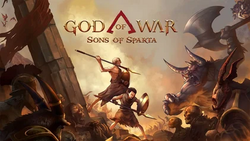

If you handed a tape of ancient Greek myths to a grizzled PlayStation magazine editor in 1996 and asked them to turn it into a videogame review, they might have written something very much like this. God of War: Sons of Sparta is a surprising return to the franchise's roots - not in scope or cinematic swagger, but in format. Santa Monica Studio has teamed with Mega Cat Studios to deliver a 2D Metroidvania that places the young Kratos and his brother Deimos in Spartan training garb and cross-sectional combat across a myth-haunted countryside. Released unexpectedly on the PlayStation 5 as part of the franchise's 20th-anniversary festivities, Sons of Sparta is a prequel that trades the triple-A, over-the-shoulder theatrics of recent entries for tight platforming, backtracking with purpose, and combat that feels like a videogame again rather than a Hollywood trailer. This isn't an experiment; it's an affectionate, sometimes ruthless, redesign of what God of War can be.
The first thing a player notices is the scale shift. Where the 2018 and Ragnarök entries used sweeping camera rides and cinematic set-pieces, Sons of Sparta strips the series down to a 2D action-platformer skeleton that leans hard on Metroidvania staples: exploration gated by abilities, looping level design that rewards memory, and incremental power-ups that turn old obstacles into new routes. You control a young Kratos through the Agoge and into the wilds beyond Sparta, armed with a spear and a shield. Combat is concise and deliberate; the spear provides reach and combo rhythm while the shield is both defense and a tool for parry windows. Santa Monica layers this core with the Gifts of Olympus - scripted, limited-usage abilities that break open encounters and serve as keys to previously sealed areas. These Gifts never feel tacked-on. They are the maple syrup of the system: used sparingly, they elevate a bland platforming pancake into something richer. Encounters strike a balance between spectacle and economy. Enemies are varied - beasts, mythological oddities, and the occasional overgrown temple trap - and they demand attention. Regular foes teach spacing and timing; elite opponents and minibosses test all the systems at once. Difficulty leans toward the challenging but fair end of the spectrum. You will die. Expect a short string of deaths when a new enemy type or a tricky jump crop up, but the checkpoints are forgiving in a way older-school players will appreciate: you rarely lose progress just for a minor mistake, and the game resists the temptation to punish exploration with cruel respawns. Metroidvania design means backtracking, and the world rewards it. New Gifts and abilities recontextualize familiar corridors into secret-laden arteries. The map is hand-crafted rather than procedural; its best moments are when a previously impassable shaft becomes a shortcut, or a hidden chamber reveals additional lore and upgrade tokens. The game also includes a post-campaign challenge mode unlocked after the main story, playable solo or in local cooperative multiplayer. The co-op is local only, a curiously retro choice in an era of seamless online sessions, but it suits the throwback design and provides a nice party trick - two players can synchronize attacks, revive one another, and approach arena fights with improvised tactics. Narratively, Sons of Sparta plays like a cracked leather-bound codex of Kratos' youth. The writing team from the modern era - Matt Sophos and Richard Zangrande Gaubert - supply a script that feels like a bridge between old blood-and-thunder God of War and the more measured, introspective tone of recent titles. TC Carson returns as a narrator, providing a grizzled counterpoint to Antony Del Rio's younger Kratos voice work. If you're buying this for plot alone, it's serviceable and evocative; if you're buying it for action-platforming, the story complements rather than overwhelms. A few small irritants temper what is otherwise a confident mechanical package. Inventory and upgrade screens occasionally lean toward the opaque, with the Deluxe Edition's extras (digital art book, soundtrack and avatars) feeling like premium dressing rather than gameplay-altering meat. A couple of boss arenas repeat layouts, and some optional areas rely on pixel-perfect leap timing that borders on fussy. These are annoyances, not dealbreakers.
Visually, Sons of Sparta is a deliberate exercise in 2D craft. If this review were a magazine in the mid-1990s I'd paste a glossy screenshot and note how the art direction marries the franchise's mythic brutality to sprite work that's both modern and nostalgic. Characters are chunky and expressive; enemy designs take recognizable Greek bestiary elements and exaggerate them into grotesque, memorable silhouettes. Backgrounds are layered, with parallax scrolling that gives scenes an unexpected sense of depth on the PS5 hardware. Animation is purposeful: Kratos' spear swings have weight, and the shield's stutter on impact communicates force without a single word. Bear McCreary's score returns, and it grounds the visuals. The music alternates between staccato war drums for combat and more elegiac strings during exploration, the sort of leavening that prevents the constant thwack of combat from becoming monotonous. Sound design is tight; each weapon impact and enemy snarl is mixed to feel tactile through a controller and TV. There are small concessions to modern polish - particle effects, bloom, and dynamic lighting - but the overall effect is of an illustrated epic rather than a photorealistic simulation. It looks the way a good 1990s console game would have looked if artists that era had access to today's GPUs and a philosophical attachment to brutal Greek myth.
God of War: Sons of Sparta is a deliberate, respectful detour. It doesn't try to outdo the recent 3D epics on spectacle; instead it proves that the franchise's ingredients - vicious combat, tragic characters, and mythic stakes - survive and even thrive in a narrower format. For long-time fans, there is pleasure in the callbacks: the return to Greek myth, the presence of Deimos, and familiar voice talent. For newcomers, the game offers a compact, challenging Metroidvania with thoughtfully designed encounters and a world that rewards curiosity. There are moments where convenience bends toward old-school obstinacy: some platforming can feel stubborn, and the decision to make the challenge mode local-only will frustrate players looking for online co-op. Yet these are quibbles beside an otherwise solid return to basics. The developers have fashioned a prequel that respects the brutality and poetry of Kratos' origin without mistaking nostalgia for innovation. In an age when every major franchise chases cinematic immersion, Sons of Sparta is a reminder that sharp gameplay and tight design still make for a memorable experience. If you still keep old magazines on the shelf for their reviews and cheeky cover art, slide this one into the stack - it's the kind of surprise that would have earned a high recommendation sticker on the cover. Score: 8 out of 10.
 Helldivers 2: The Ultimate Skill Test — How to Survive When Friendly Fire Is A Feature
 Transformers: War for Cybertron on PS3
 Disney's Chicken Little: Ace in Action on PS2
 Onimusha: Dawn of Dreams on PS2
 Tokyo Xanadu eX+ on PS4
 Action Man: Operation Extreme on PlayStation









 Another SquareThought Site