

 Oct 2025
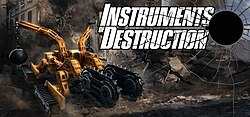

There is a peculiar pleasure in watching well-engineered chaos come to life, and Instruments of Destruction is a game that trades in precisely that peculiar pleasure. Presented by Radiangames, the one-person studio of Luke Schneider, this PS5 port brings a physics-driven demolition sandbox to the living room with a seriousness of purpose that would have made 1990s reviewers reach for superlatives and still feel underpowered. Schneider, once lead tech designer on Red Faction: Guerrilla, has tilted his fascination with simulated ruin into a full game: a single-player simulation where the primary goal is to make things fall apart in ways that are beautiful, surprising and occasionally hilariously catastrophic. The game arrives on Sony's hardware following an extended life on PC and a well-documented early access period. What the PS5 version delivers is not merely a straight port; it places the game's core strengths onto a console platform with a tidy presentation and all the missions, editors and sandbox trappings fans have come to expect. For those who remember the late 1990s appetite for clever mechanical puzzles and vehicular ingenuity, Instruments of Destruction feels like a modern heir to that sensibility, but with modern physics and a soundtrack that GameStar found 'unexpectedly cool.'
At heart this is a level-based demolition simulator with the temperament of a puzzle game and the ego of a sandbox. The main campaign, shipped in the 1.0 build, comprises more than 50 missions; each asks the player to demolish structures using a selection drawn from over 100 pre-designed vehicles. Missions are objective-driven yet flexible enough to encourage creative thinking. A separate 25-mission campaign flips the script, asking players to design their own machines and prove them in a series of user-creation challenges. For those who simply want to unleash mayhem without the nagging of objectives, a sandbox mode provides freeform tools and environments that are pure, unbuttoned destruction therapy. The vehicle editor is the linchpin. Reviewers who tried early access noted that the editor is both easy and fun to use, and on PS5 this remains true: the interface is approachable, parts snap together with satisfying logic, and the act of iterating on a contraption has a tactile rhythm reminiscent of assembling a complicated model kit while the world trembles underfoot. Machines range from sensible demolition rigs to ridiculous Rube Goldberg devices whose only function is to be beautiful failures. The game encourages experimentation; sometimes the most elegant solution is a noisy, overbuilt thing that squats and rips through concrete like a determined beast. Destruction itself is the star. The physics system produces collapses that are spectacular and often intricate, with debris that behaves in ways that reward careful placement and ruthless improvisation. Early impressions compared the game to Besiege, and Instruments of Destruction accepts that lineage while carving its own niche. Critics have argued that Schneider's physics surpasses some contemporaries, producing collapses that feel heavier and more consequential. There is clear inspiration taken from the 1997 title Blast Corps in the campaign's pacing and the satisfaction derived from preventing catastrophe through clever engineering; the game wears that influence openly but builds upon it with a modern, modular approach to vehicle design. Progression is handled through mission completion and creative milestones. Most players will oscillate between the structured challenge of the campaign and the purely experimental sandbox. There is no multiplayer, which will disappoint a subset of players who enjoy shared chaos, but the single-player experience is deep enough to sustain dozens of hours. The PS5 implementation benefits from responsive controls and quick load times, so the ritual of testing, failing, tweaking and retesting never drags. The learning curve is fair: novices can build serviceable contraptions quickly, while tinkerers can spend long nights chasing the perfect collapse.
Graphically, Instruments of Destruction is not trying to be photorealism on a power-hungry diet, and that is to its credit. The visual style favors clarity over glossy ambition: materials fracture with convincing detail, shadows read well and particle effects punctuate moments of impact without becoming gratuitous flourishes. The PS5's horsepower gives the destruction system room to breathe; cascades of debris, tumbling beams and spray of dust are resolved cleanly even when several hundred simulated objects fill the frame. Performance on PS5 is steady, and the presentation is aided by thoughtful camera choices that keep the action readable. When a building decides to fold like a deck of cards, the camera frames the event with dignity rather than frantic handheld mimicry. The soundtrack, which some early coverage called an 'unexpectedly cool' surprise, complements the visuals with a score that elevates big moments without trying to drown out the sound of metal on concrete. The overall aesthetic is utilitarian-workmanlike in the best possible way-so the spectacle of destruction remains the centerpiece rather than the special effects used to dress it up.
Instruments of Destruction is a measured, confident entry in the niche but lively category of physics-based construction and destruction games. It wears its influences proudly-Blast Corps and Besiege are unavoidable referents-but refracts them through Luke Schneider's experience and a straightforward, well-implemented vehicle editor. The result is a game that is spectacular when it needs to be and reliably satisfying when it aims for smaller pleasures: a clean collapse, a clever machine, a moment of triumphant improvisation. Single-player only and focused on mechanics rather than ostentation, this is a title for players who take pleasure in engineering mayhem and savor the slow work of iteration. For those who prefer shared calamity, the lack of multiplayer is a drawback, but for the solitary demolitionist the PS5 version of Instruments of Destruction is an elegant toolset. It rewards curiosity, patience and a mischievous mind. In the lexicon of 1990s seriousness, this would be a game to nod approvingly at, tuck a folded review page into your wallet and return to when you needed to remind yourself how small things can crumble in the most satisfying ways. If you want controlled chaos with a brain, this machine will serve you well.
 Destruction Derby Raw on PlayStation
 Destruction Derby Arenas on PS2
 Pro Evolution Soccer 2015 on PS4
 Power Pro Kun Pocket 13 on DS
 Derby Stallion 04 on PS2
 MotoGP 19 on Switch










 Another SquareThought Site